
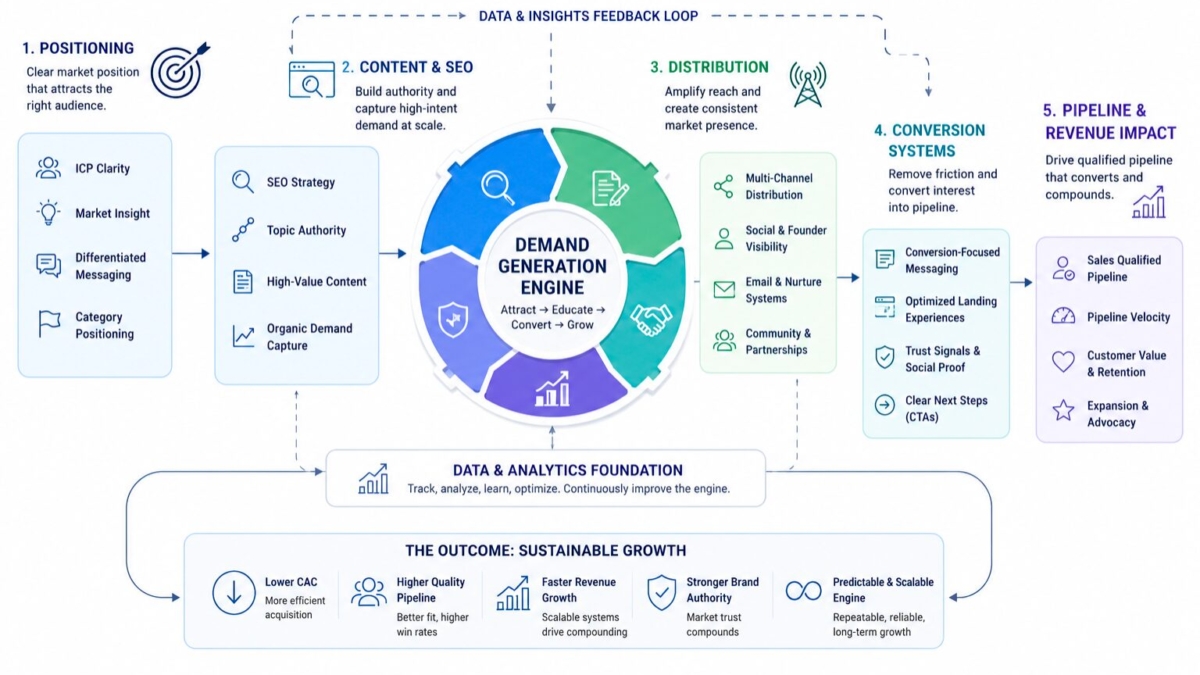
Most early-stage B2B SaaS companies do not struggle because they lack marketing channels.
They struggle because their acquisition systems were never designed to scale in the first place.
B2B SaaS demand generation becomes sustainable when acquisition systems are designed around trust, positioning, and scalable distribution instead of isolated marketing tactics.
What usually exists instead is a collection of disconnected activities:
- sporadic content
- inconsistent outbound
- underdeveloped positioning
- paid campaigns without market clarity
- SEO without strategic depth
- sales outreach without demand education
From the outside, it can look like execution.
Internally, it creates operational noise.
The uncomfortable reality is that many SaaS companies are not building demand generation systems. They are simply creating temporary acquisition activity and hoping momentum appears later.
The distinction matters.
A scalable demand generation engine is not a campaign strategy. It is an operational growth architecture that compounds trust, market familiarity, distribution reach, and conversion efficiency over time.
That changes how the entire company approaches growth.
Most B2B SaaS Demand Generation Systems Fail Before They Scale
A surprising number of SaaS growth problems are not traffic problems.
They are:
- positioning problems
- trust problems
- clarity problems
- sequencing problems
- conversion problems
- operational alignment problems
The market rarely responds sustainably to fragmented execution.
Sophisticated operators understand something many growth teams ignore:
Demand generation is downstream from strategic clarity.
Without that foundation, companies often mistake motion for progress.
Publishing more content does not automatically create demand.
Running outbound sequences does not automatically create pipeline.
Increasing ad spend does not automatically create market trust.
And SEO traffic without positioning clarity frequently produces low-intent acquisition that never converts into meaningful revenue.
This is one of the reasons many SaaS teams experience acquisition volatility.
The channels themselves are not always failing.
The underlying growth architecture is weak.
The Real Problem Is Rarely Traffic
Traffic is easy to overvalue because it is visible.
Pipeline quality is harder to evaluate because it requires:
- sales alignment
- conversion analysis
- intent qualification
- behavioral understanding
- positioning clarity
Many SaaS companies generate traffic that never compounds commercially.
This usually happens when acquisition systems are built around:
- vanity metrics
- channel obsession
- disconnected campaigns
- short-term reporting cycles
The result is predictable:
- high lead volume
- weak conversion quality
- unstable CAC
- inconsistent pipeline
- low trust density
Sophisticated growth systems optimize for:
- commercial relevance
- buyer intent
- trust accumulation
- category familiarity
- conversion readiness
That distinction becomes increasingly important as markets mature.
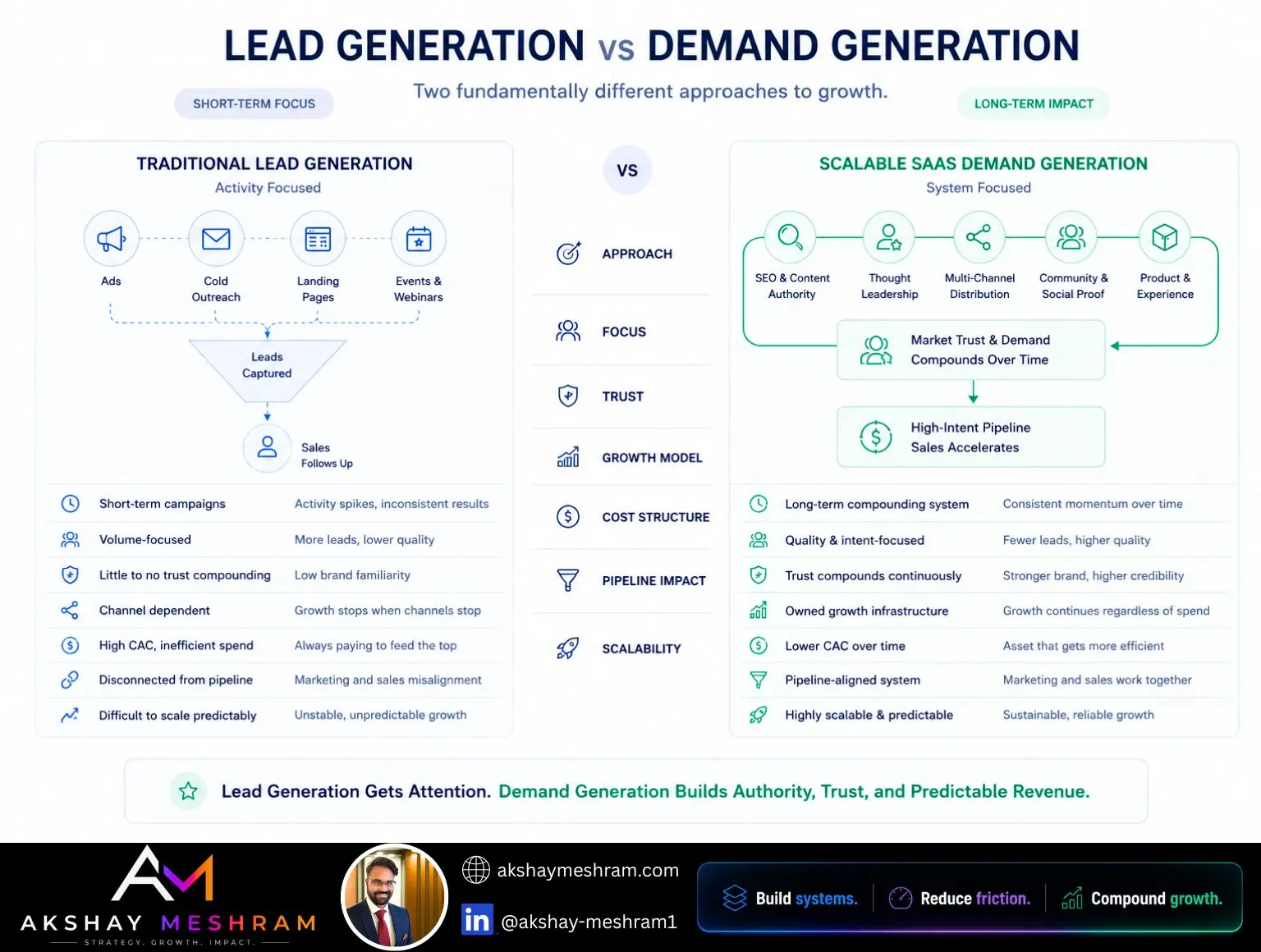
Most SaaS Companies Confuse Activity With Demand Generation
Modern SaaS marketing environments reward visibility.
That creates a dangerous illusion.
A company can appear highly active while generating very little actual market demand.
This happens constantly:
- daily LinkedIn posting with weak positioning
- SEO content with no strategic differentiation
- outbound outreach without buyer education
- webinars without category authority
- paid acquisition without narrative clarity
The issue is not execution volume.
The issue is strategic coherence.
Demand generation becomes scalable when:
- positioning reinforces distribution
- distribution reinforces trust
- trust reinforces conversion
- conversion reinforces pipeline quality
- pipeline quality reinforces revenue efficiency
That is where compounding starts.
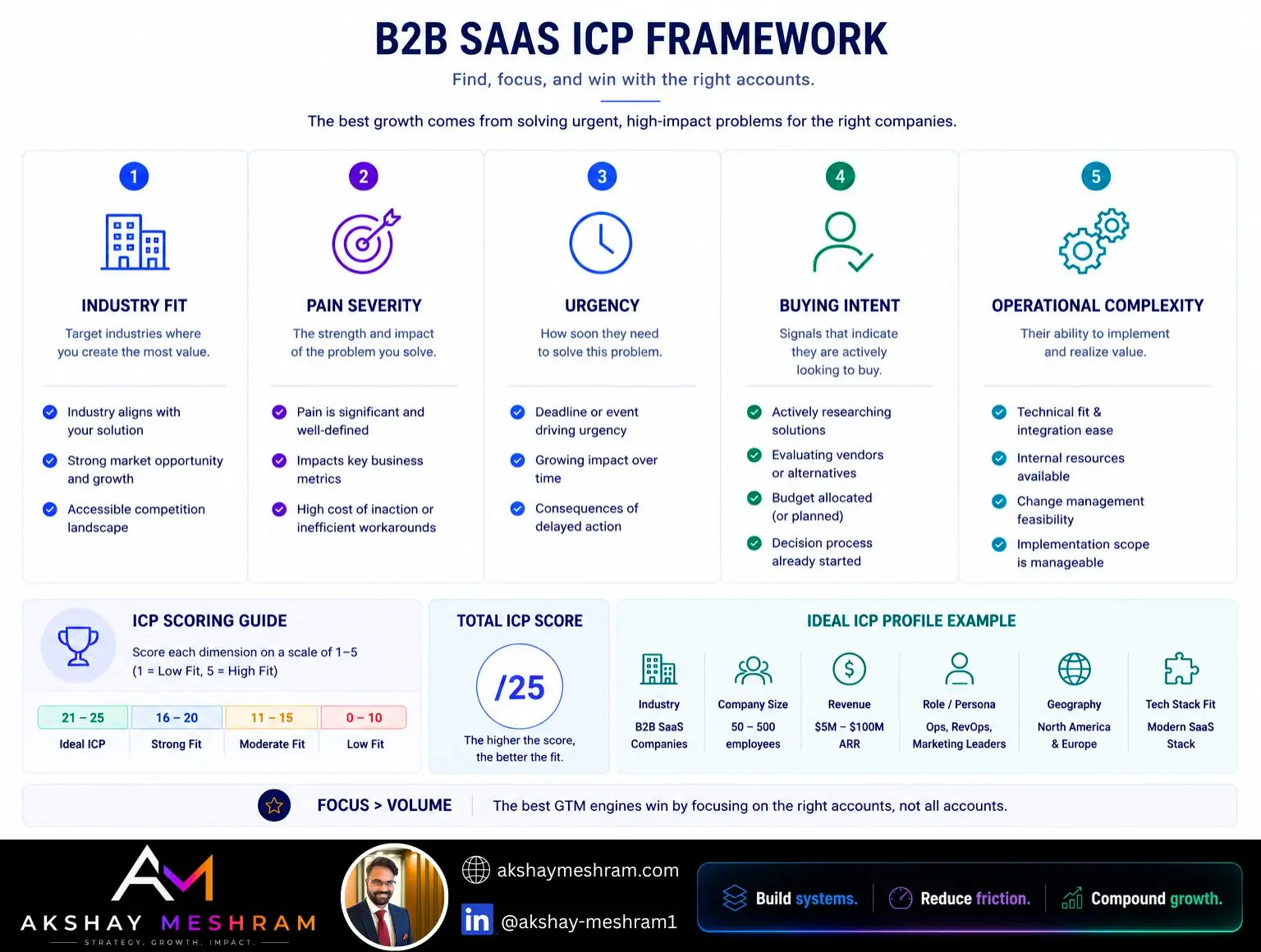
I Would Start With Market Clarity Before Acquisition
Most SaaS companies begin with channels.
I would begin with market interpretation.
Because acquisition efficiency is heavily influenced by:
- ICP precision
- positioning clarity
- category understanding
- buyer psychology
- narrative alignment
Growth systems become expensive when companies attempt to scale ambiguity.
That is one of the most common mistakes in SaaS GTM execution.
Before investing aggressively into acquisition, I would want clear answers to:
- Who specifically experiences the highest pain?
- What operational problem is urgent enough to justify change?
- What existing alternatives are buyers comparing against?
- Why would the market trust this company specifically?
- What category narrative are we entering?
Without these answers, even strong marketing execution produces weak strategic outcomes.
Defining the ICP With Precision Changes Everything
Many SaaS companies define their ICP too broadly.
Broad ICPs usually create:
- weak messaging
- low conversion efficiency
- unclear positioning
- expensive acquisition
- diluted trust
Sophisticated SaaS growth systems narrow aggressively before they scale outward.
Because specificity improves:
- relevance
- resonance
- conversion quality
- sales efficiency
- content effectiveness
A narrow ICP often produces stronger pipeline economics than broad acquisition reach.
This is one reason early-stage SaaS companies frequently struggle with demand generation despite heavy activity.
They are speaking to everyone.
Markets rarely trust vague positioning.
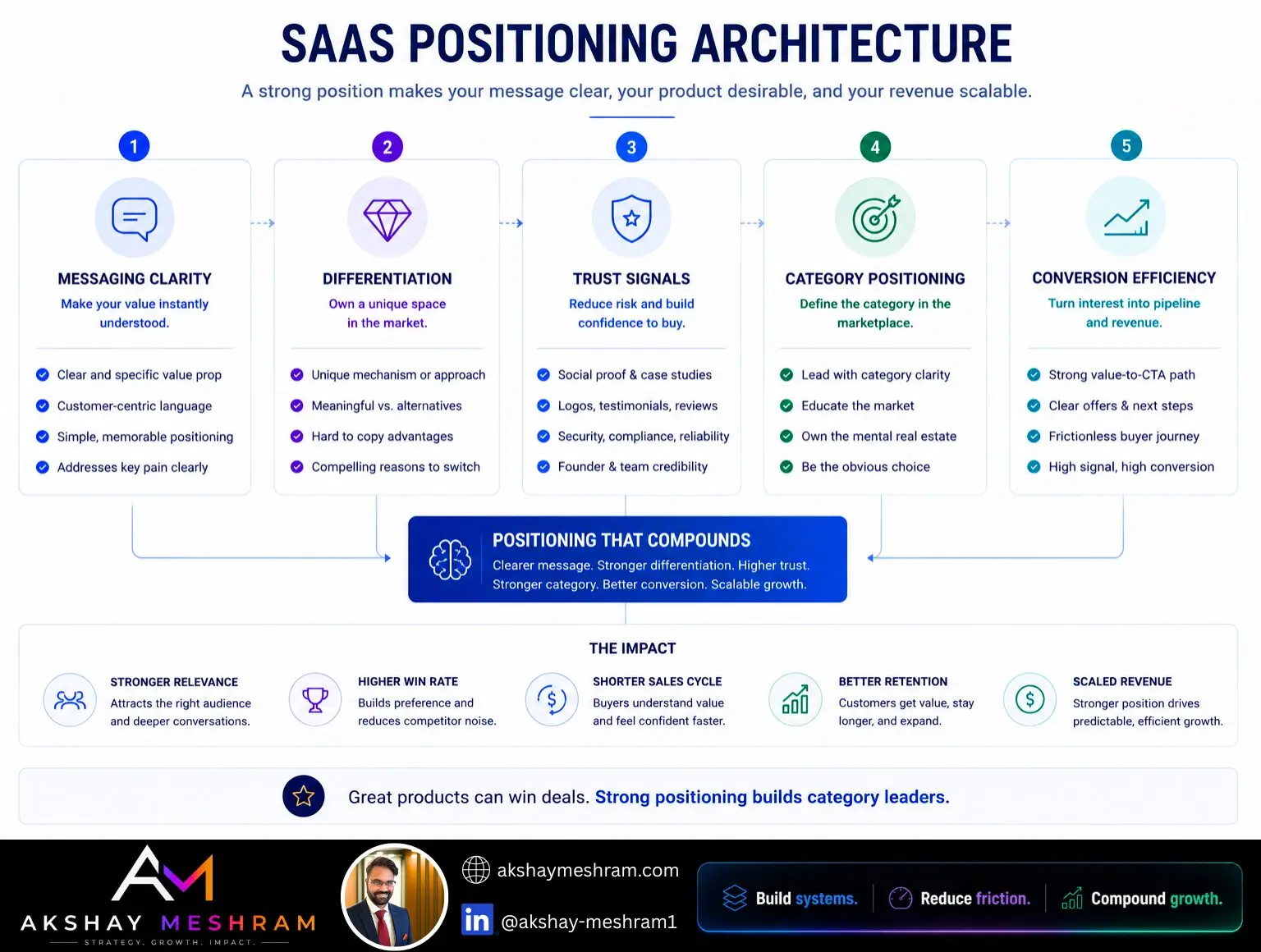
Positioning Determines Conversion Efficiency
Positioning is not branding decoration.
It directly affects:
- CAC efficiency
- conversion velocity
- outbound performance
- content performance
- SEO effectiveness
- pipeline quality
Strong positioning reduces cognitive friction.
Weak positioning increases explanation costs.
Modern B2B buyers increasingly self-educate before speaking with sales.
If a company cannot quickly communicate:
- who it serves
- why it matters
- what operational problem it solves
- why its perspective is differentiated
then acquisition costs usually rise over time.
Positioning clarity compounds distribution efficiency.
Weak Positioning Creates Expensive Acquisition
One of the least discussed realities in SaaS growth is this:
Many acquisition problems are actually positioning failures disguised as channel failures.
Teams often blame:
- SEO
- paid ads
- outbound
- content marketing
when the deeper issue is:
- weak market narrative
- unclear differentiation
- low trust density
- generic messaging
Sophisticated operators understand that distribution amplifies positioning.
It does not replace it.
This becomes especially important in saturated SaaS categories where feature parity is increasingly common.
In those environments:
- trust
- credibility
- clarity
- strategic narrative
often become stronger growth advantages than product functionality alone.
I Would Build Demand Generation Around Trust Accumulation
Trust compounds more slowly than campaigns.
But it compounds far longer.
This is one of the biggest differences between sustainable SaaS growth systems and temporary acquisition spikes.
Sophisticated demand generation increasingly depends on:
- market credibility
- educational positioning
- category familiarity
- strategic consistency
- perceived expertise
Modern buyers are significantly more skeptical than they were a decade ago.
That skepticism changes acquisition dynamics.
Companies are no longer competing only for attention.
They are competing for credibility.
Modern B2B Buyers Self-Educate Before They Convert
The modern SaaS buyer journey is increasingly non-linear.
Buyers consume:
- search results
- founder content
- peer opinions
- product comparisons
- educational material
- analyst commentary
- social proof
long before engaging sales.
Research from HubSpot continues to show how self-directed buyer behavior is reshaping modern B2B acquisition journeys, particularly as buyers increasingly prefer independent research before engaging with sales teams.
That changes what demand generation must accomplish.
The objective is no longer merely:
- generating clicks
- generating leads
The objective is:
- reducing uncertainty
- increasing trust
- reinforcing authority
- creating category familiarity
Demand generation increasingly functions as market education infrastructure.
Content Should Reduce Buyer Uncertainty
Many SaaS content strategies fail because they optimize for publishing frequency instead of decision confidence.
Buyers do not trust companies simply because they produce content.
Trust develops when content demonstrates:
- judgment
- nuance
- realism
- market understanding
- operational awareness
Surface-level content rarely builds authority.
It creates temporary visibility at best.
The strongest SaaS content strategies behave more like:
- strategic advisory publishing
- category education systems
- operator insight distribution
This is why many founder-led SaaS brands outperform larger competitors in perceived authority despite having smaller marketing budgets.
Authority Compounds Faster Than Short-Term Campaigns
Short-term campaigns can generate spikes.
Authority generates compounding market familiarity.
Because sophisticated B2B buying decisions involve:
- perceived risk
- implementation confidence
- operational trust
- strategic credibility
Buyers want evidence that a company understands:
- their environment
- their constraints
- their economics
- their operational realities
Authority content helps reduce perceived implementation risk.
That directly influences:
- conversion behavior
- sales velocity
- pipeline quality
- retention expectations
Sophisticated demand generation therefore becomes inseparable from trust architecture.
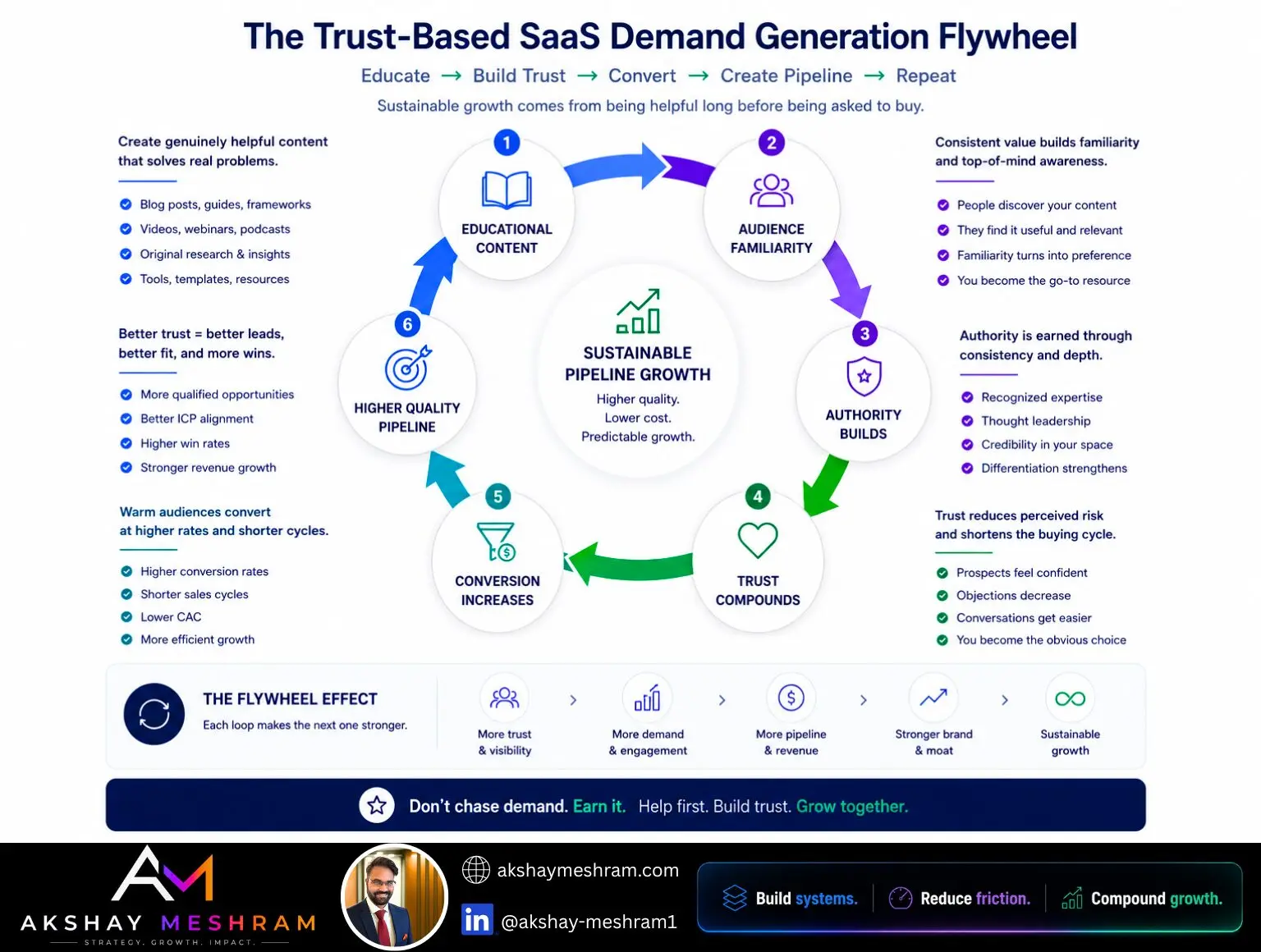
I Would Prioritize Acquisition Channels Differently Than Most SaaS Teams
Most SaaS teams over-prioritize channels.
Sophisticated operators prioritize:
- sequencing
- timing
- readiness
- positioning maturity
The order matters.
Premature scaling creates expensive inefficiency.
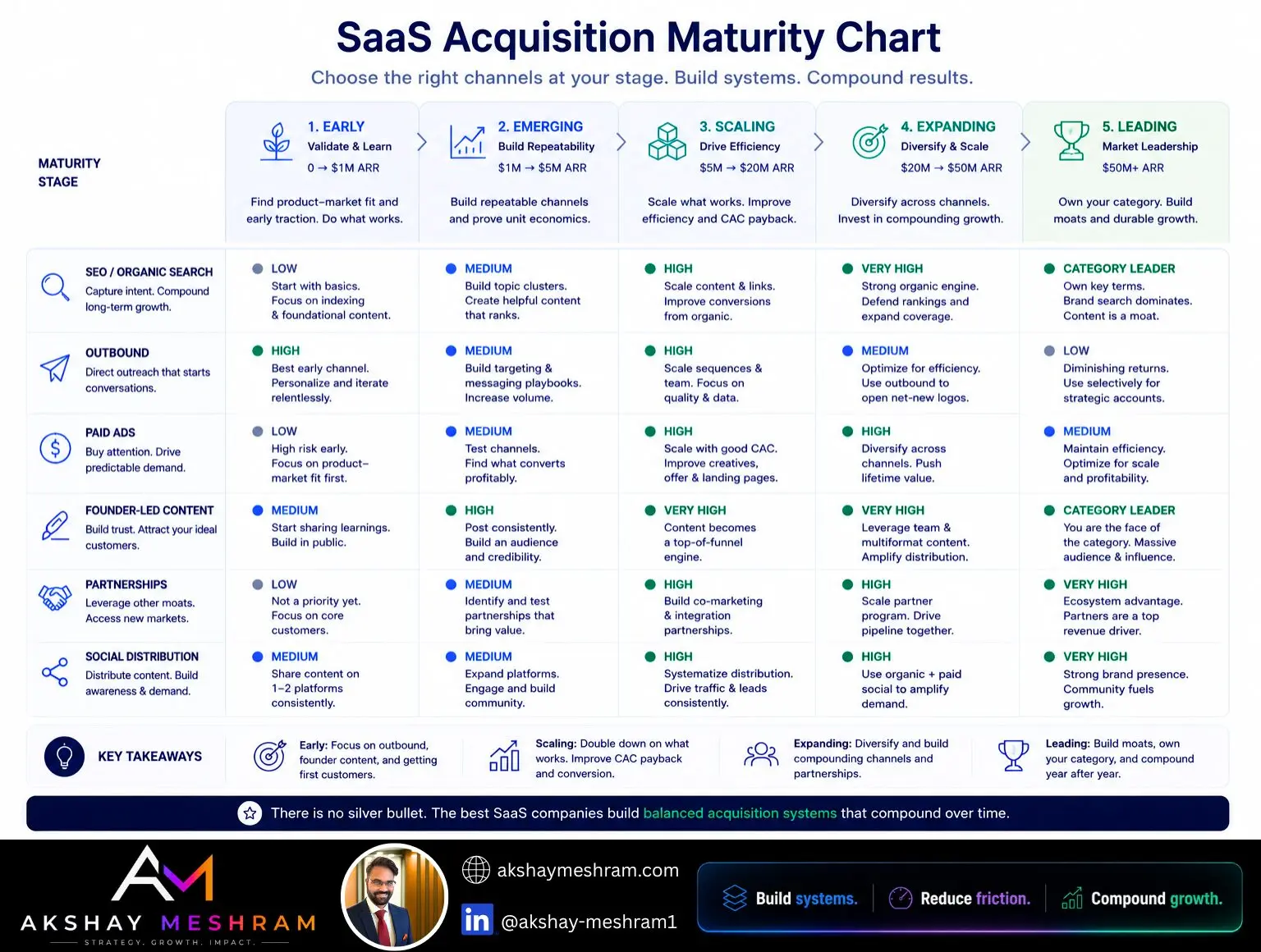
SEO Should Be Treated as Strategic Infrastructure
Google itself emphasizes the importance of helpful, people-first content and strong expertise signals in long-term search visibility strategies, as documented in Google Search Central.
SEO is often misunderstood as a traffic channel.
In sophisticated SaaS environments, SEO functions more like:
- trust infrastructure
- demand capture architecture
- category visibility
- authority reinforcement
High-quality SEO compounds because it aligns:
- discovery
- education
- positioning
- conversion intent
The strongest SaaS SEO systems do not merely target keywords.
They build:
- topical authority
- semantic depth
- category association
- expertise signals
That matters enormously for long-term sustainability.
Platforms like Ahrefs have also extensively documented how topical authority and semantic relevance influence sustainable SEO performance.
The strongest B2B SaaS demand generation systems behave more like growth infrastructure than campaign execution.
LinkedIn Should Amplify Market Positioning, Not Vanity Metrics
A large percentage of SaaS LinkedIn content is optimized for engagement mechanics rather than strategic authority.
That creates shallow visibility.
Sophisticated operators use LinkedIn differently.
They use it to:
- reinforce positioning
- distribute insights
- educate markets
- increase familiarity
- shape perception
The objective is not merely impressions.
The objective is becoming cognitively associated with expertise in a specific category.
Over time, this creates:
- trust acceleration
- inbound familiarity
- audience retention
- brand recall
Which materially improves demand generation efficiency.
Outbound Works Best When Market Education Already Exists
Outbound becomes dramatically more effective when buyers already recognize:
- the problem
- the category
- the company narrative
Cold outreach rarely compensates for weak market positioning.
The strongest outbound systems are usually supported by broader trust infrastructure.
Not isolated sequences.
Paid Acquisition Without Positioning Usually Burns Capital
Paid acquisition scales amplification.
It does not fix unclear positioning.
Without:
- differentiated positioning
- strong conversion systems
- trust reinforcement
- clear ICP alignment
paid acquisition frequently becomes financially unstable.
Sophisticated operators typically delay aggressive paid scaling until:
- conversion efficiency stabilizes
- messaging resonates consistently
- pipeline quality is validated
- retention indicators are healthy
That sequencing discipline matters.
Contrarian Insight
Premature paid scaling often creates the illusion of traction while quietly damaging acquisition economics underneath.
This is especially dangerous in SaaS because early CAC inefficiency compounds operational pressure later.
I Would Build a Distribution System Instead of Publishing Random Content
Most SaaS content fails because distribution was never engineered intentionally.
Publishing alone rarely compounds.
Distribution creates familiarity.
Familiarity creates trust.
Trust improves conversion probability.
That sequence matters.
Sophisticated SaaS companies increasingly treat distribution as infrastructure rather than promotion.
Content Without Distribution Rarely Compounds
Many companies over-invest in content production while under-investing in distribution systems.
This creates:
- weak visibility
- inconsistent reach
- poor authority accumulation
Strong content strategies require:
- repetition
- amplification
- redistribution
- format adaptation
- platform alignment
Compounding visibility rarely happens accidentally.
Semrush has similarly highlighted the growing importance of multi-channel content distribution and search visibility compounding.
Distribution Creates Market Familiarity
Repeated exposure matters because B2B buying decisions are heavily influenced by familiarity and perceived credibility.
Buyers often prefer:
- recognizable expertise
- familiar operators
- trusted educational sources
before they prefer products themselves.
This is one reason educational authority compounds commercially over time.
Repetition Builds Trust Before Conversion
Sophisticated operators understand that:
- trust rarely forms during a single interaction
- conversion usually follows accumulated familiarity
Repeated strategic exposure reduces:
- uncertainty
- skepticism
- perceived implementation risk
This is why demand generation systems should be designed for:
- consistency
- narrative cohesion
- long-term visibility
rather than short-term campaign bursts.
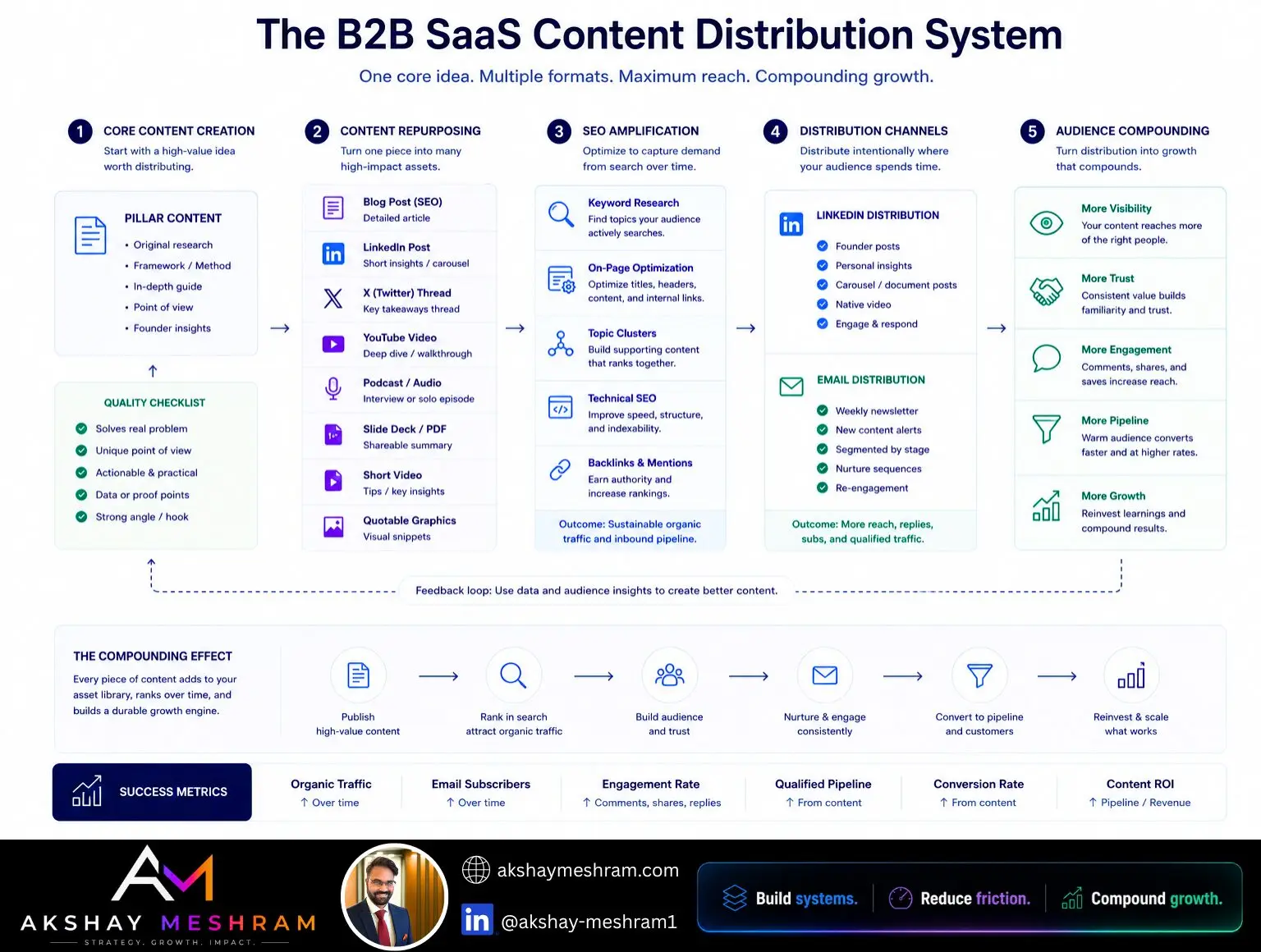
Framework: The Demand Distribution Flywheel
The distribution system I would build would likely function as:
- Deep strategic content
- Multi-format distribution
- Search visibility
- Social amplification
- Founder-led commentary
- Audience familiarity
- Increased trust
- Higher conversion intent
- Better pipeline quality
- Stronger authority signals
Then the cycle compounds.
I Would Design the Website Around Conversion Psychology
Many SaaS websites create unnecessary cognitive friction.
They over-explain features while under-communicating:
- relevance
- differentiation
- trust
- operational outcomes
Sophisticated conversion systems reduce buyer uncertainty quickly.
Most SaaS Websites Create Cognitive Friction
Common issues include:
- vague headlines
- category jargon
- unclear differentiation
- overwhelming navigation
- weak trust signals
Buyers should immediately understand:
- who the product is for
- what operational problem it solves
- why it matters commercially
- why this company is credible
Clarity improves conversion efficiency.
Confusion increases abandonment.
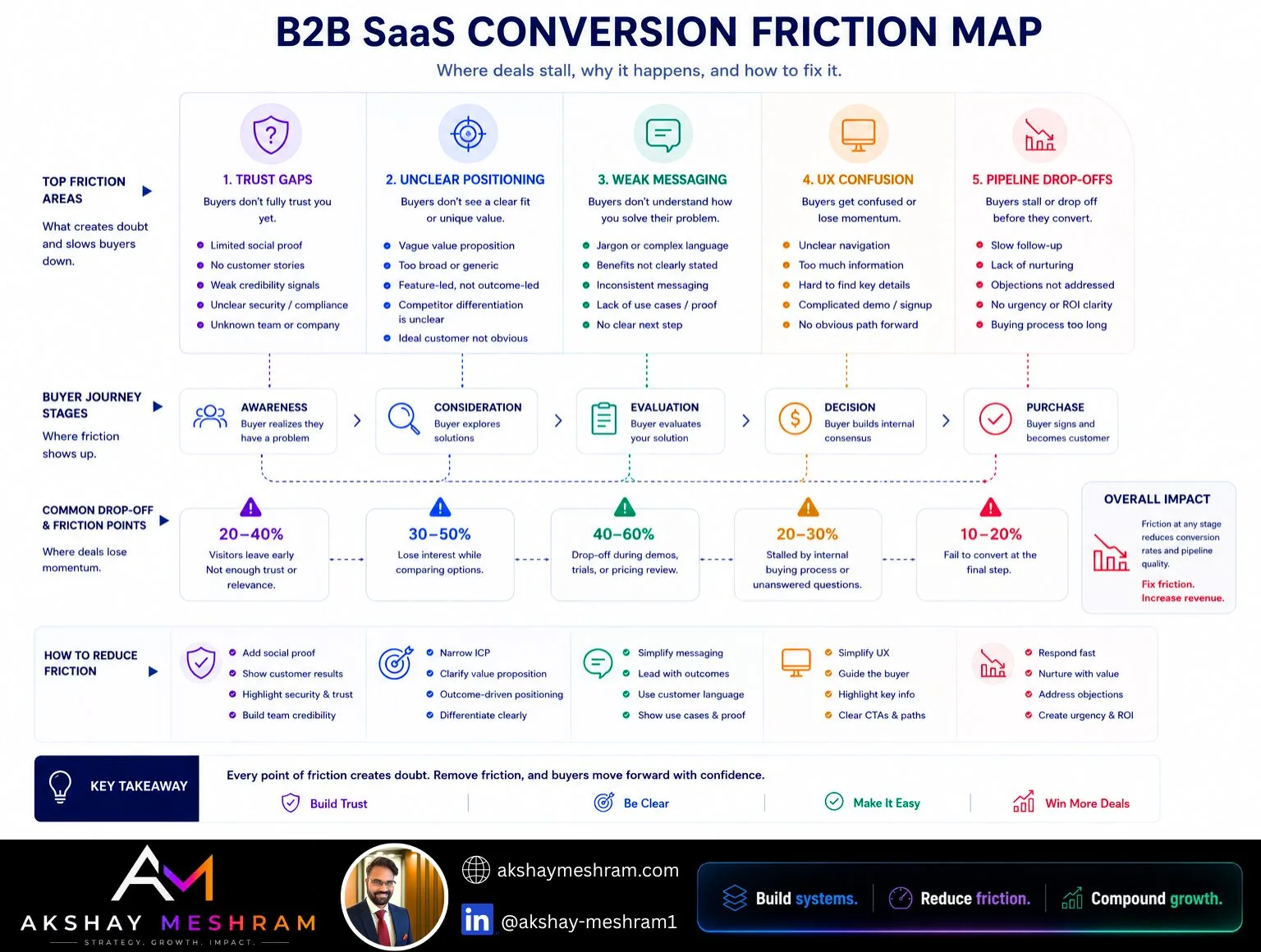
Buyers Need Clarity Before They Need Features
Features matter later.
Strategic clarity matters first.
Most buyers initially evaluate:
- relevance
- trust
- risk
- confidence
- operational fit
before deeply evaluating product capability.
That changes how sophisticated SaaS websites should communicate.
Conversion Rates Improve When Positioning Is Obvious
Strong positioning reduces:
- explanation costs
- onboarding friction
- evaluation confusion
- sales resistance
Which improves:
- demo conversion
- pipeline quality
- sales efficiency
Positioning therefore influences conversion far more than many teams realize.
I Would Build a Pipeline System – Not a Lead Collection Machine
Lead volume alone can be deeply misleading.
Sophisticated SaaS companies increasingly optimize for:
- pipeline quality
- revenue efficiency
- sales velocity
- conversion economics
rather than raw lead counts.
This is a far more commercially mature approach.
Lead Volume Is Often a Vanity Metric
Large lead numbers frequently hide:
- poor qualification
- weak intent
- low conversion rates
- inefficient CAC
The strongest SaaS growth systems optimize for:
- commercially relevant pipeline
- high-intent buyers
- retention potential
- expansion potential
That produces healthier long-term economics.
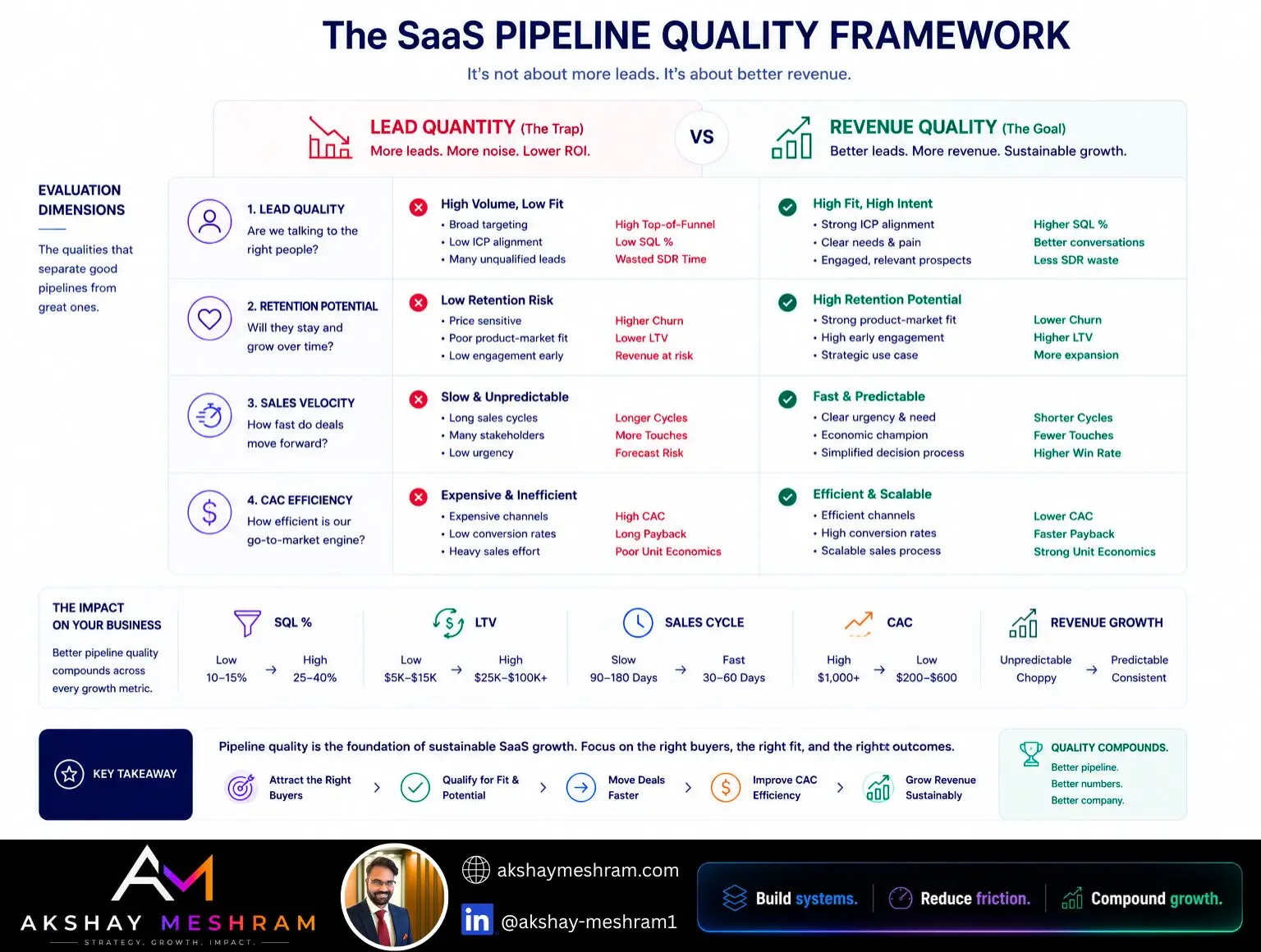
High-Intent Pipeline Matters More Than Top-of-Funnel Scale
A smaller volume of highly aligned buyers often outperforms large quantities of weak-fit traffic.
This becomes especially important in:
- complex sales cycles
- enterprise SaaS
- high-consideration environments
where trust and operational confidence heavily influence purchasing behavior.
Sophisticated SaaS Teams Optimize for Revenue Efficiency
Sophisticated operators increasingly evaluate:
- CAC payback
- pipeline velocity
- retention quality
- expansion revenue
- acquisition sustainability
because growth without operational efficiency eventually becomes fragile.
Demand generation should strengthen business resilience.
Not merely reporting dashboards.
I Would Treat Demand Generation as Organizational Infrastructure
One of the biggest mistakes in SaaS is treating demand generation as isolated marketing execution.
Scalable demand generation is organizational infrastructure.
It requires alignment across:
- positioning
- marketing
- sales
- product
- customer experience
Without alignment, acquisition systems weaken under scale pressure.
Sustainable Growth Requires Cross-Functional Alignment
Marketing can generate demand.
But operational inconsistency can still destroy conversion momentum.
Sophisticated SaaS growth requires:
- message consistency
- onboarding alignment
- sales clarity
- product expectation alignment
Growth systems break when operational trust breaks.
Sales and Marketing Misalignment Slows Pipeline Velocity
Weak alignment often creates:
- inconsistent qualification
- messaging disconnects
- poor lead handling
- buyer confusion
Sophisticated teams reduce friction across the entire buyer journey.
That improves:
- conversion quality
- trust continuity
- revenue efficiency
Acquisition Systems Break When Operations Cannot Support Scale
Scaling acquisition before operational readiness creates instability.
This is one reason sophisticated operators scale deliberately.
Because:
- onboarding quality
- customer success
- implementation experience
- retention capability
directly affect long-term acquisition sustainability.
Growth and operations are inseparable.
Why Most SaaS Growth Systems Stop Compounding
Most growth systems plateau because they rely too heavily on:
- temporary tactics
- channel dependency
- unsustainable CAC
- shallow trust
Eventually the market stops responding efficiently.
That is when underlying strategic weaknesses become visible.
Short-Term Tactics Create Long-Term Instability
Tactical spikes can create misleading momentum.
But without:
- positioning depth
- authority accumulation
- trust infrastructure
- scalable distribution
growth eventually becomes volatile.
Weak Distribution Systems Eventually Plateau
Markets forget inconsistent brands quickly.
Consistency compounds familiarity.
Familiarity compounds trust.
Trust compounds conversion efficiency.
This is why distribution consistency matters more than occasional visibility spikes.
Trust Deficits Become Growth Constraints
As categories mature, trust increasingly becomes:
- a competitive advantage
- a conversion advantage
- a retention advantage
The strongest SaaS demand generation systems therefore behave more like:
- reputation systems
- educational ecosystems
- category authority engines
than traditional campaign structures.
The Demand Generation Engine I Would Build Instead
The system I would build would contain five interconnected layers:
Positioning Layer
Focused on:
- ICP precision
- category clarity
- differentiation
- narrative strength
Trust Layer
Focused on:
- educational authority
- founder visibility
- strategic insights
- expertise reinforcement
Distribution Layer
Focused on:
- SEO
- LinkedIn distribution
- search visibility
- audience familiarity
- content amplification
Conversion Layer
Focused on:
- messaging clarity
- trust signals
- friction reduction
- buyer confidence
Pipeline Optimization Layer
Focused on:
- revenue quality
- qualification
- retention alignment
- CAC efficiency
- scalable economics
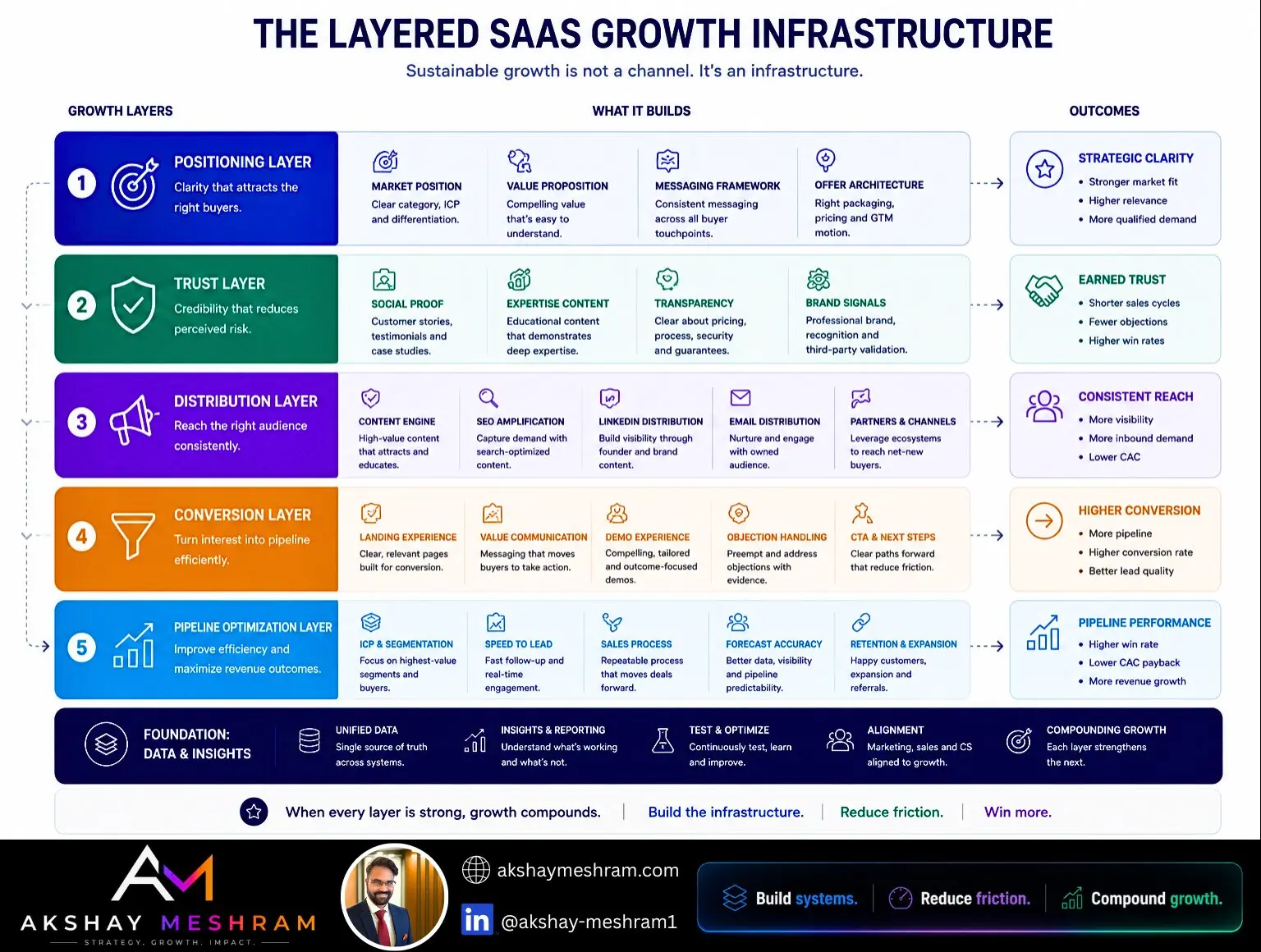
Framework: The Scalable SaaS Demand Generation Stack
The system compounds through:
- Positioning clarity
- Trust accumulation
- Distribution consistency
- Audience familiarity
- Conversion confidence
- Pipeline quality
- Revenue efficiency
- Market authority
- Organic demand acceleration
Then the cycle reinforces itself.
Final Strategic Observation
Most B2B SaaS companies do not fail because growth is impossible.
They fail because their acquisition systems were never strategically integrated.
Sophisticated demand generation is not:
- isolated campaigns
- random content
- channel experimentation
- lead volume obsession
It is:
- positioning architecture
- trust accumulation
- distribution consistency
- conversion design
- operational alignment
The strongest SaaS growth systems eventually become difficult to compete against because they create:
- market familiarity
- intellectual trust
- category association
- compounding visibility
- predictable pipeline behavior
That is what scalable demand generation actually looks like.
Not marketing activity.
But growth infrastructure.
Frequently Asked Questions
What is a scalable demand generation engine?
A scalable demand generation engine is a structured acquisition system designed to consistently generate qualified pipeline through positioning, trust-building, distribution, and conversion optimization rather than isolated campaigns.
Why do most B2B SaaS companies struggle with pipeline generation?
Most struggle because their acquisition systems lack:
- positioning clarity
- trust infrastructure
- distribution consistency
- conversion alignment
- operational sequencing
Many focus on channels before strategic foundations are established.
Which acquisition channel scales best for SaaS?
There is rarely a single best channel universally.
Sophisticated SaaS companies typically combine:
- SEO
- founder-led content
- LinkedIn distribution
- educational authority
- outbound systems
- conversion optimization
into integrated acquisition infrastructure.
How long does SaaS demand generation usually take to compound?
Sustainable demand generation usually compounds gradually because it depends heavily on:
- trust accumulation
- audience familiarity
- positioning reinforcement
- distribution consistency
The strongest systems are typically built over extended periods rather than short campaign cycles.
Why is positioning critical in SaaS demand generation?
Positioning directly affects:
- conversion efficiency
- CAC
- trust perception
- sales velocity
- acquisition sustainability
Weak positioning makes every acquisition channel more expensive.
Durable Growth Is Built Before It Is Seen
If there is one recurring pattern across sophisticated SaaS companies, it is this:
The companies that compound demand most effectively rarely think like marketers first.
They think like system designers.
They understand that sustainable acquisition is built through:
- trust
- clarity
- consistency
- positioning
- operational alignment
Long before scale appears externally.
That is the difference between temporary visibility and durable market authority.
And increasingly, durable authority is what compounds growth.
Sophisticated B2B SaaS demand generation is ultimately about compounding trust and pipeline quality over time.

[…] Sophisticated SaaS growth systems increasingly rely on integrated demand creation ecosystems rather than isolated campaign execution. This is why modern operators invest heavily in scalable demand generation infrastructure. […]
The piece is right that SEO without strategic depth produces low-intent traffic. What we see in practice is that programmatic SEO actually forces the strategic clarity the article calls for, because you can’t build a scalable content system without nailing ICP and positioning first.