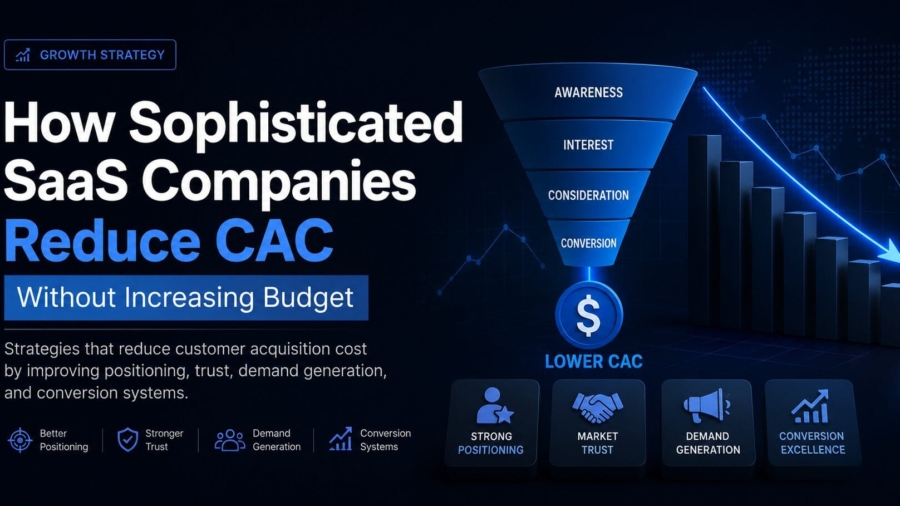
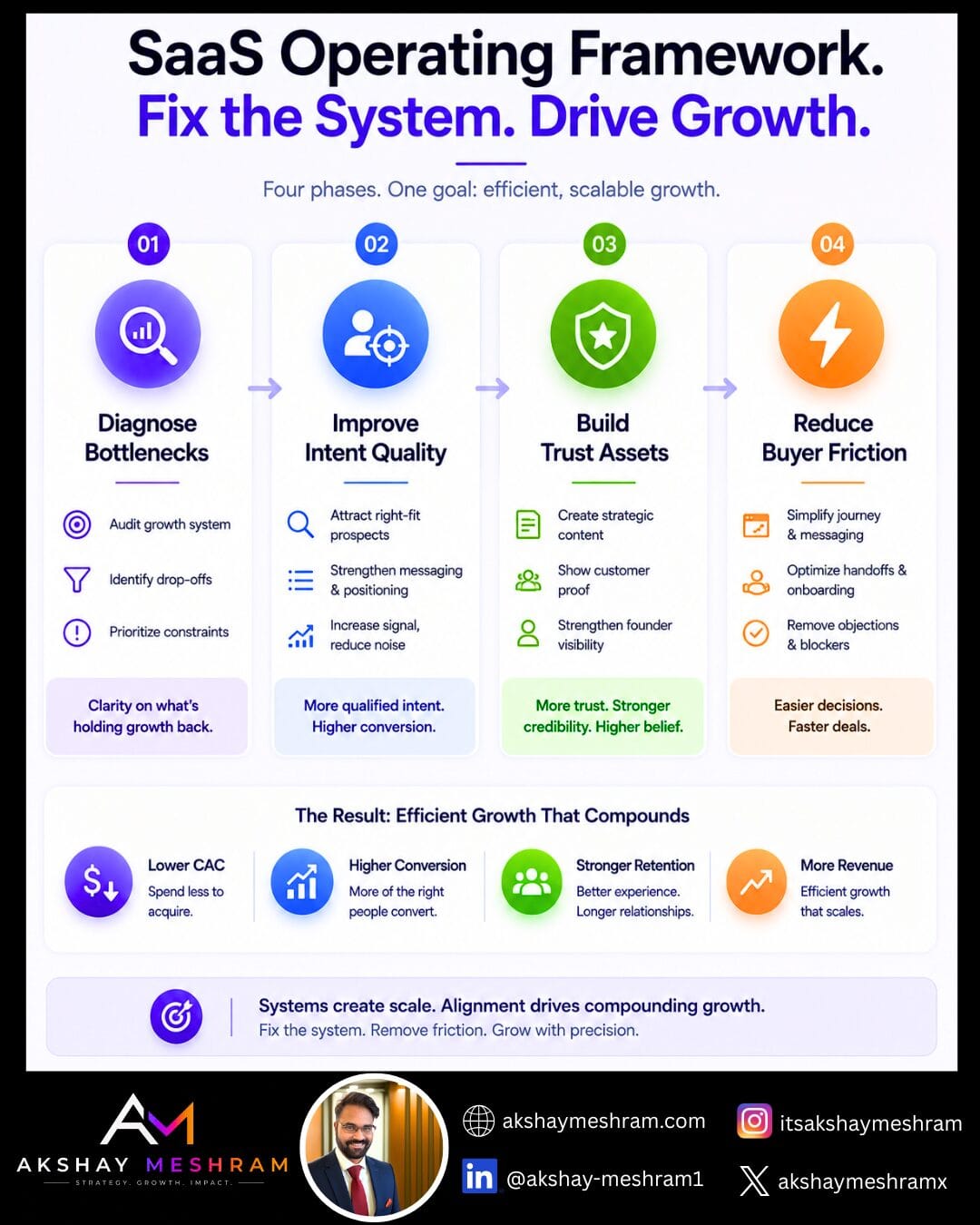
Reduce CAC without increasing budget is now one of the biggest priorities for SaaS companies facing rising acquisition costs, saturated channels, and declining conversion efficiency.
Table of Contents
Customer acquisition cost is often discussed like a tactical marketing metric.
A campaign problem. An ad efficiency problem. A targeting problem.
In practice, sophisticated SaaS operators understand something far more important:
CAC is usually a downstream reflection of deeper structural realities inside the business.
When acquisition costs rise consistently, the root cause is rarely isolated to paid channels alone. More often, it is the cumulative effect of weak positioning, low market trust, poor demand architecture, conversion friction, fragmented GTM alignment, or inefficient onboarding experiences.
This distinction matters because it changes how companies respond.
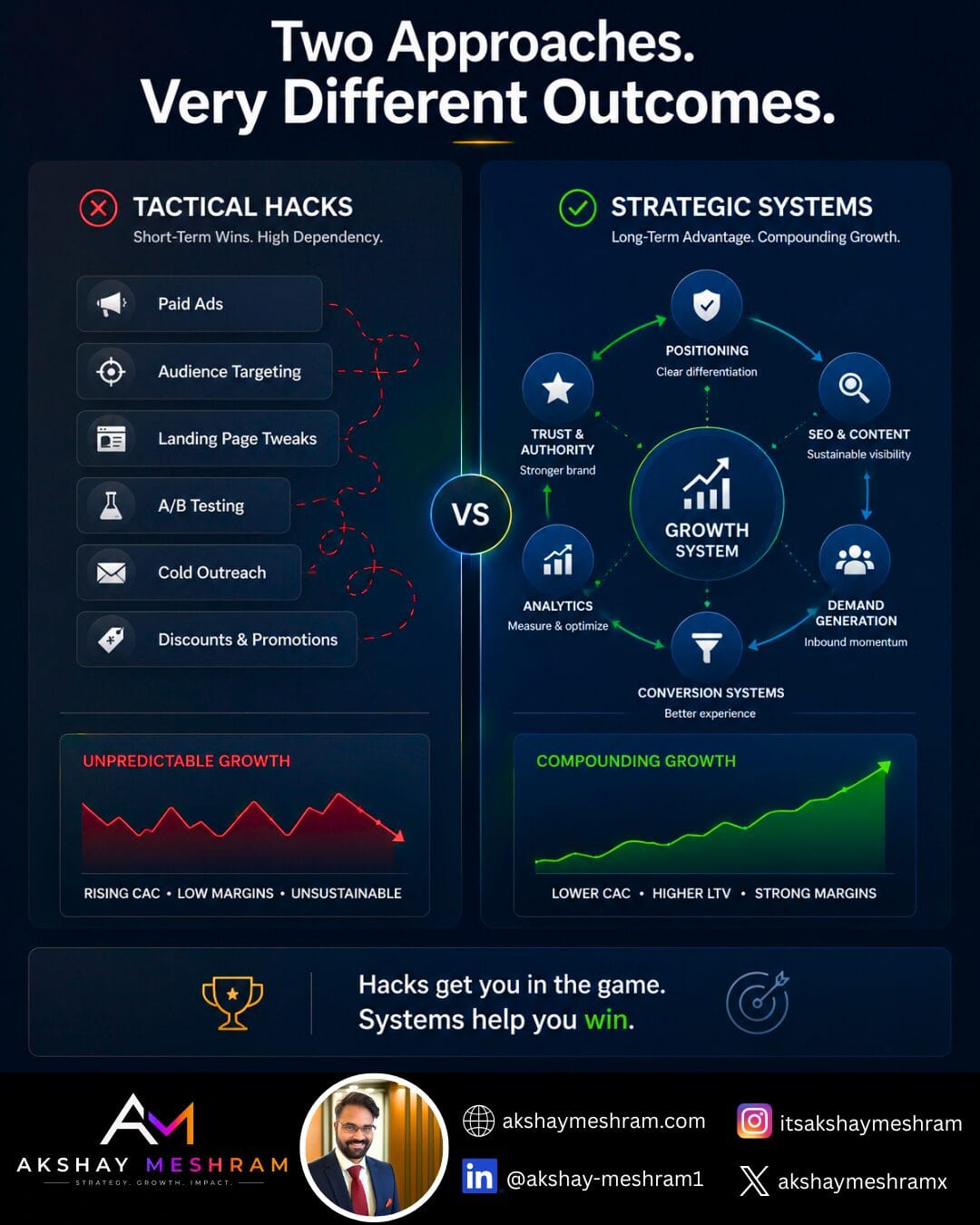
Average teams try to lower CAC by optimizing campaigns.
Sophisticated teams redesign the acquisition system itself.
That difference is what separates temporary efficiency gains from durable acquisition economics.
Most CAC Advice Is Operationally Shallow
The majority of CAC advice online follows the same predictable pattern:
reduce CPCs
improve ad targeting
optimize landing pages
lower CPMs
test more creatives
increase ROAS
None of these are inherently wrong. Some are necessary.
But most of them operate downstream from the actual drivers of acquisition efficiency.
This is why many SaaS companies experience a frustrating cycle:
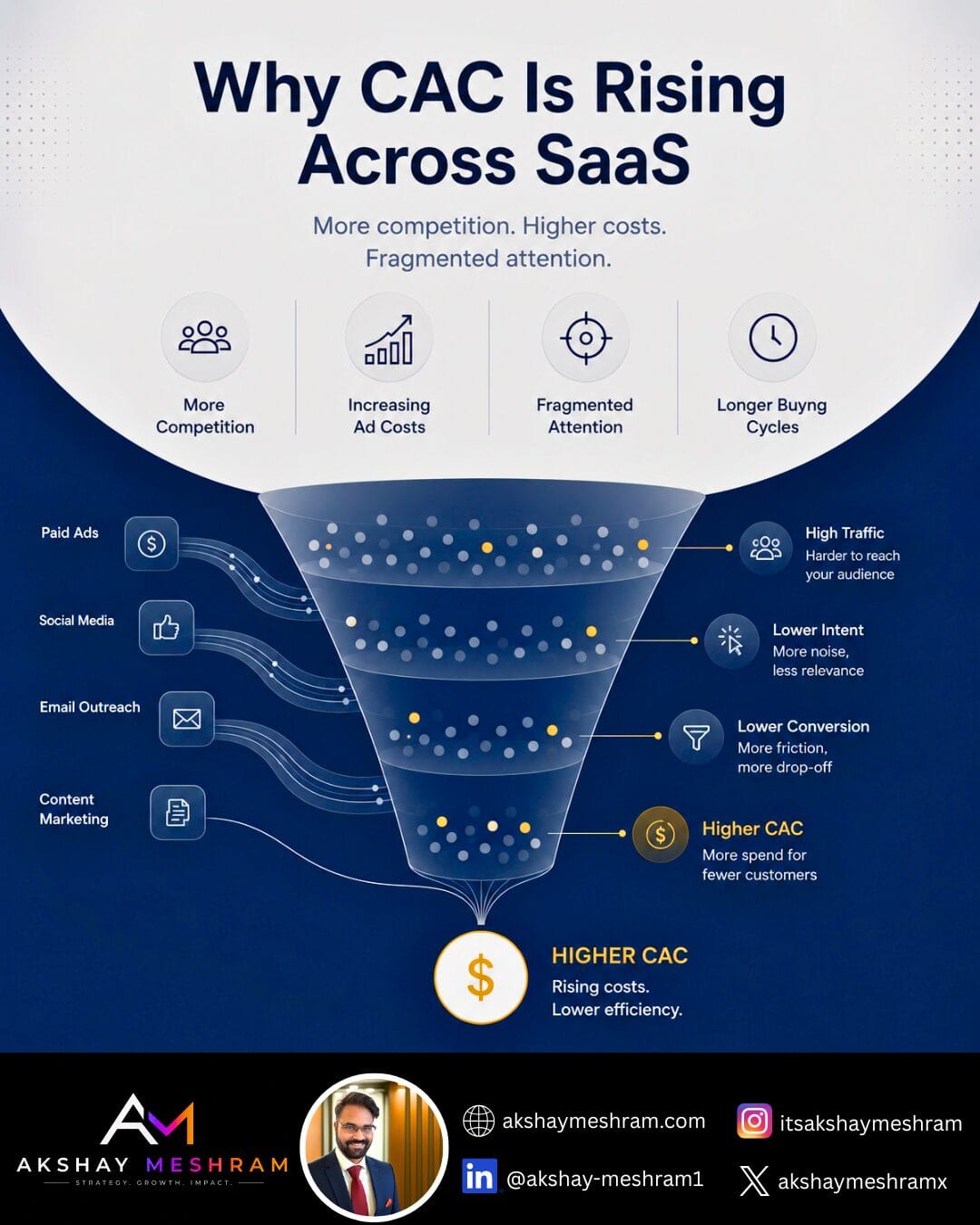
acquisition costs rise
paid channels become less efficient
conversion rates weaken
sales cycles lengthen
leadership increases spend
CAC worsens further
The company responds tactically to what is fundamentally a structural problem.
Sophisticated operators view CAC differently.
They understand that acquisition efficiency is not merely a media-buying outcome. It is the cumulative result of how effectively the business:
earns trust
communicates value
creates demand
qualifies intent
reduces friction
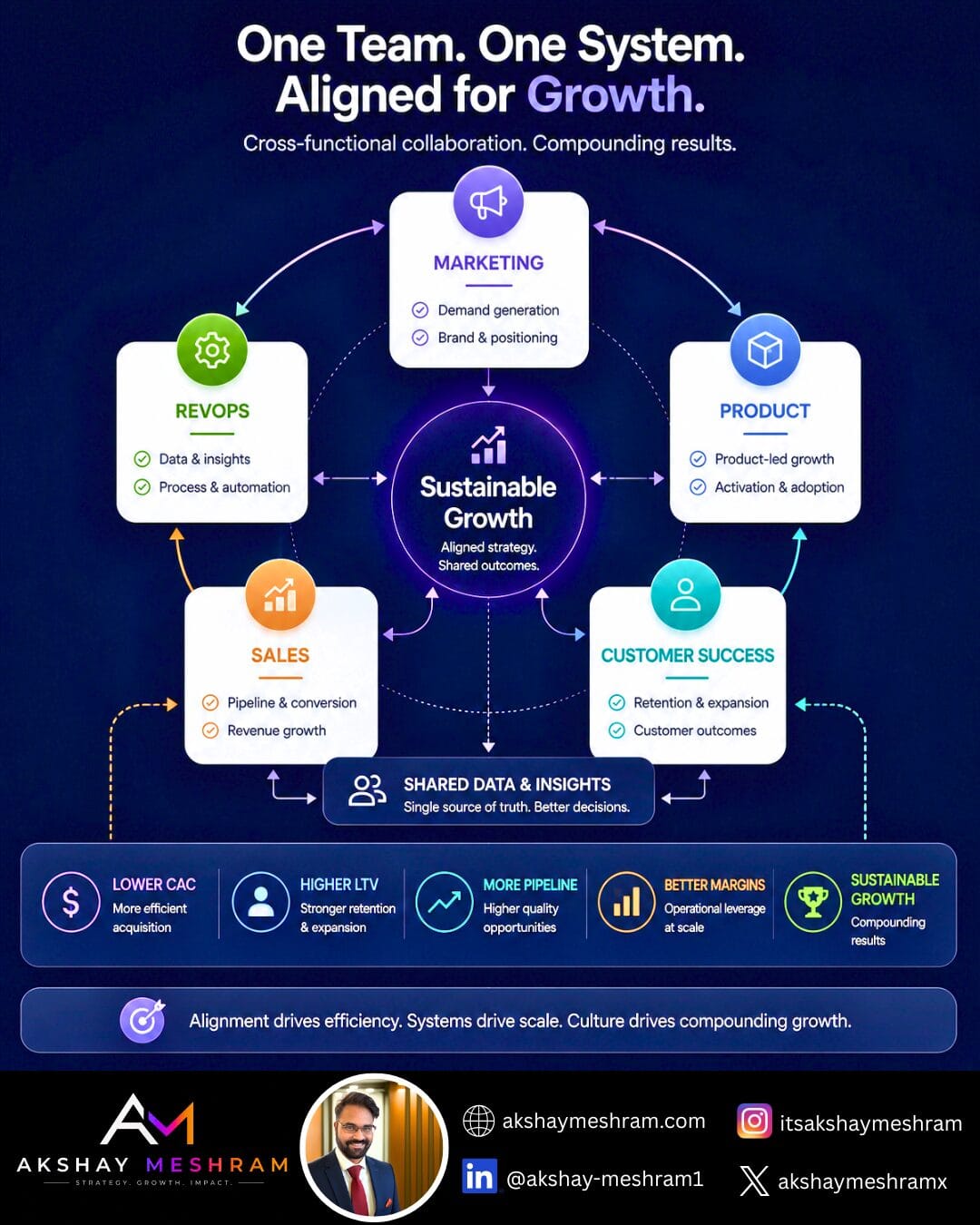
aligns teams
compounds authority
improves retention
builds preference over time
That broader perspective changes where leverage comes from.
Why CAC Is Rising Across SaaS
Rising CAC is not isolated to a handful of companies. It reflects broader structural changes across modern B2B and SaaS markets.
Several dynamics are contributing simultaneously.
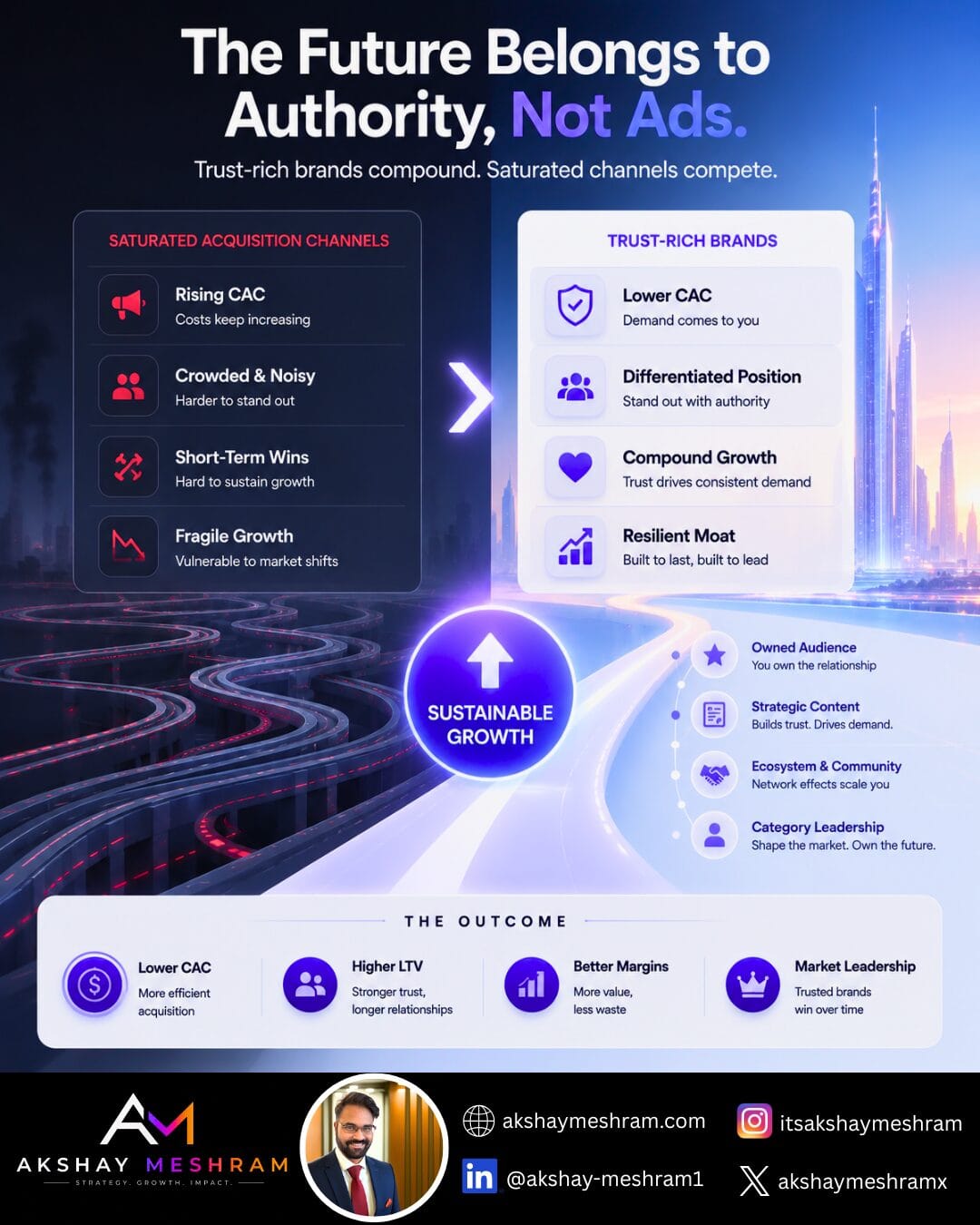
Paid channels are increasingly saturated
As more companies compete aggressively for the same buyer attention, auction-based platforms naturally become more expensive.
This has been consistently discussed across performance marketing research and industry analysis from HubSpot and Semrush.
In crowded categories, incremental spend often produces diminishing efficiency.
Buyers are more skeptical than before
Modern SaaS buyers have become highly resistant to:
generic positioning
inflated claims
feature parity messaging
aggressive outbound
shallow content marketing
This increases the amount of trust required before conversion happens.
In effect, skepticism becomes an acquisition tax.
Companies with weak authority or low credibility pay substantially more to overcome buyer hesitation.
Why Most Companies Treat CAC as a Channel Problem Instead of a Systems Problem
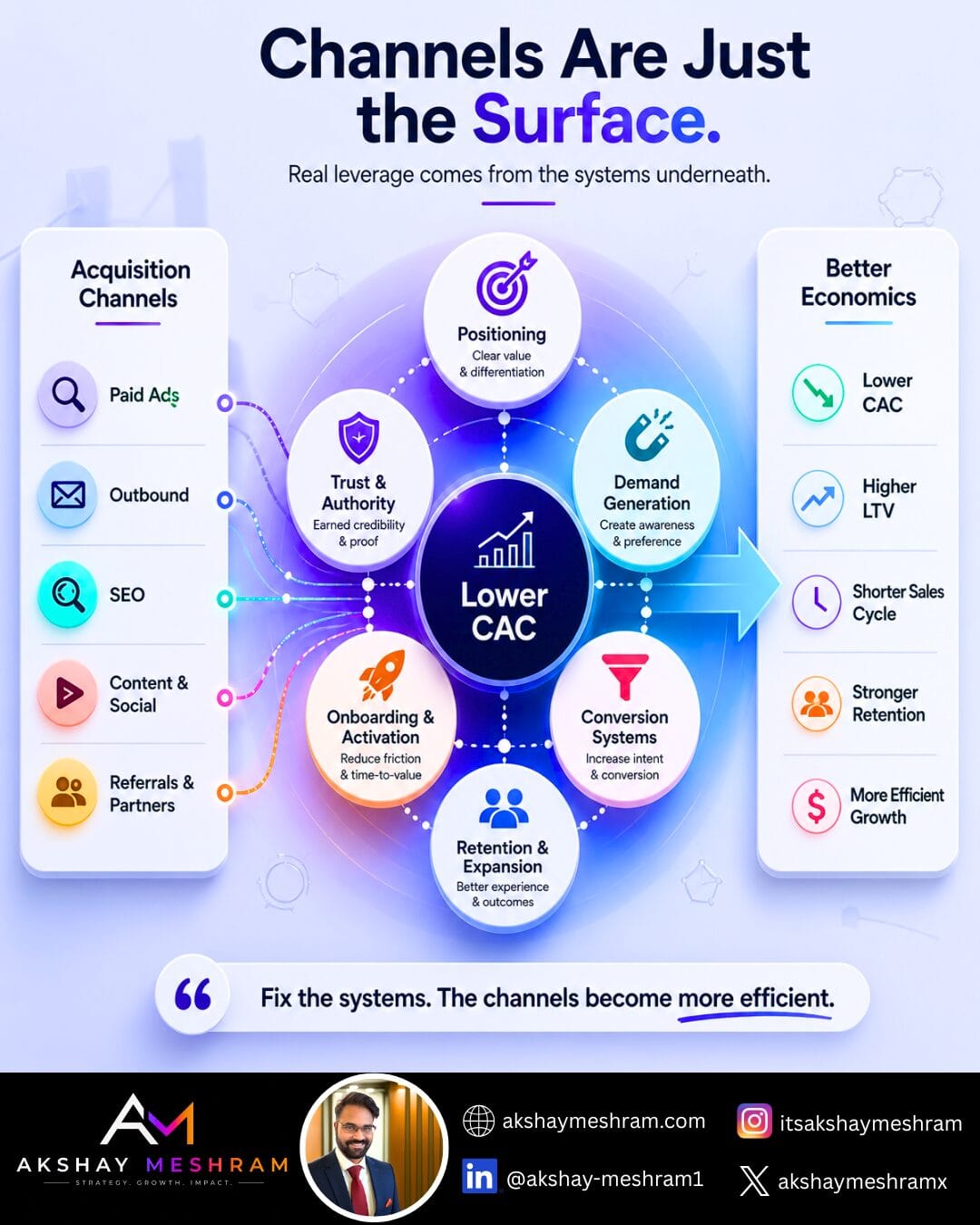
Most teams view acquisition channels as the primary driver of CAC.
Sophisticated teams understand that channels often expose underlying system weaknesses.
For example:
expensive paid acquisition may actually indicate weak positioning
poor conversion rates may indicate audience misalignment
low demo conversion may reflect trust deficits
long sales cycles may signal unclear category understanding
Channels amplify what already exists.
If trust is weak, paid media becomes expensive.
If differentiation is unclear, conversion efficiency declines.
If intent quality is poor, CAC rises even with strong media execution.
This is why two companies can spend similar amounts in the same acquisition channels yet produce radically different CAC outcomes.
The difference is usually structural.
Sophisticated SaaS Companies Think About CAC Differently
High-performing SaaS operators rarely optimize for “cheap acquisition.”
They optimize for acquisition efficiency.
Cheap leads are not necessarily efficient leads.
A low-cost channel that generates:
low retention
poor expansion revenue
weak onboarding
high churn
poor fit customers
…can quietly become one of the most expensive growth motions in the business.
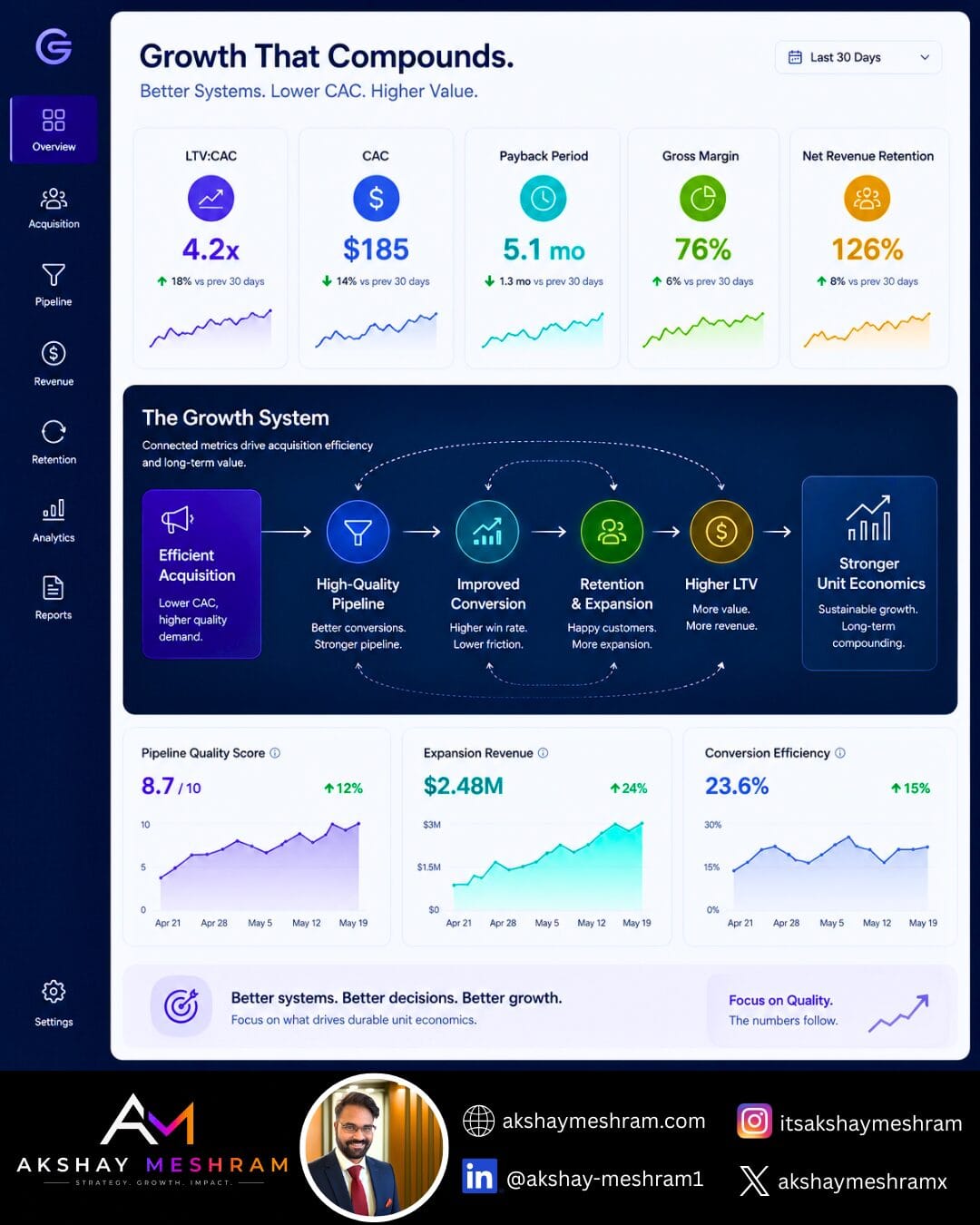
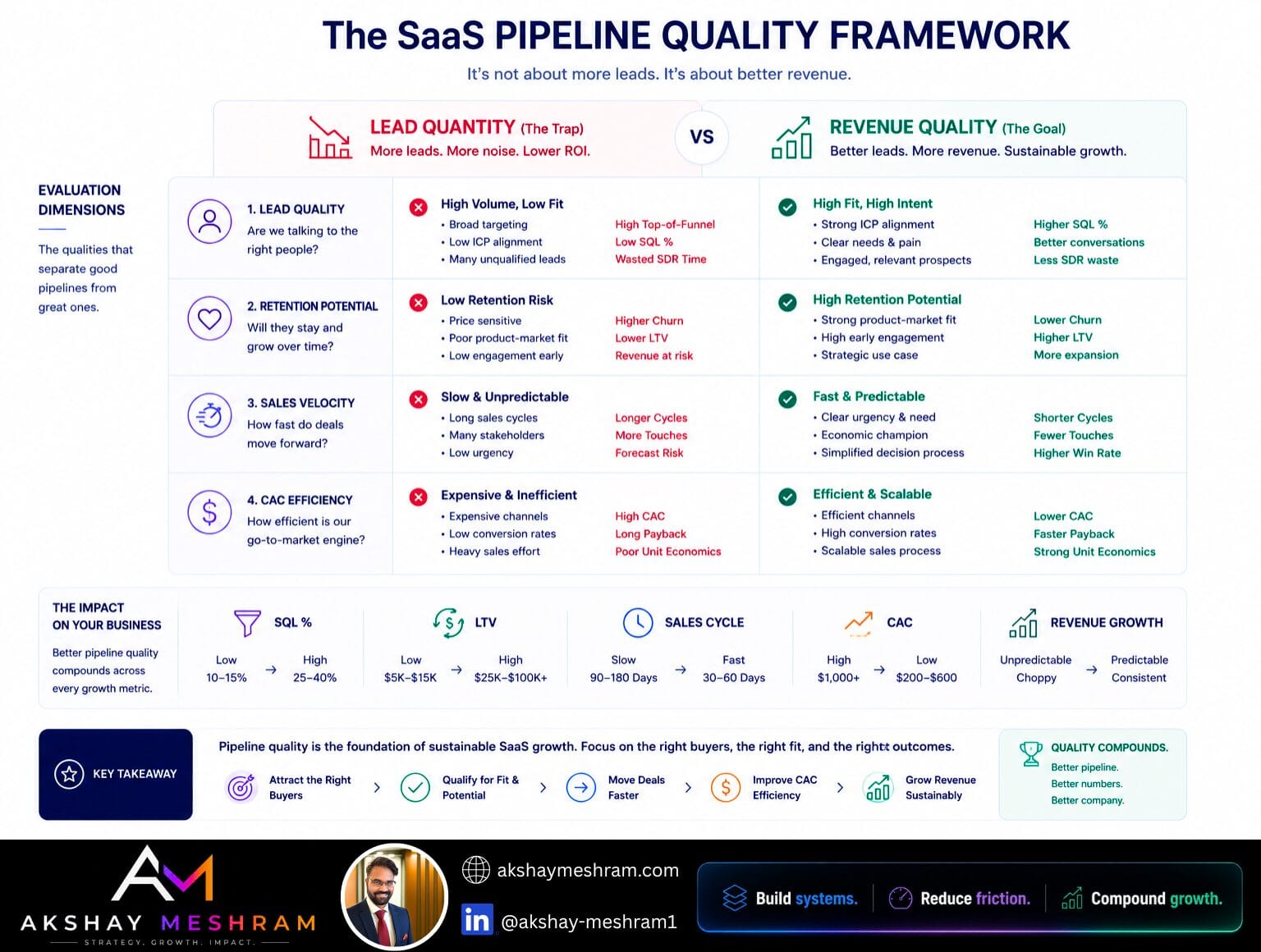
Sophisticated teams evaluate CAC within a broader revenue efficiency framework.
They examine:
LTV:CAC ratios
payback periods
retention curves
expansion revenue
pipeline quality
sales velocity
activation rates
conversion depth
This creates a more mature understanding of acquisition economics.
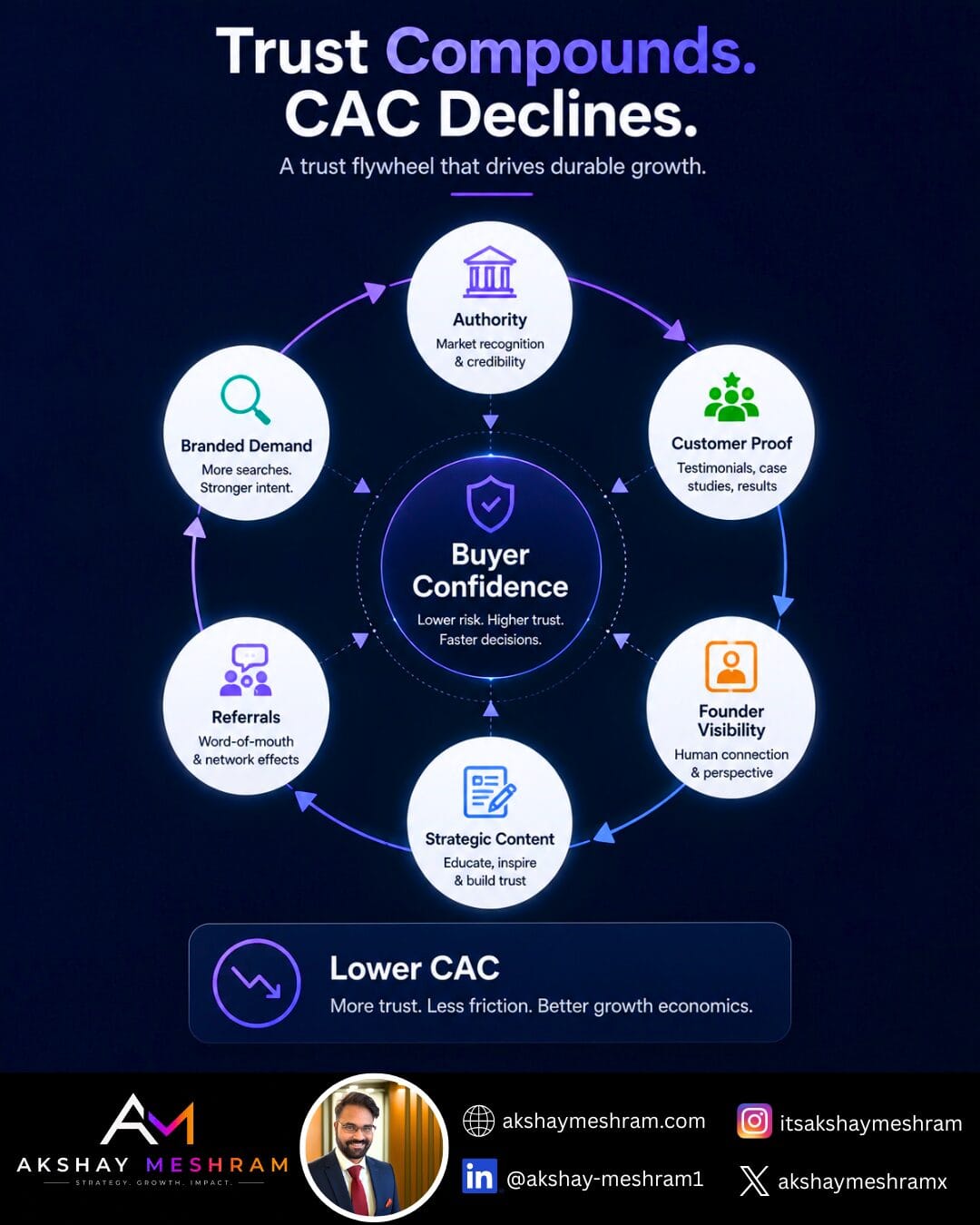
Trust Lowers CAC Structurally
One of the most overlooked acquisition advantages in SaaS is trust.
Trust reduces:
conversion resistance
buyer uncertainty
sales friction
onboarding hesitation
perceived risk
Over time, this changes acquisition economics dramatically.
Companies with strong market trust often experience:
higher branded search volume
stronger referral loops
shorter sales cycles
higher demo conversion rates
lower outbound dependence
better inbound conversion efficiency
Trust compresses decision-making friction.
When buyers already perceive a company as credible:
less persuasion is required
fewer objections emerge
more intent arrives pre-qualified
That directly influences CAC.
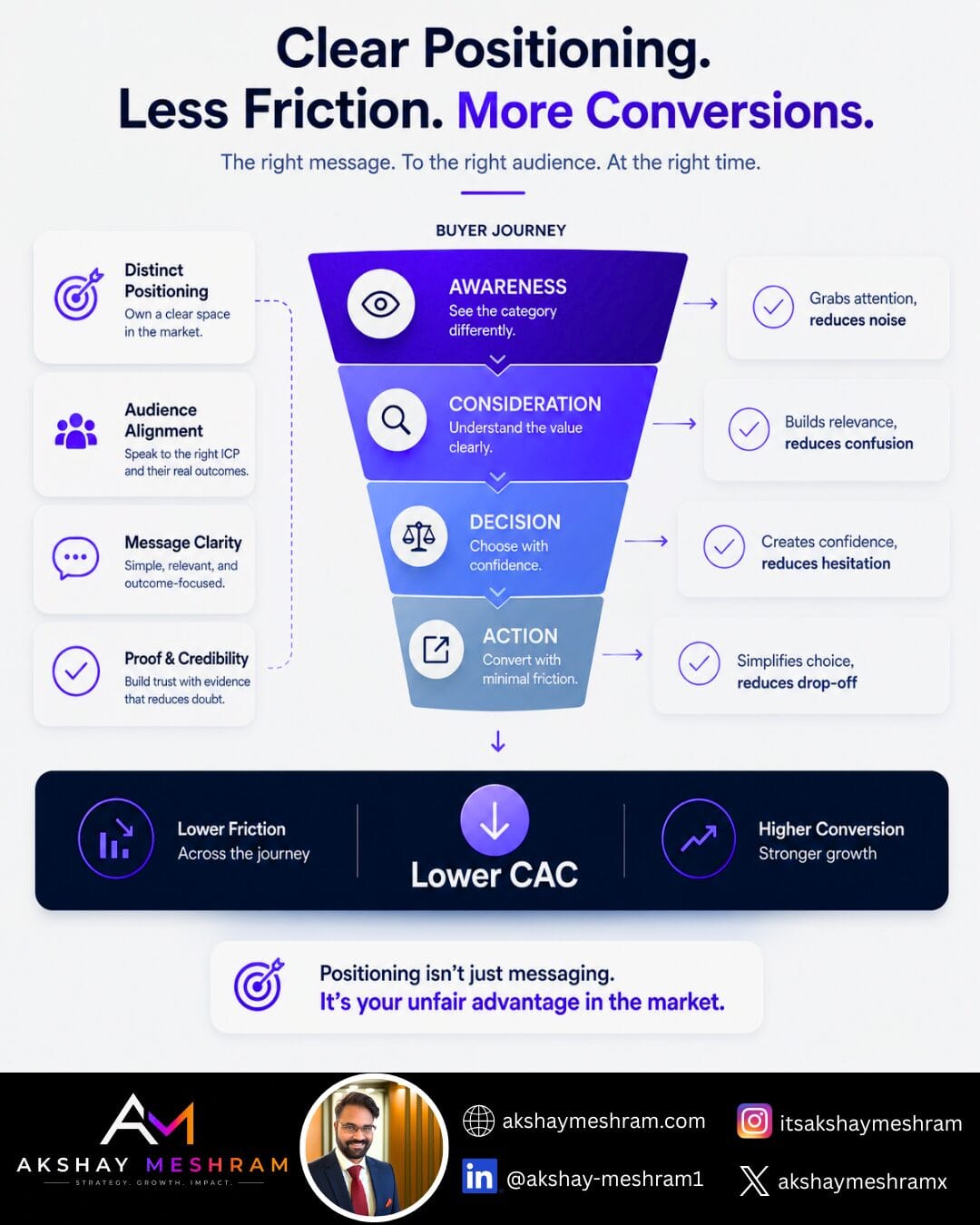
Positioning Is One of the Highest-Leverage CAC Variables
Many CAC conversations completely ignore positioning.
This is a major strategic mistake.
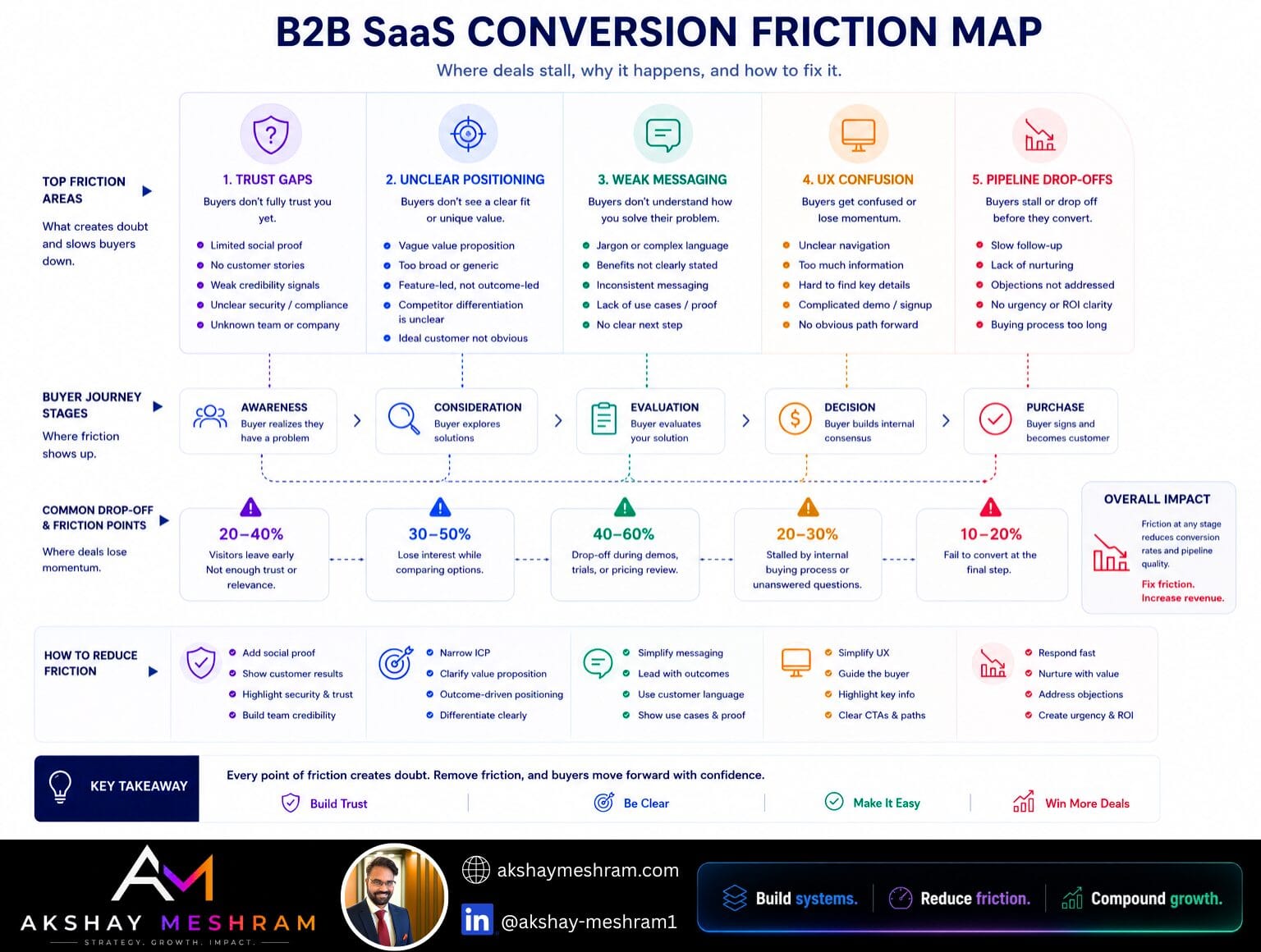
Weak positioning quietly increases acquisition costs across the entire funnel.
When differentiation is unclear:
buyers require more education
sales cycles lengthen
messaging becomes generic
conversion rates weaken
paid acquisition becomes less efficient
The company spends more simply to create clarity.
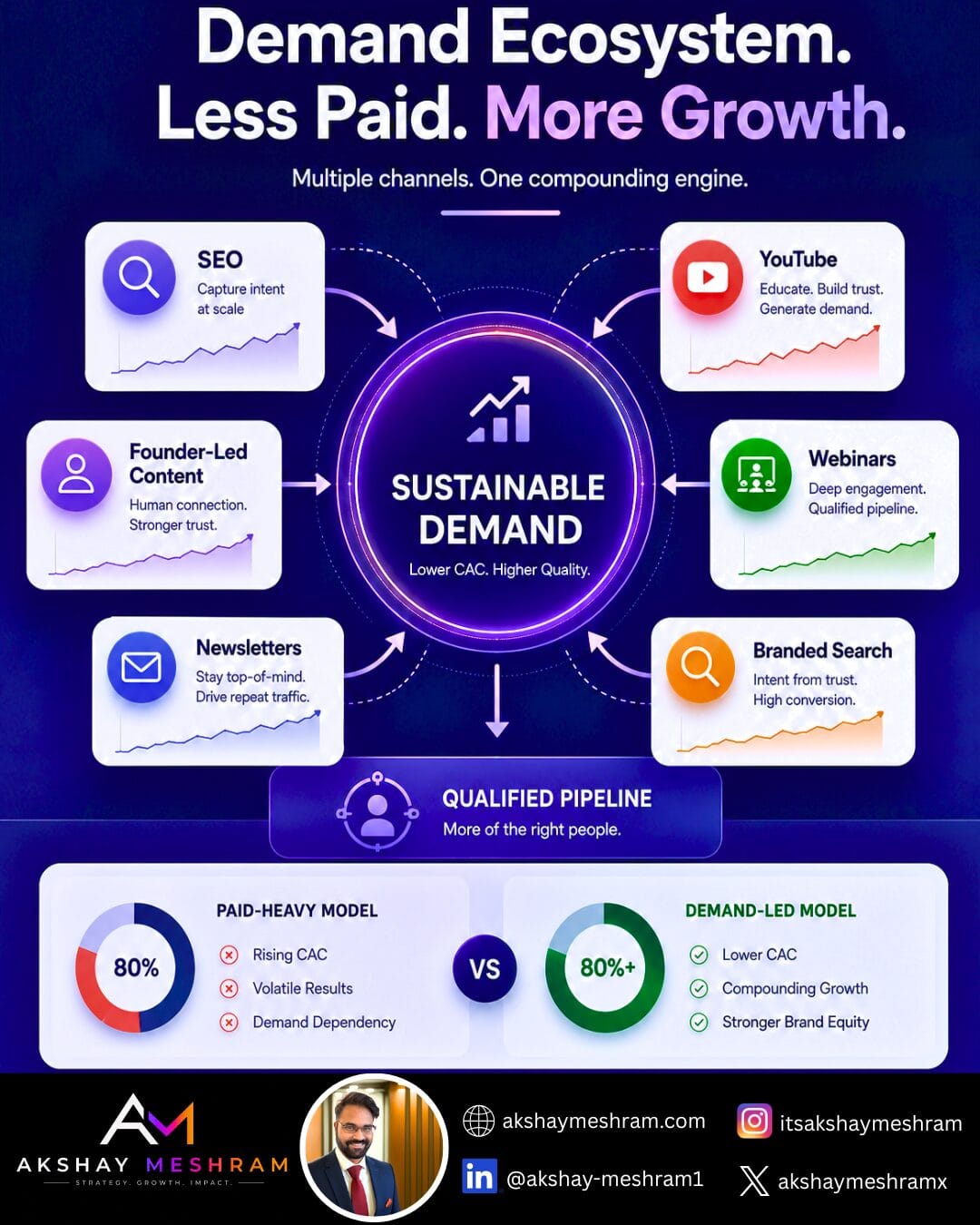
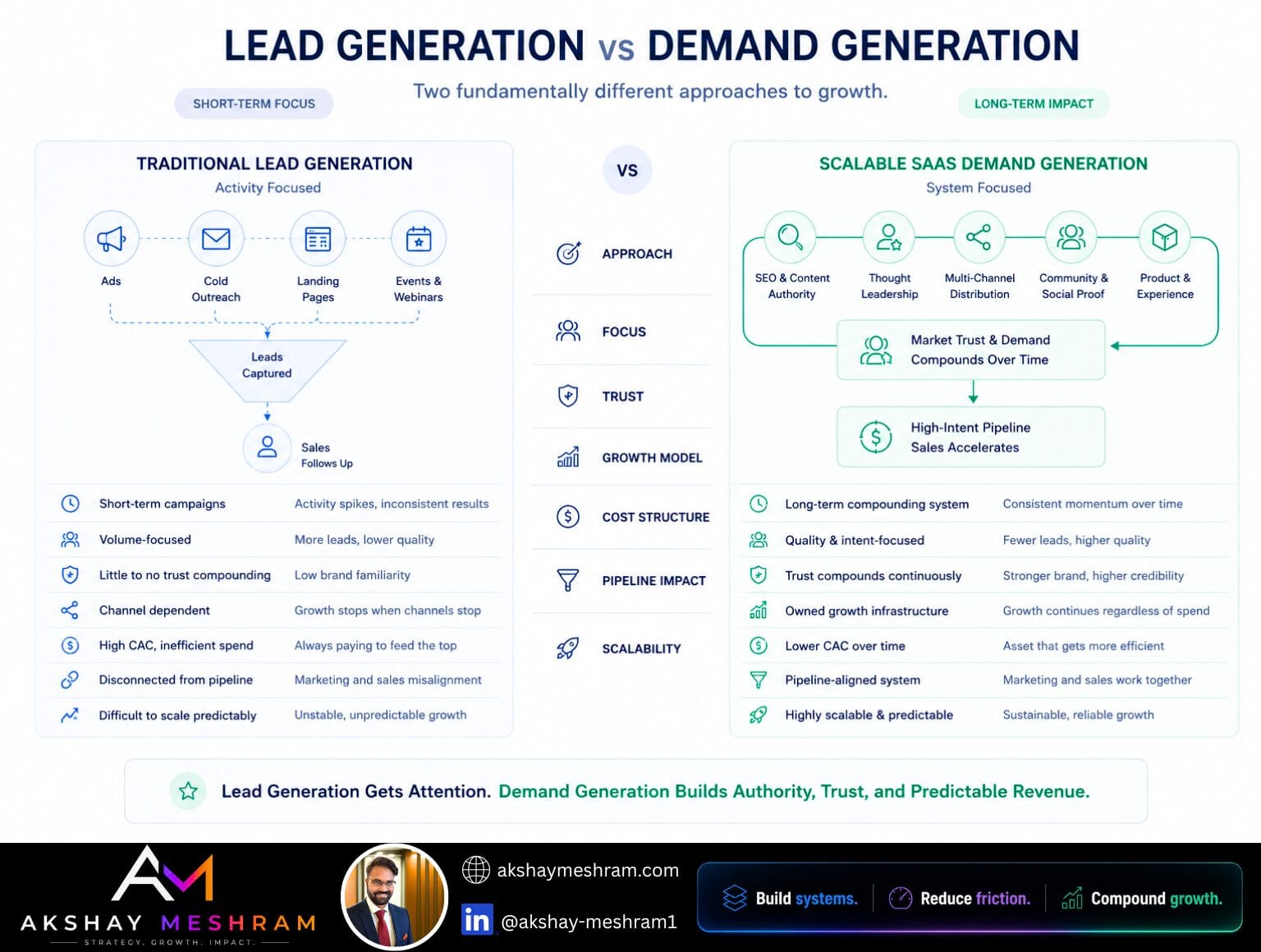
Demand Generation Reduces Dependence on Expensive Demand Capture
Average teams rely heavily on demand capture:
paid search
outbound
direct-response acquisition
Sophisticated teams invest significantly in demand generation.
Most early-stage B2B SaaS companies do not struggle because they lack marketing channels.
They struggle because their acquisition systems were never designed to scale in the first place.
B2B SaaS demand generation becomes sustainable when acquisition systems are designed around trust, positioning, and scalable distribution instead of isolated marketing tactics.
What usually exists instead is a collection of disconnected activities:
sporadic content
inconsistent outbound
underdeveloped positioning
paid campaigns without market clarity
SEO without strategic depth
sales outreach without demand education
From the outside, it can look like execution.
Internally, it creates operational noise.
The uncomfortable reality is that many SaaS companies are not building demand generation systems. They are simply creating temporary acquisition activity and hoping momentum appears later.
The distinction matters.
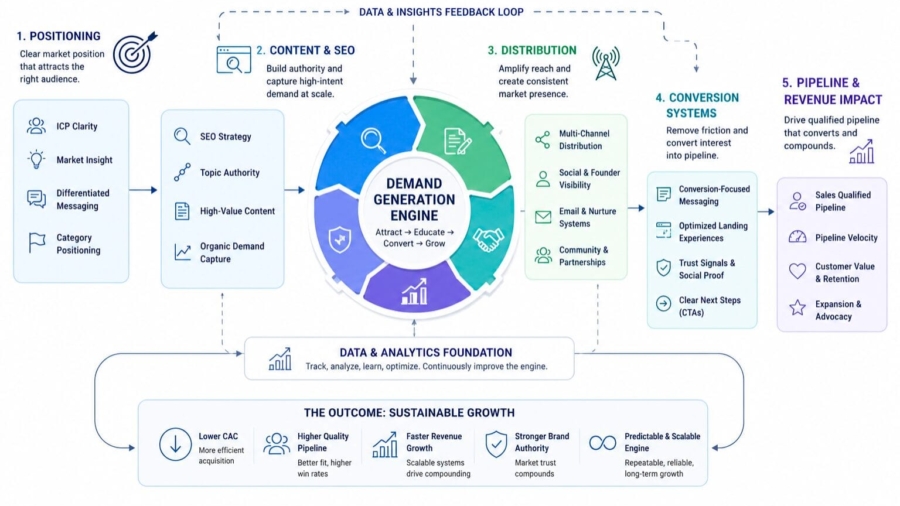
A scalable demand generation engine is not a campaign strategy. It is an operational growth architecture that compounds trust, market familiarity, distribution reach, and conversion efficiency over time.
That changes how the entire company approaches growth.
Most B2B SaaS Demand Generation Systems Fail Before They Scale
A surprising number of SaaS growth problems are not traffic problems.
They are:
positioning problems
trust problems
clarity problems
sequencing problems
conversion problems
operational alignment problems
The market rarely responds sustainably to fragmented execution.
Sophisticated operators understand something many growth teams ignore:
Demand generation is downstream from strategic clarity.
Without that foundation, companies often mistake motion for progress.
Publishing more content does not automatically create demand.
Running outbound sequences does not automatically create pipeline.
Increasing ad spend does not automatically create market trust.
And SEO traffic without positioning clarity frequently produces low-intent acquisition that never converts into meaningful revenue.
This is one of the reasons many SaaS teams experience acquisition volatility.
The channels themselves are not always failing.
The underlying growth architecture is weak.
The Real Problem Is Rarely Traffic
Traffic is easy to overvalue because it is visible.
Pipeline quality is harder to evaluate because it requires:
sales alignment
conversion analysis
intent qualification
behavioral understanding
positioning clarity
Many SaaS companies generate traffic that never compounds commercially.
This usually happens when acquisition systems are built around:
vanity metrics
channel obsession
disconnected campaigns
short-term reporting cycles
The result is predictable:
high lead volume
weak conversion quality
unstable CAC
inconsistent pipeline
low trust density
Sophisticated growth systems optimize for:
commercial relevance
buyer intent
trust accumulation
category familiarity
conversion readiness
That distinction becomes increasingly important as markets mature.
Most SaaS Companies Confuse Activity With Demand Generation
Modern SaaS marketing environments reward visibility.
That creates a dangerous illusion.
A company can appear highly active while generating very little actual market demand.
This happens constantly:
daily LinkedIn posting with weak positioning
SEO content with no strategic differentiation
outbound outreach without buyer education
webinars without category authority
paid acquisition without narrative clarity
The issue is not execution volume.
The issue is strategic coherence.
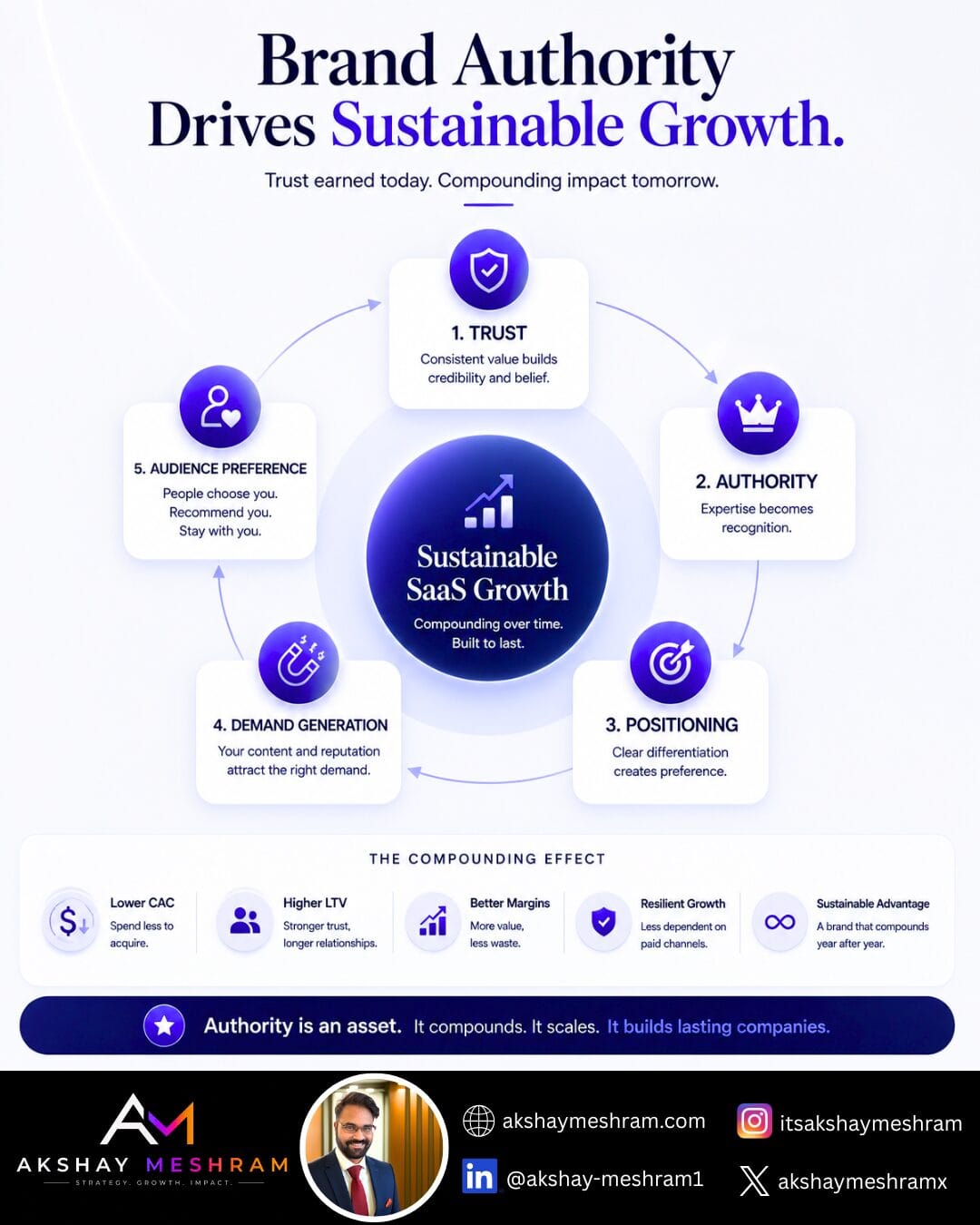
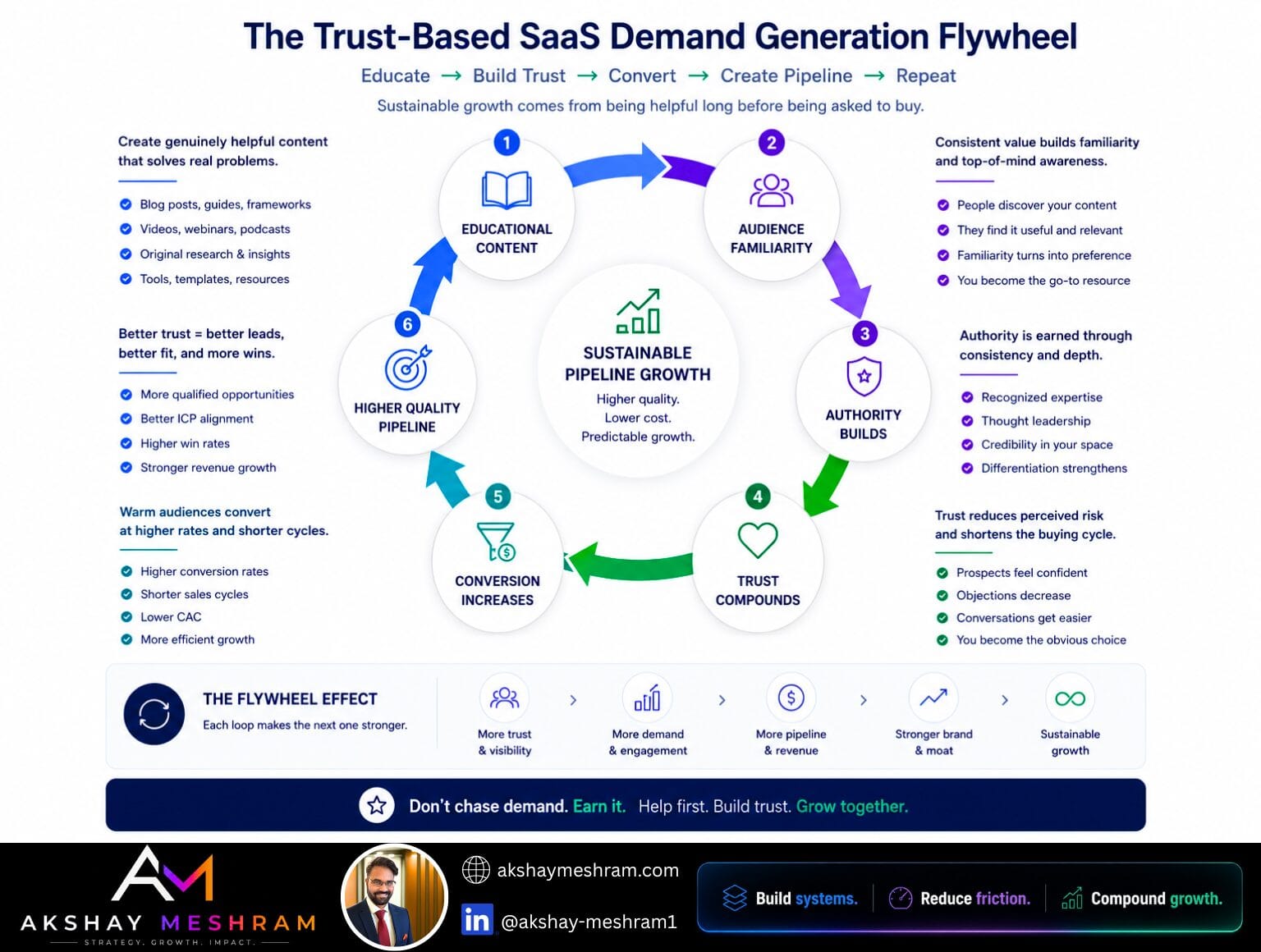
Demand generation becomes scalable when:
positioning reinforces distribution
distribution reinforces trust
trust reinforces conversion
conversion reinforces pipeline quality
pipeline quality reinforces revenue efficiency
That is where compounding starts.
I Would Start With Market Clarity Before Acquisition
Most SaaS companies begin with channels.
I would begin with market interpretation.
Because acquisition efficiency is heavily influenced by:
ICP precision
positioning clarity
category understanding
buyer psychology
narrative alignment
Growth systems become expensive when companies attempt to scale ambiguity.
That is one of the most common mistakes in SaaS GTM execution.
Before investing aggressively into acquisition, I would want clear answers to:
Who specifically experiences the highest pain?
What operational problem is urgent enough to justify change?
What existing alternatives are buyers comparing against?
Why would the market trust this company specifically?
What category narrative are we entering?
Without these answers, even strong marketing execution produces weak strategic outcomes.
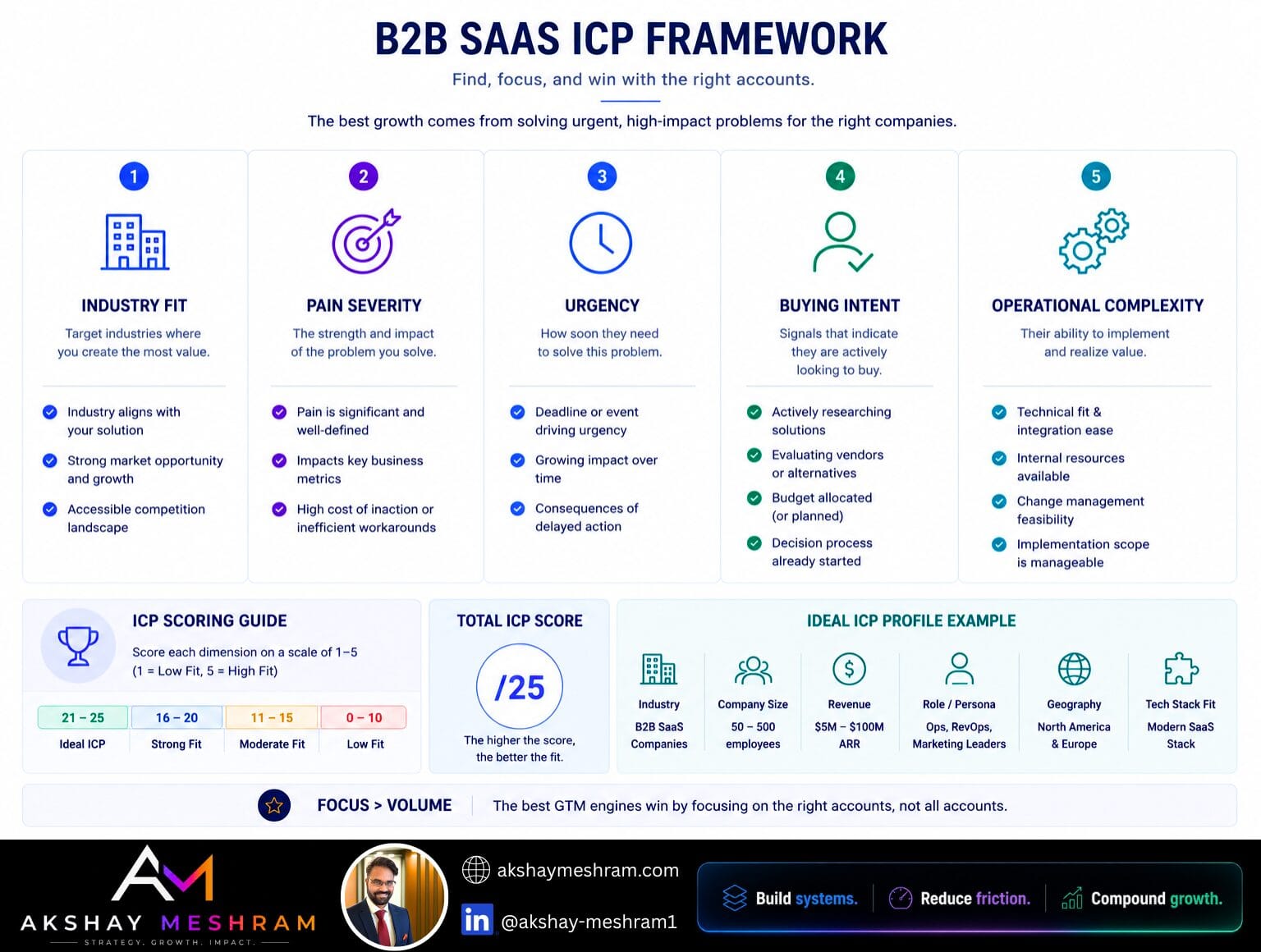
Defining the ICP With Precision Changes Everything
Many SaaS companies define their ICP too broadly.
Broad ICPs usually create:
weak messaging
low conversion efficiency
unclear positioning
expensive acquisition
diluted trust
Sophisticated SaaS growth systems narrow aggressively before they scale outward.
Because specificity improves:
relevance
resonance
conversion quality
sales efficiency
content effectiveness
A narrow ICP often produces stronger pipeline economics than broad acquisition reach.
This is one reason early-stage SaaS companies frequently struggle with demand generation despite heavy activity.
They are speaking to everyone.
Markets rarely trust vague positioning.
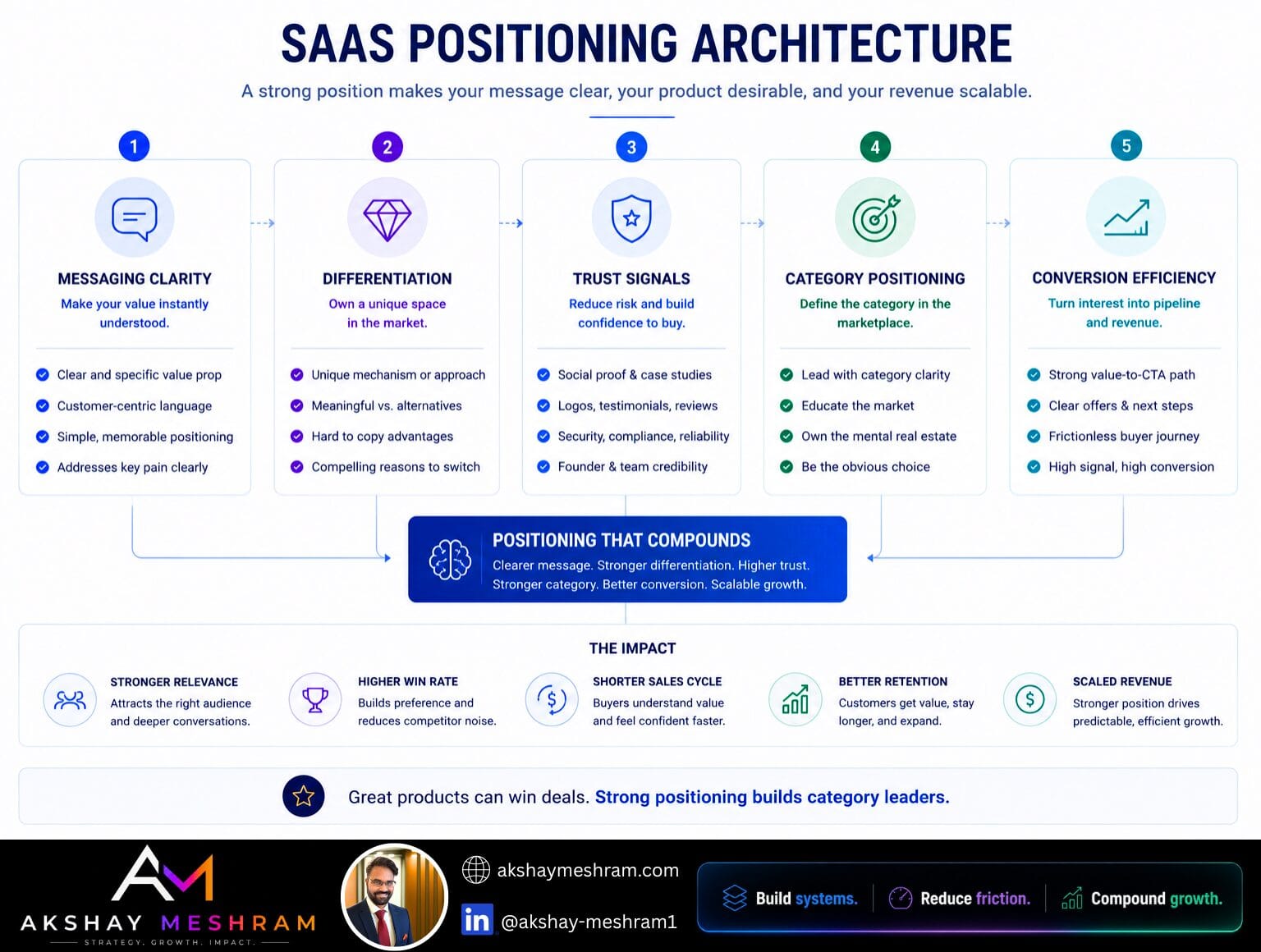
Positioning Determines Conversion Efficiency
Positioning is not branding decoration.
It directly affects:
CAC efficiency
conversion velocity
outbound performance
content performance
SEO effectiveness
pipeline quality
Strong positioning reduces cognitive friction.
Weak positioning increases explanation costs.
Modern B2B buyers increasingly self-educate before speaking with sales.
If a company cannot quickly communicate:
who it serves
why it matters
what operational problem it solves
why its perspective is differentiated
then acquisition costs usually rise over time.
Positioning clarity compounds distribution efficiency.
Weak Positioning Creates Expensive Acquisition
One of the least discussed realities in SaaS growth is this:
Many acquisition problems are actually positioning failures disguised as channel failures.
Teams often blame:
SEO
paid ads
outbound
content marketing
when the deeper issue is:
weak market narrative
unclear differentiation
low trust density
generic messaging
Sophisticated operators understand that distribution amplifies positioning.
It does not replace it.
This becomes especially important in saturated SaaS categories where feature parity is increasingly common.
In those environments:
trust
credibility
clarity
strategic narrative
often become stronger growth advantages than product functionality alone.
I Would Build Demand Generation Around Trust Accumulation
Trust compounds more slowly than campaigns.
But it compounds far longer.
This is one of the biggest differences between sustainable SaaS growth systems and temporary acquisition spikes.
Sophisticated demand generation increasingly depends on:
market credibility
educational positioning
category familiarity
strategic consistency
perceived expertise
Modern buyers are significantly more skeptical than they were a decade ago.
That skepticism changes acquisition dynamics.
Companies are no longer competing only for attention.
They are competing for credibility.
Modern B2B Buyers Self-Educate Before They Convert
The modern SaaS buyer journey is increasingly non-linear.
Buyers consume:
search results
founder content
peer opinions
product comparisons
educational material
analyst commentary
social proof
long before engaging sales.
Research from HubSpot continues to show how self-directed buyer behavior is reshaping modern B2B acquisition journeys, particularly as buyers increasingly prefer independent research before engaging with sales teams.
That changes what demand generation must accomplish.
The objective is no longer merely:
generating clicks
generating leads
The objective is:
reducing uncertainty
increasing trust
reinforcing authority
creating category familiarity
Demand generation increasingly functions as market education infrastructure.
Content Should Reduce Buyer Uncertainty
Many SaaS content strategies fail because they optimize for publishing frequency instead of decision confidence.
Buyers do not trust companies simply because they produce content.
Trust develops when content demonstrates:
judgment
nuance
realism
market understanding
operational awareness
Surface-level content rarely builds authority.
It creates temporary visibility at best.
The strongest SaaS content strategies behave more like:
strategic advisory publishing
category education systems
operator insight distribution
This is why many founder-led SaaS brands outperform larger competitors in perceived authority despite having smaller marketing budgets.
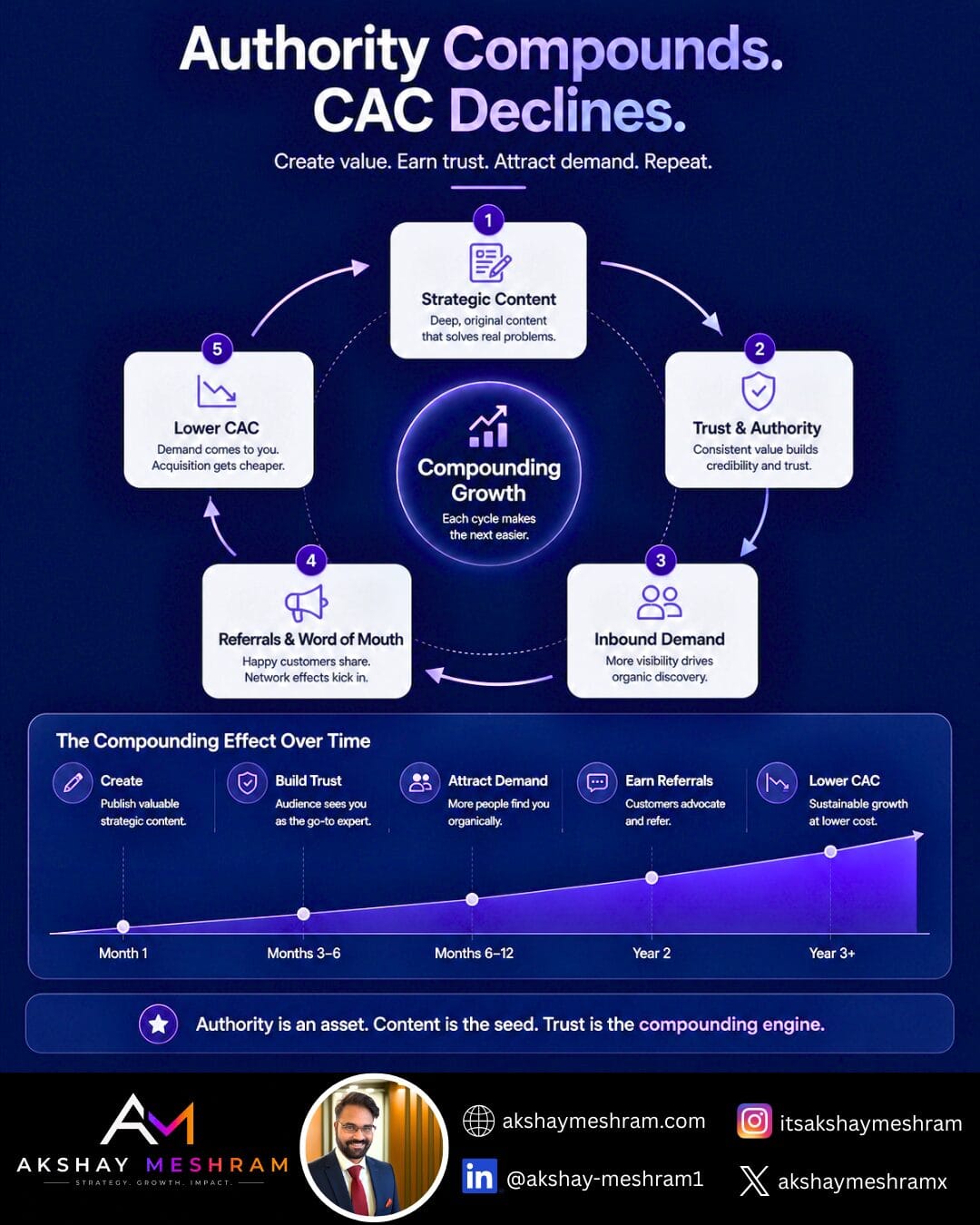
Authority Compounds Faster Than Short-Term Campaigns
Sophisticated demand generation therefore becomes inseparable from trust architecture.
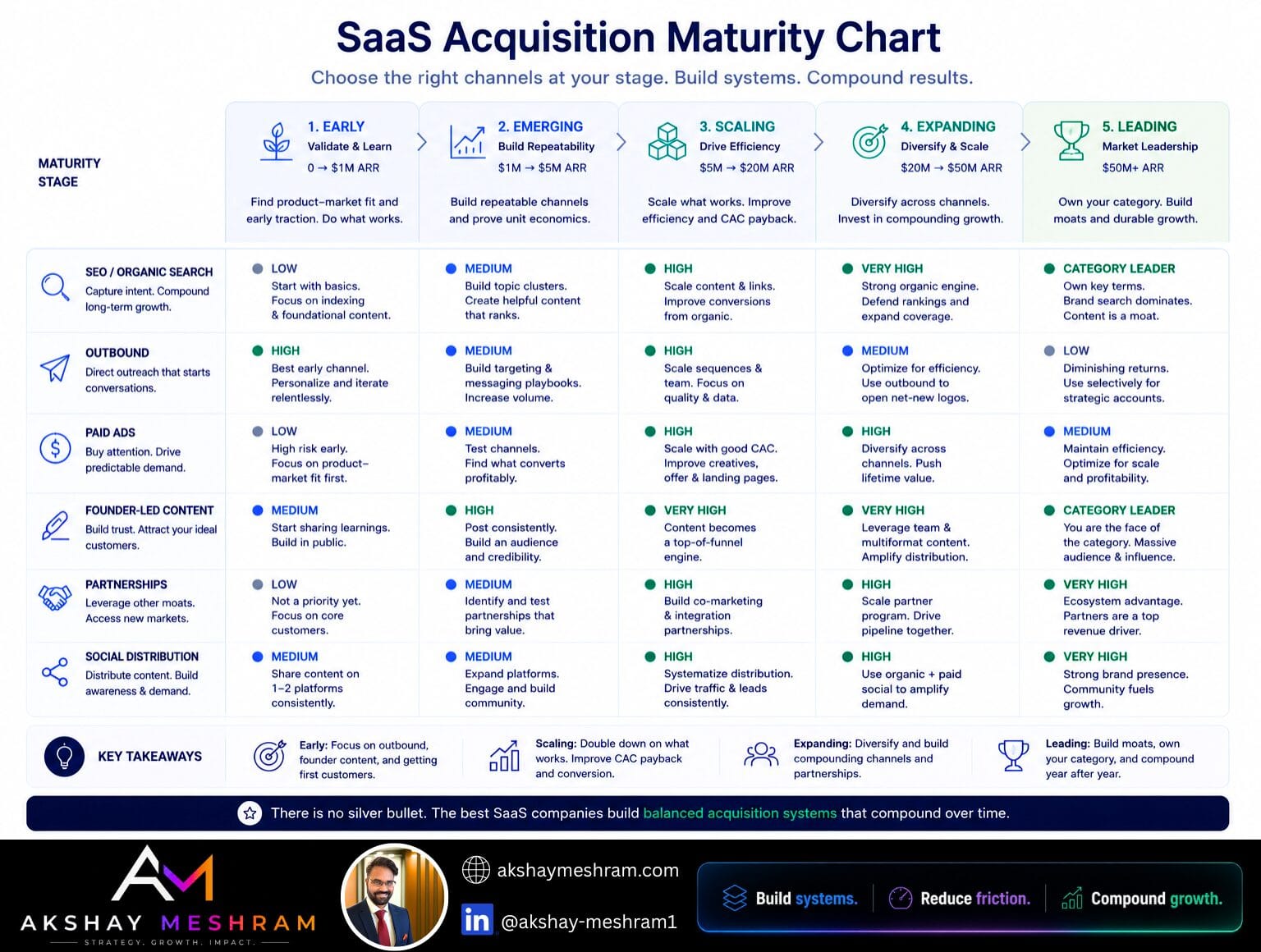
I Would Prioritize Acquisition Channels Differently Than Most SaaS Teams
Most SaaS teams over-prioritize channels.
Sophisticated operators prioritize:
sequencing
timing
readiness
positioning maturity
The order matters.
Premature scaling creates expensive inefficiency.
SEO Should Be Treated as Strategic Infrastructure
Google itself emphasizes the importance of helpful, people-first content and strong expertise signals in long-term search visibility strategies, as documented in Google Search Central.
SEO is often misunderstood as a traffic channel.
In sophisticated SaaS environments, SEO functions more like:
trust infrastructure
demand capture architecture
category visibility
authority reinforcement
High-quality SEO compounds because it aligns:
discovery
education
positioning
conversion intent
The strongest SaaS SEO systems do not merely target keywords.
They build:
topical authority
semantic depth
category association
expertise signals
That matters enormously for long-term sustainability.
Platforms like Ahrefs have also extensively documented how topical authority and semantic relevance influence sustainable SEO performance.
The strongest B2B SaaS demand generation systems behave more like growth infrastructure than campaign execution.
LinkedIn Should Amplify Market Positioning, Not Vanity Metrics
A large percentage of SaaS LinkedIn content is optimized for engagement mechanics rather than strategic authority.
That creates shallow visibility.
Sophisticated operators use LinkedIn differently.
They use it to:
reinforce positioning
distribute insights
educate markets
increase familiarity
shape perception
The objective is not merely impressions.
The objective is becoming cognitively associated with expertise in a specific category.
Over time, this creates:
trust acceleration
inbound familiarity
audience retention
brand recall
Which materially improves demand generation efficiency.
Outbound Works Best When Market Education Already Exists
Outbound becomes dramatically more effective when buyers already recognize:
the problem
the category
the company narrative
Cold outreach rarely compensates for weak market positioning.
The strongest outbound systems are usually supported by broader trust infrastructure.
Not isolated sequences.
Paid Acquisition Without Positioning Usually Burns Capital
Most growth systems plateau because they rely too heavily on:
temporary tactics
channel dependency
unsustainable CAC
shallow trust
Eventually the market stops responding efficiently.
That is when underlying strategic weaknesses become visible.
Short-Term Tactics Create Long-Term Instability
Tactical spikes can create misleading momentum.
But without:
positioning depth
authority accumulation
trust infrastructure
scalable distribution
growth eventually becomes volatile.
Weak Distribution Systems Eventually Plateau
Markets forget inconsistent brands quickly.
Consistency compounds familiarity.
Familiarity compounds trust.
Trust compounds conversion efficiency.
This is why distribution consistency matters more than occasional visibility spikes.
Trust Deficits Become Growth Constraints
As categories mature, trust increasingly becomes:
a competitive advantage
a conversion advantage
a retention advantage
The strongest SaaS demand generation systems therefore behave more like:
reputation systems
educational ecosystems
category authority engines
than traditional campaign structures.
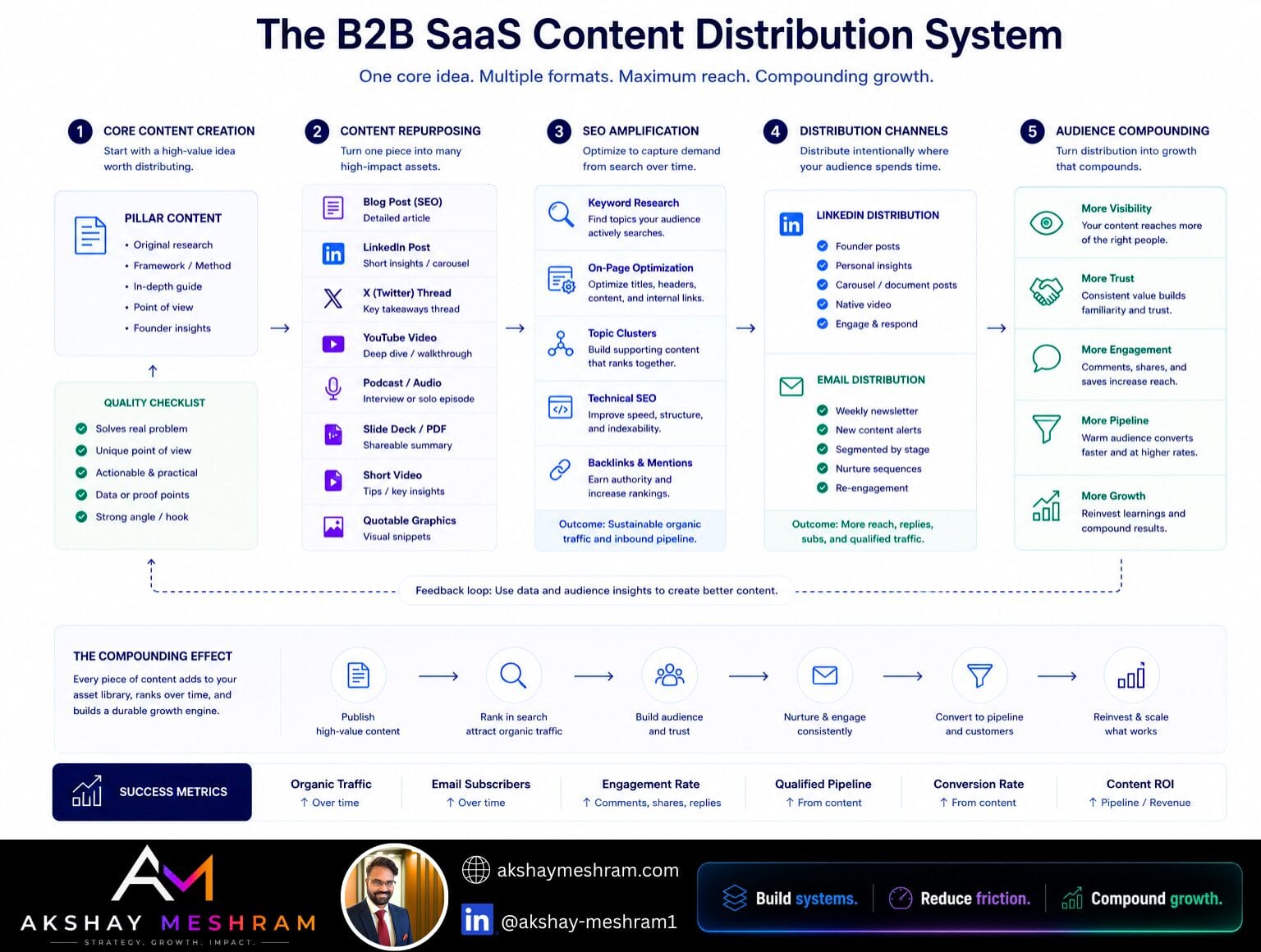
The Demand Generation Engine I Would Build Instead
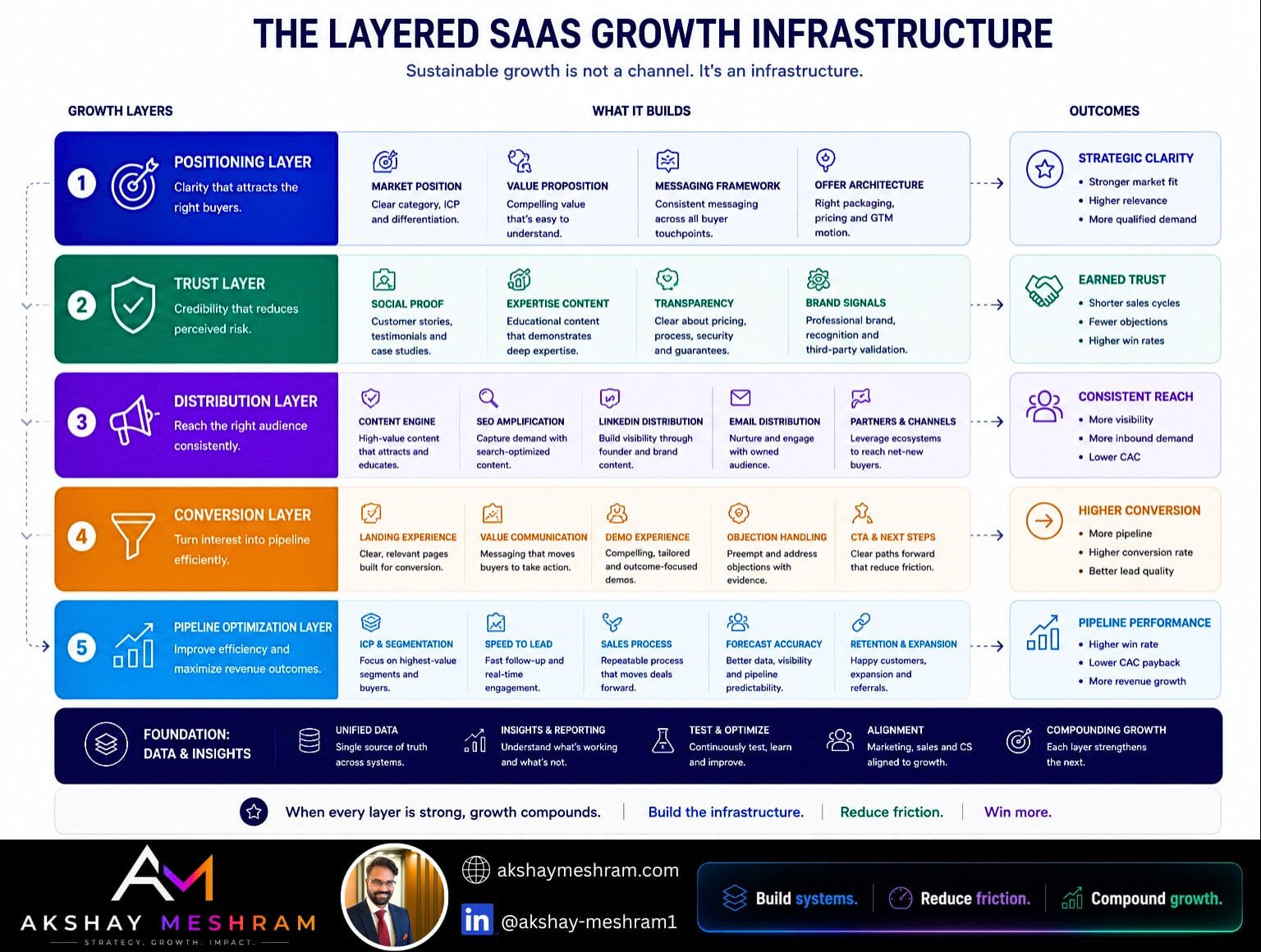
The system I would build would contain five interconnected layers:
Positioning Layer
Focused on:
ICP precision
category clarity
differentiation
narrative strength
Trust Layer
Focused on:
educational authority
founder visibility
strategic insights
expertise reinforcement
Distribution Layer
Focused on:
SEO
LinkedIn distribution
search visibility
audience familiarity
content amplification
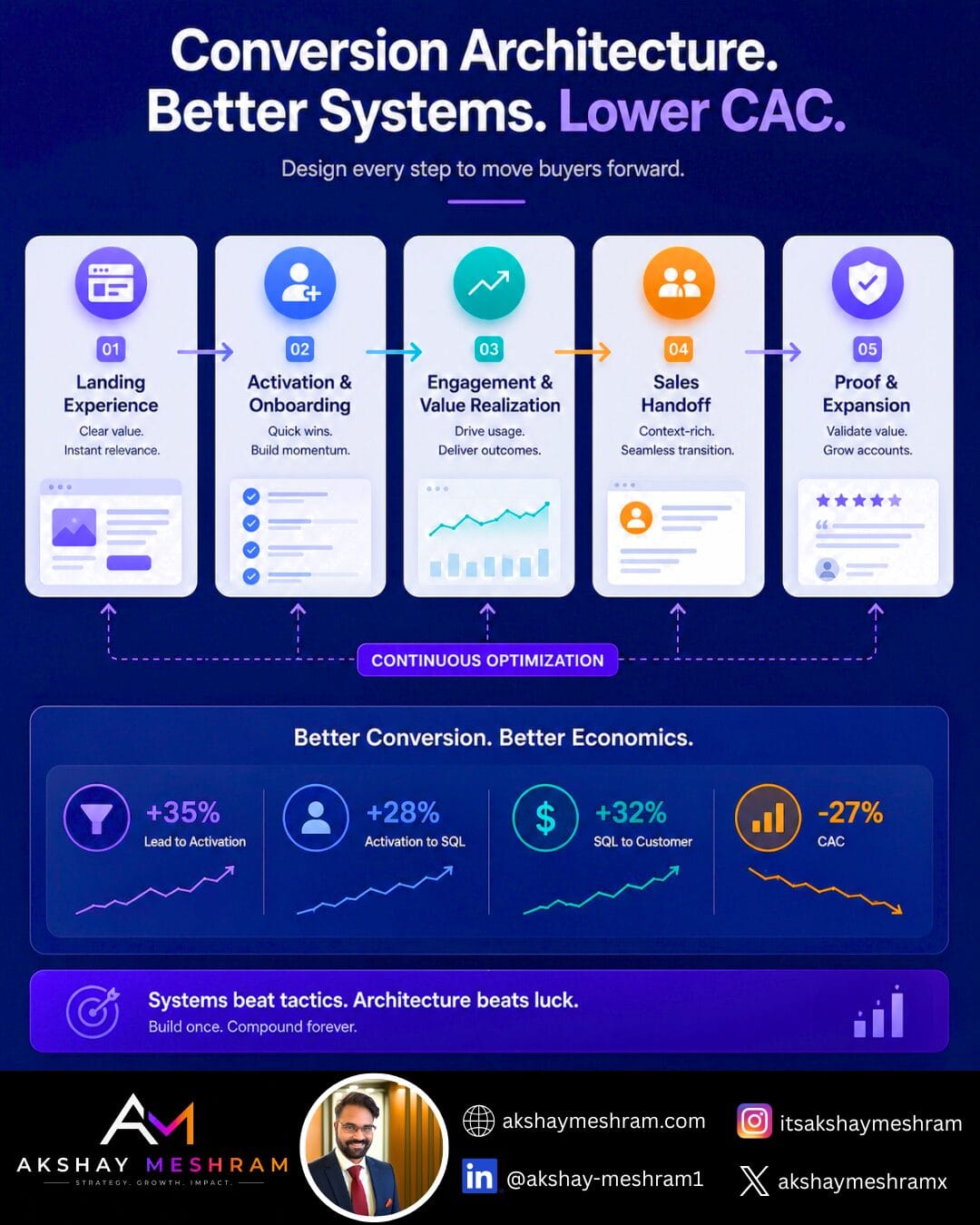
Conversion Layer
Focused on:
messaging clarity
trust signals
friction reduction
buyer confidence
Pipeline Optimization Layer
Focused on:
revenue quality
qualification
retention alignment
CAC efficiency
scalable economics
Framework: The Scalable SaaS Demand Generation Stack
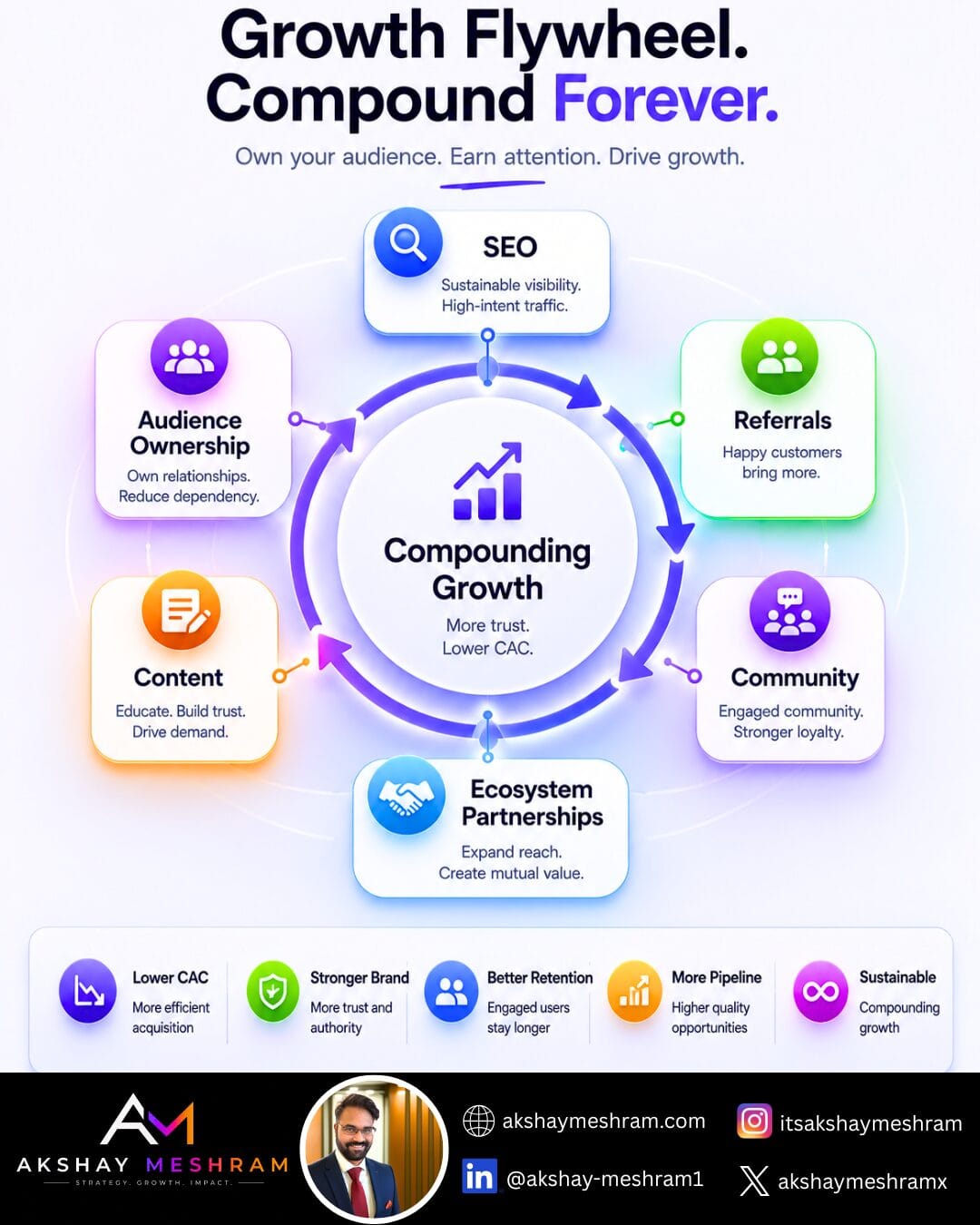
The system compounds through:
Positioning clarity
Trust accumulation
Distribution consistency
Audience familiarity
Conversion confidence
Pipeline quality
Revenue efficiency
Market authority
Organic demand acceleration
Then the cycle reinforces itself.
Final Strategic Observation
Most B2B SaaS companies do not fail because growth is impossible.
They fail because their acquisition systems were never strategically integrated.
Sophisticated demand generation is not:
isolated campaigns
random content
channel experimentation
lead volume obsession
It is:
positioning architecture
trust accumulation
distribution consistency
conversion design
operational alignment
The strongest SaaS growth systems eventually become difficult to compete against because they create:
market familiarity
intellectual trust
category association
compounding visibility
predictable pipeline behavior
That is what scalable demand generation actually looks like.
Not marketing activity.
But growth infrastructure.
Frequently Asked Questions
What is a scalable demand generation engine?
A scalable demand generation engine is a structured acquisition system designed to consistently generate qualified pipeline through positioning, trust-building, distribution, and conversion optimization rather than isolated campaigns.
Why do most B2B SaaS companies struggle with pipeline generation?
Most struggle because their acquisition systems lack:
positioning clarity
trust infrastructure
distribution consistency
conversion alignment
operational sequencing
Many focus on channels before strategic foundations are established.
Which acquisition channel scales best for SaaS?
There is rarely a single best channel universally.
Sophisticated SaaS companies typically combine:
SEO
founder-led content
LinkedIn distribution
educational authority
outbound systems
conversion optimization
into integrated acquisition infrastructure.
How long does SaaS demand generation usually take to compound?
Sustainable demand generation usually compounds gradually because it depends heavily on:
trust accumulation
audience familiarity
positioning reinforcement
distribution consistency
The strongest systems are typically built over extended periods rather than short campaign cycles.
Why is positioning critical in SaaS demand generation?
Positioning directly affects:
conversion efficiency
CAC
trust perception
sales velocity
acquisition sustainability
Weak positioning makes every acquisition channel more expensive.
Durable Growth Is Built Before It Is Seen
If there is one recurring pattern across sophisticated SaaS companies, it is this:
The companies that compound demand most effectively rarely think like marketers first.
They think like system designers.
They understand that sustainable acquisition is built through:
trust
clarity
consistency
positioning
operational alignment
Long before scale appears externally.
That is the difference between temporary visibility and durable market authority.
And increasingly, durable authority is what compounds growth.
Sophisticated B2B SaaS demand generation is ultimately about compounding trust and pipeline quality over time.
Shopping Basket
Manage Consent
To provide the best experiences, we use technologies like cookies to store and/or access device information. Consenting to these technologies will allow us to process data such as browsing behavior or unique IDs on this site. Not consenting or withdrawing consent, may adversely affect certain features and functions.
Functional
Always active
The technical storage or access is strictly necessary for the legitimate purpose of enabling the use of a specific service explicitly requested by the subscriber or user, or for the sole purpose of carrying out the transmission of a communication over an electronic communications network.
Preferences
The technical storage or access is necessary for the legitimate purpose of storing preferences that are not requested by the subscriber or user.
Statistics
The technical storage or access that is used exclusively for statistical purposes.The technical storage or access that is used exclusively for anonymous statistical purposes. Without a subpoena, voluntary compliance on the part of your Internet Service Provider, or additional records from a third party, information stored or retrieved for this purpose alone cannot usually be used to identify you.
Marketing
The technical storage or access is required to create user profiles to send advertising, or to track the user on a website or across several websites for similar marketing purposes.