
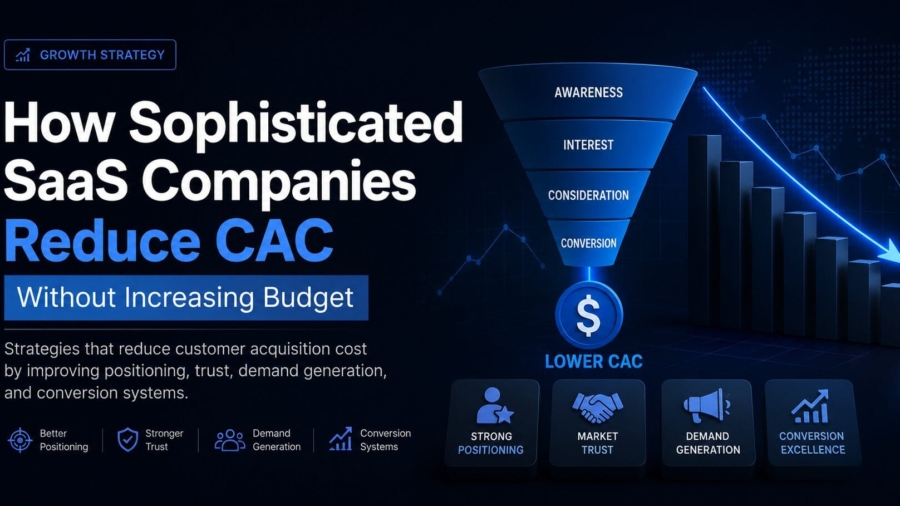
Reduce CAC without increasing budget is now one of the biggest priorities for SaaS companies facing rising acquisition costs, saturated channels, and declining conversion efficiency.
Table of Contents
Customer acquisition cost is often discussed like a tactical marketing metric.
A campaign problem.
An ad efficiency problem.
A targeting problem.
In practice, sophisticated SaaS operators understand something far more important:
CAC is usually a downstream reflection of deeper structural realities inside the business.
When acquisition costs rise consistently, the root cause is rarely isolated to paid channels alone. More often, it is the cumulative effect of weak positioning, low market trust, poor demand architecture, conversion friction, fragmented GTM alignment, or inefficient onboarding experiences.
This distinction matters because it changes how companies respond.
Average teams try to lower CAC by optimizing campaigns.
Sophisticated teams redesign the acquisition system itself.
That difference is what separates temporary efficiency gains from durable acquisition economics.
Most CAC Advice Is Operationally Shallow
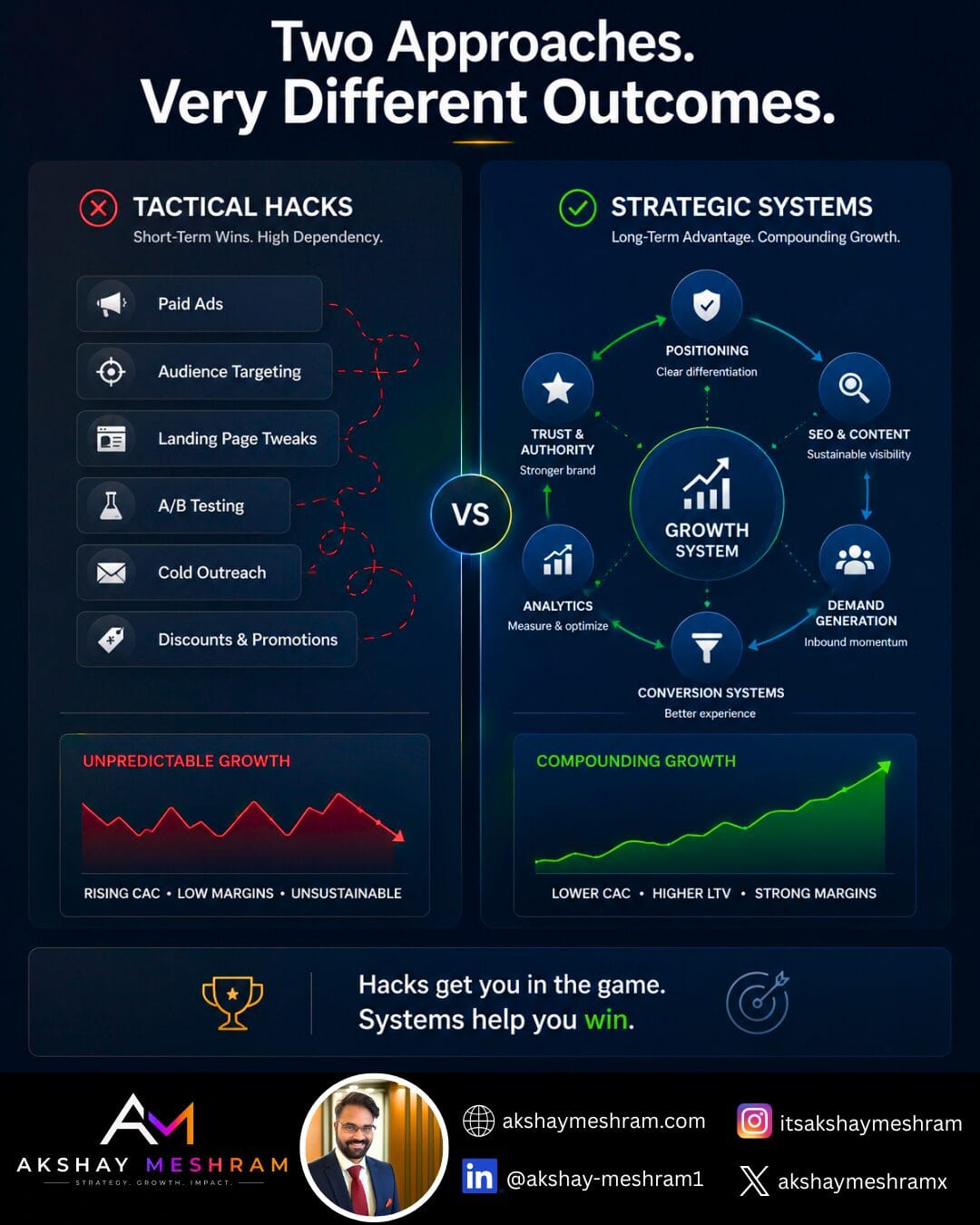
The majority of CAC advice online follows the same predictable pattern:
- reduce CPCs
- improve ad targeting
- optimize landing pages
- lower CPMs
- test more creatives
- increase ROAS
None of these are inherently wrong. Some are necessary.
But most of them operate downstream from the actual drivers of acquisition efficiency.
This is why many SaaS companies experience a frustrating cycle:
- acquisition costs rise
- paid channels become less efficient
- conversion rates weaken
- sales cycles lengthen
- leadership increases spend
- CAC worsens further
The company responds tactically to what is fundamentally a structural problem.
Sophisticated operators view CAC differently.
They understand that acquisition efficiency is not merely a media-buying outcome. It is the cumulative result of how effectively the business:
- earns trust
- communicates value
- creates demand
- qualifies intent
- reduces friction
- aligns teams
- compounds authority
- improves retention
- builds preference over time
That broader perspective changes where leverage comes from.
Why CAC Is Rising Across SaaS
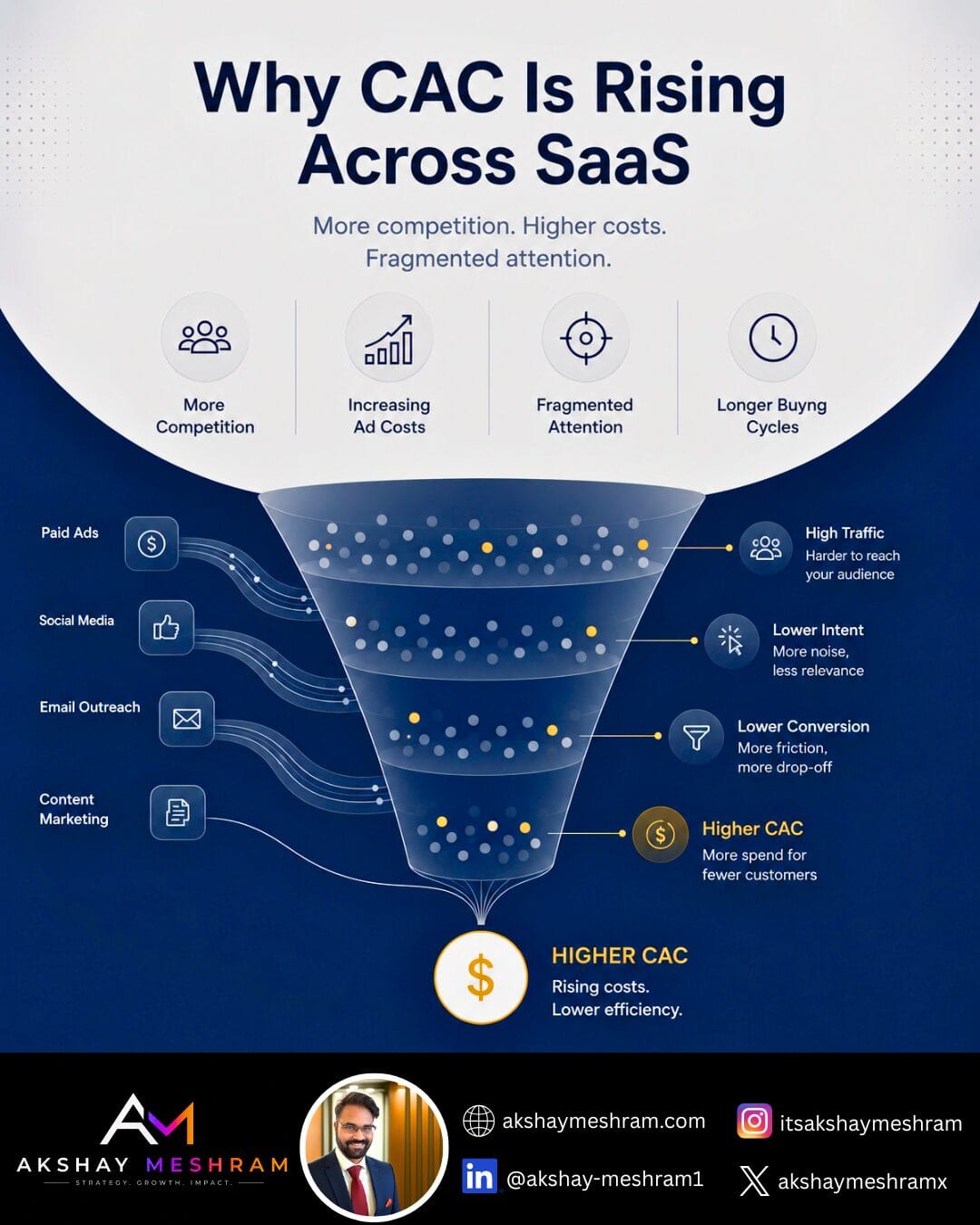
Rising CAC is not isolated to a handful of companies. It reflects broader structural changes across modern B2B and SaaS markets.
Several dynamics are contributing simultaneously.
Paid channels are increasingly saturated
As more companies compete aggressively for the same buyer attention, auction-based platforms naturally become more expensive.
This has been consistently discussed across performance marketing research and industry analysis from HubSpot and Semrush.
In crowded categories, incremental spend often produces diminishing efficiency.
Buyers are more skeptical than before
Modern SaaS buyers have become highly resistant to:
- generic positioning
- inflated claims
- feature parity messaging
- aggressive outbound
- shallow content marketing
This increases the amount of trust required before conversion happens.
In effect, skepticism becomes an acquisition tax.
Companies with weak authority or low credibility pay substantially more to overcome buyer hesitation.
Why Most Companies Treat CAC as a Channel Problem Instead of a Systems Problem
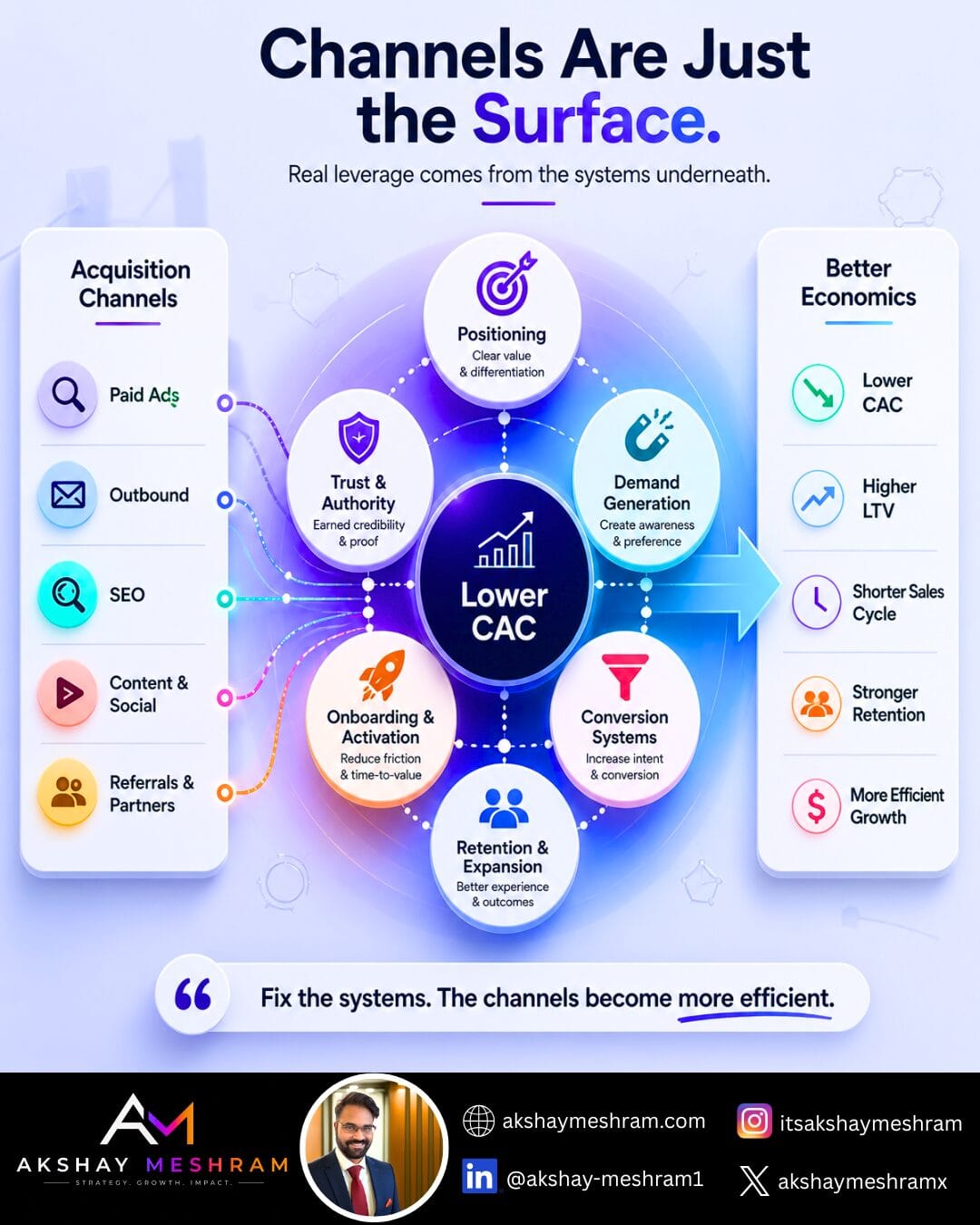
Most teams view acquisition channels as the primary driver of CAC.
Sophisticated teams understand that channels often expose underlying system weaknesses.
For example:
- expensive paid acquisition may actually indicate weak positioning
- poor conversion rates may indicate audience misalignment
- low demo conversion may reflect trust deficits
- long sales cycles may signal unclear category understanding
Channels amplify what already exists.
If trust is weak, paid media becomes expensive.
If differentiation is unclear, conversion efficiency declines.
If intent quality is poor, CAC rises even with strong media execution.
This is why two companies can spend similar amounts in the same acquisition channels yet produce radically different CAC outcomes.
The difference is usually structural.
Sophisticated SaaS Companies Think About CAC Differently
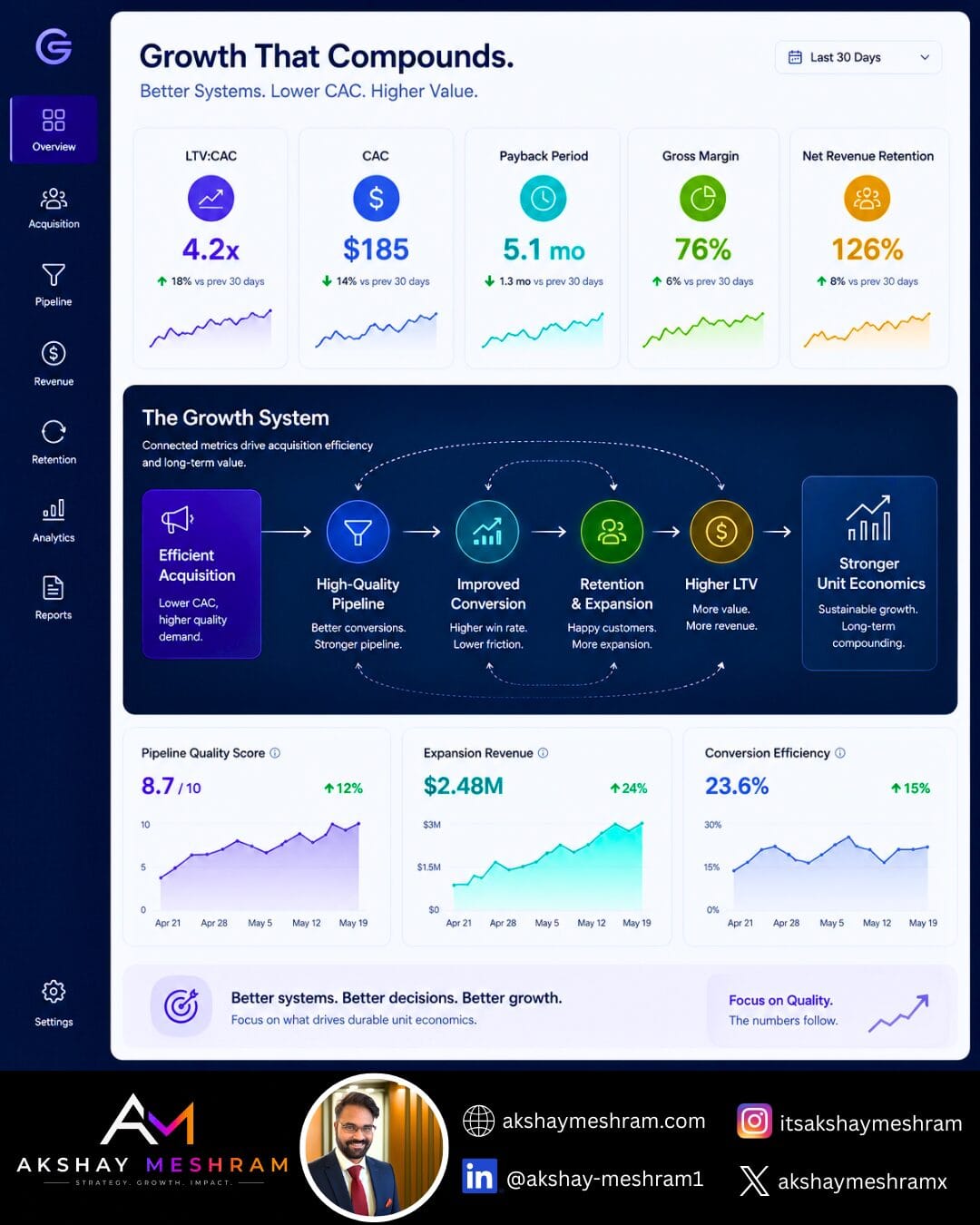
High-performing SaaS operators rarely optimize for “cheap acquisition.”
They optimize for acquisition efficiency.
Cheap leads are not necessarily efficient leads.
A low-cost channel that generates:
- low retention
- poor expansion revenue
- weak onboarding
- high churn
- poor fit customers
…can quietly become one of the most expensive growth motions in the business.
Sophisticated teams evaluate CAC within a broader revenue efficiency framework.
They examine:
- LTV:CAC ratios
- payback periods
- retention curves
- expansion revenue
- pipeline quality
- sales velocity
- activation rates
- conversion depth
This creates a more mature understanding of acquisition economics.
Trust Lowers CAC Structurally
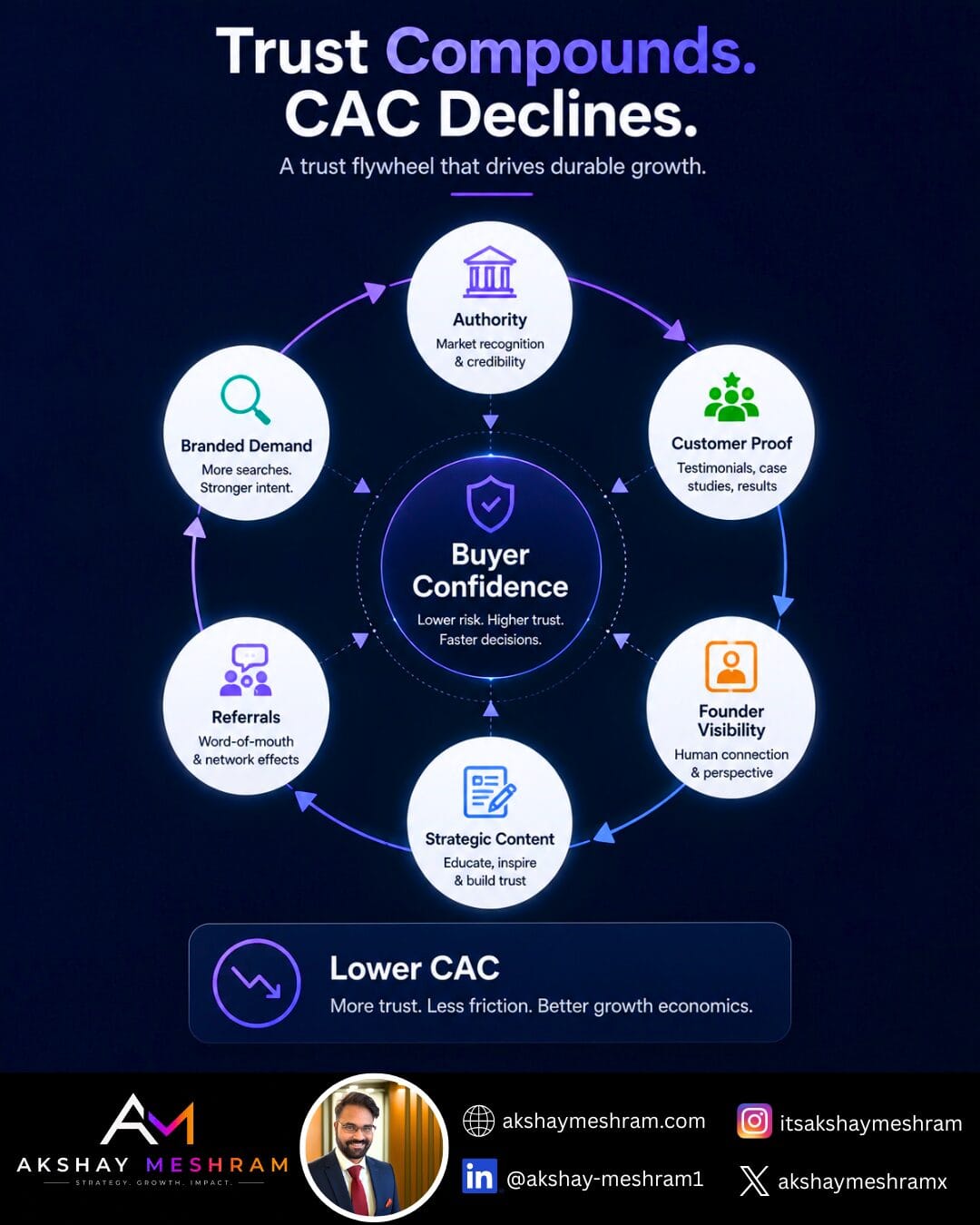
One of the most overlooked acquisition advantages in SaaS is trust.
Trust reduces:
- conversion resistance
- buyer uncertainty
- sales friction
- onboarding hesitation
- perceived risk
Over time, this changes acquisition economics dramatically.
Companies with strong market trust often experience:
- higher branded search volume
- stronger referral loops
- shorter sales cycles
- higher demo conversion rates
- lower outbound dependence
- better inbound conversion efficiency
Trust compresses decision-making friction.
When buyers already perceive a company as credible:
- less persuasion is required
- fewer objections emerge
- more intent arrives pre-qualified
That directly influences CAC.
Positioning Is One of the Highest-Leverage CAC Variables
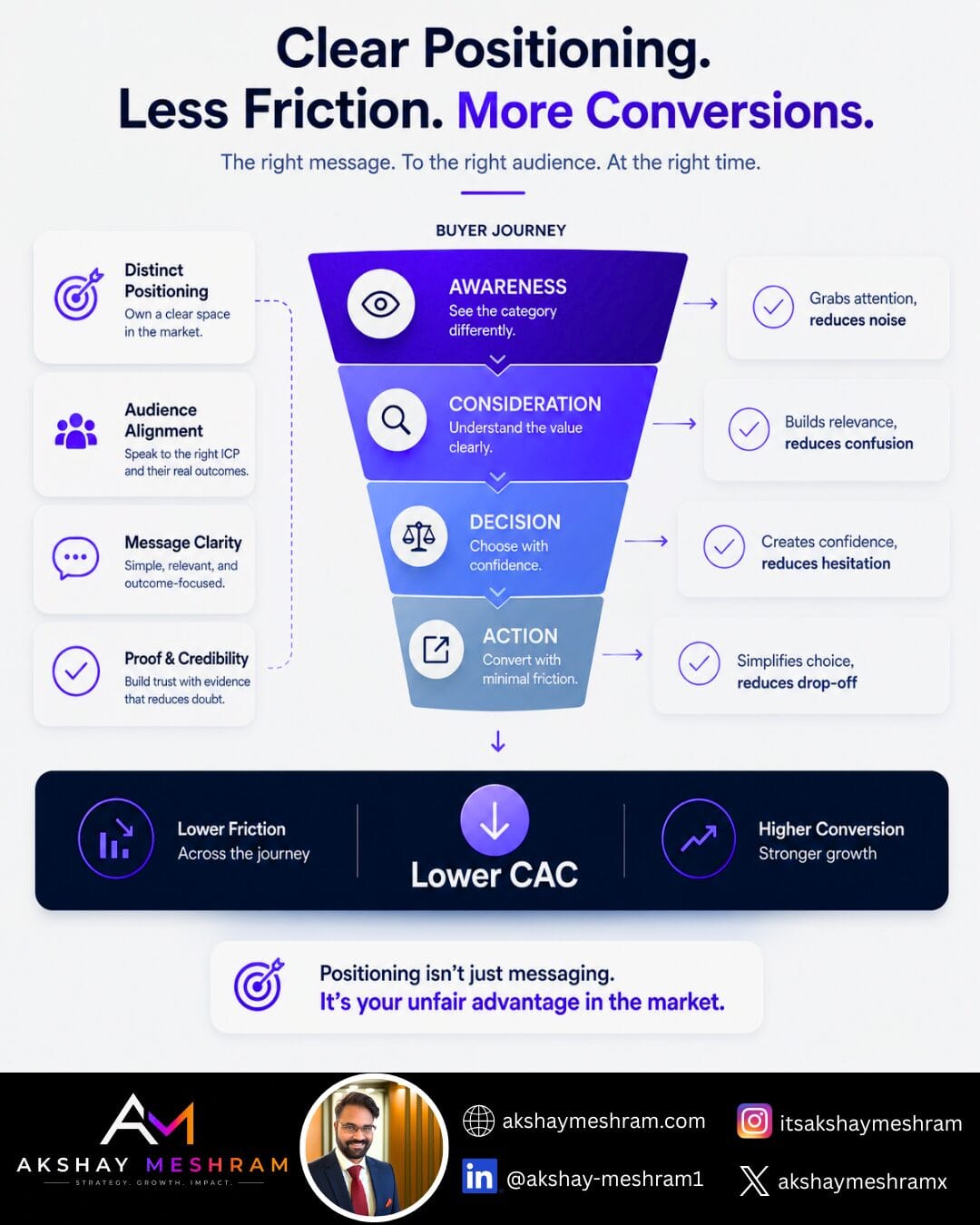
Many CAC conversations completely ignore positioning.
This is a major strategic mistake.
Weak positioning quietly increases acquisition costs across the entire funnel.
When differentiation is unclear:
- buyers require more education
- sales cycles lengthen
- messaging becomes generic
- conversion rates weaken
- paid acquisition becomes less efficient
The company spends more simply to create clarity.
Demand Generation Reduces Dependence on Expensive Demand Capture
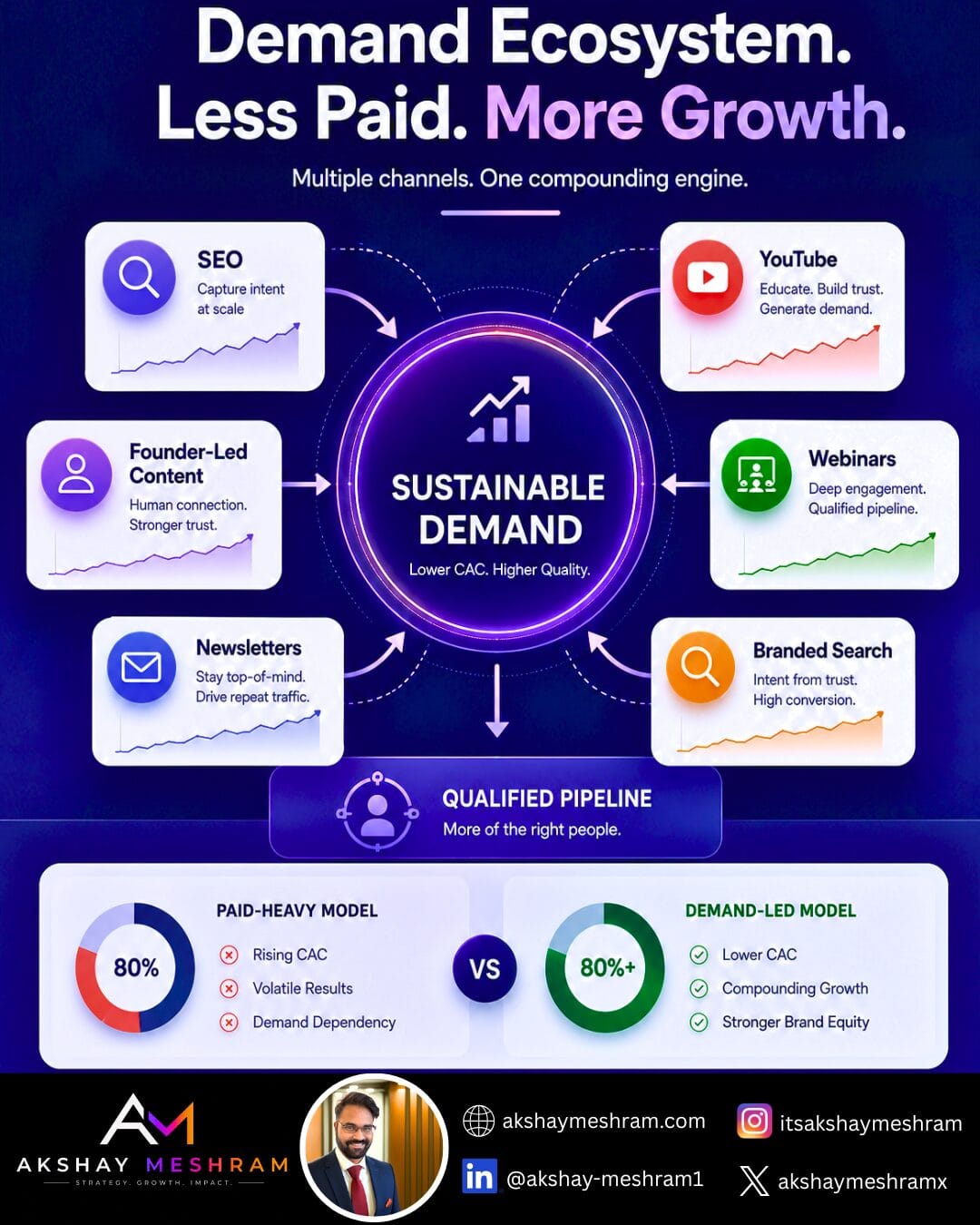
Average teams rely heavily on demand capture:
- paid search
- outbound
- direct-response acquisition
Sophisticated teams invest significantly in demand generation.
That includes:
- strategic SEO
- educational content
- founder-led media
- category education
- YouTube
- webinars
- newsletters
- ecosystem participation
This changes acquisition economics over time.
Demand generation improves CAC indirectly but powerfully.
When companies consistently educate the market:
- buyer awareness improves
- trust compounds
- branded search increases
- intent quality improves
- conversion friction decreases
The objective is not merely traffic.
The objective is preference formation before the buying moment occurs.
Conversion Infrastructure Is a Major CAC Lever
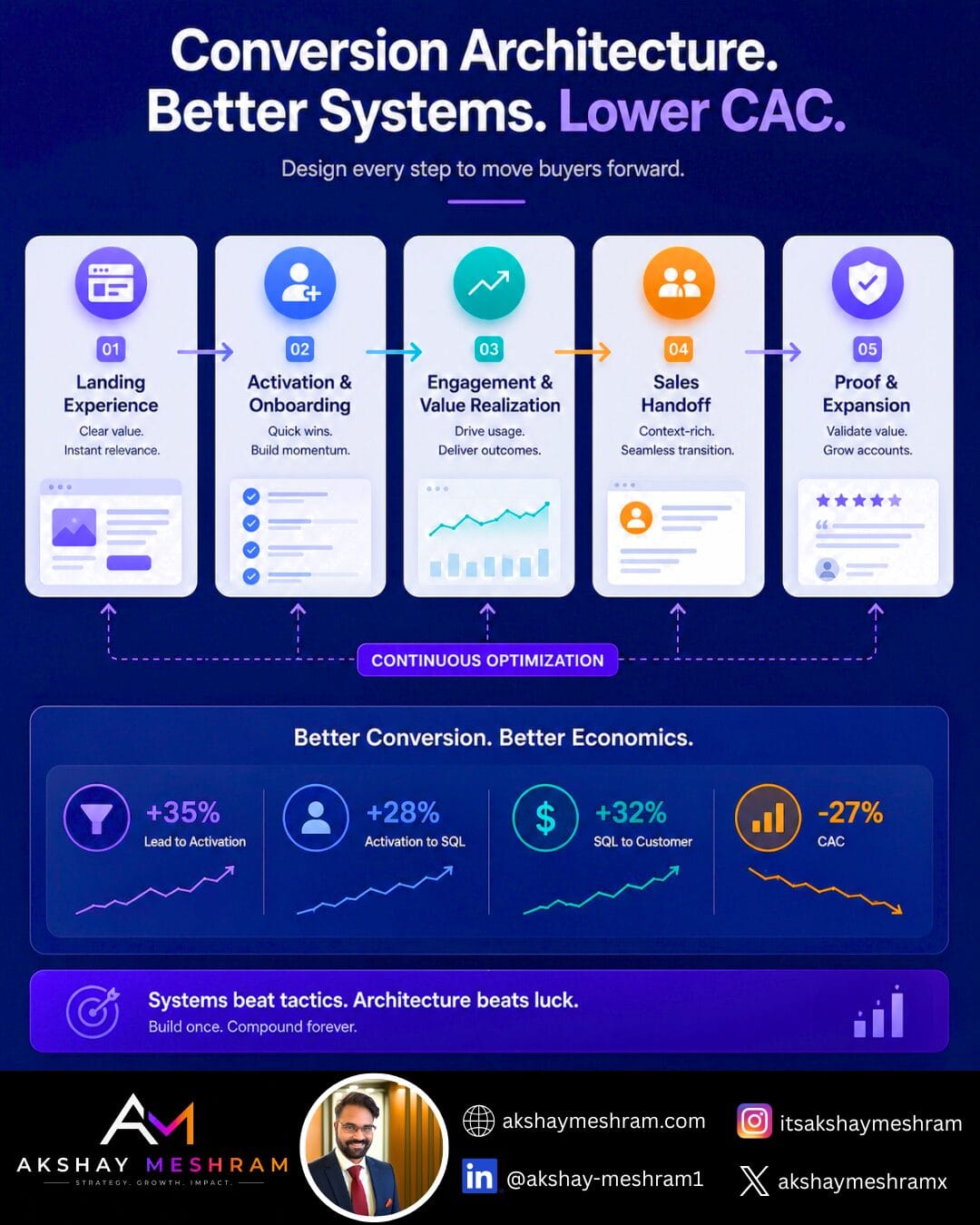
Many companies focus aggressively on traffic growth while underinvesting in conversion infrastructure.
Sophisticated operators understand that improving conversion efficiency often lowers CAC faster than expanding traffic volume.
This includes:
- onboarding design
- sales transitions
- product education
- activation systems
- landing page clarity
- proof architecture
- messaging consistency
Small improvements across these systems compound significantly.
Reducing CAC Requires Cross-Functional Alignment
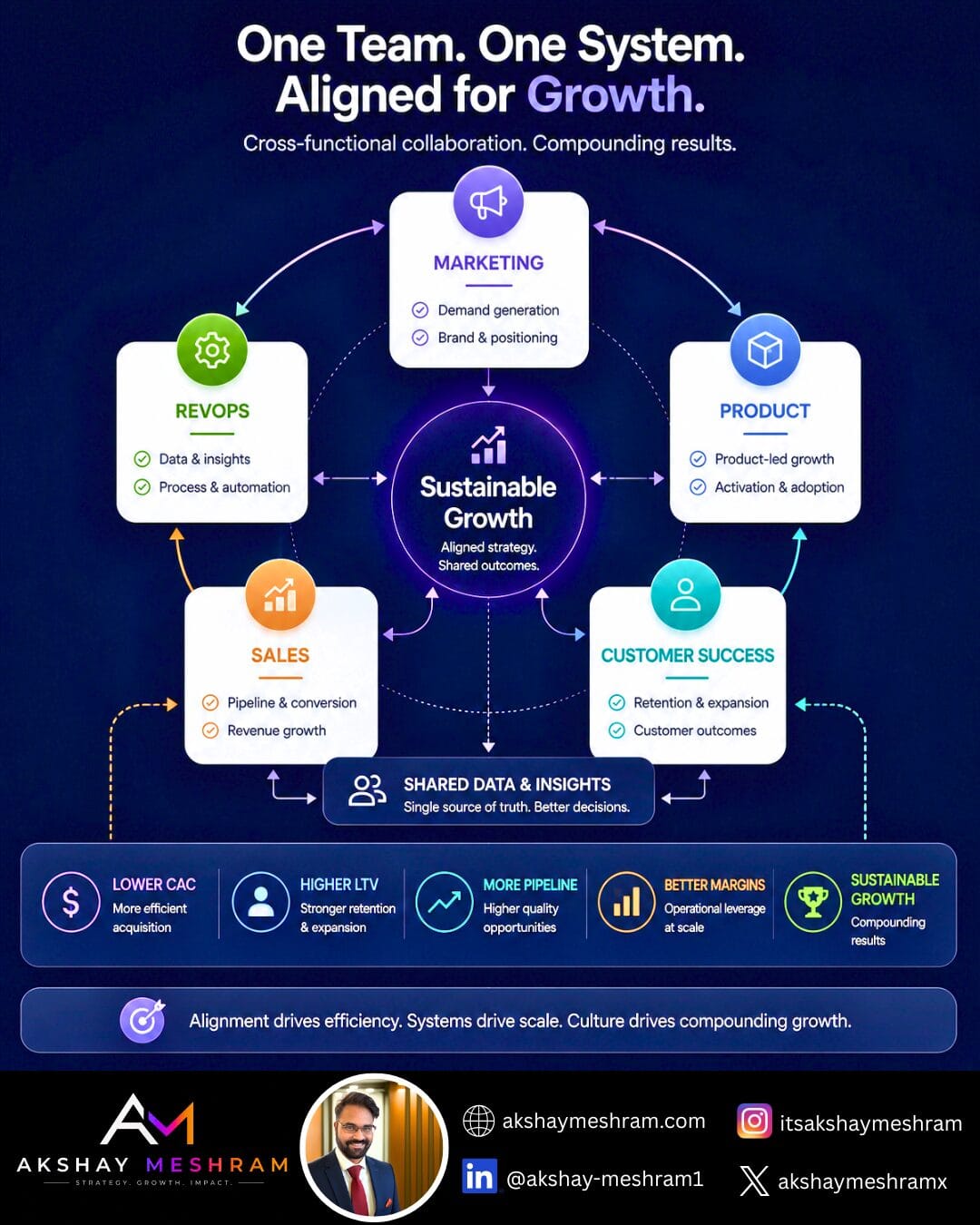
CAC problems are rarely isolated within marketing alone.
In many SaaS companies, acquisition inefficiency emerges from:
- product onboarding
- sales qualification
- ICP misalignment
- weak retention
- inconsistent positioning
- fragmented messaging
The most efficient growth organizations maintain strong alignment between:
- product
- marketing
- sales
- RevOps
- customer success
That alignment reduces systemic friction.
Content Compounds CAC Efficiency Over Time
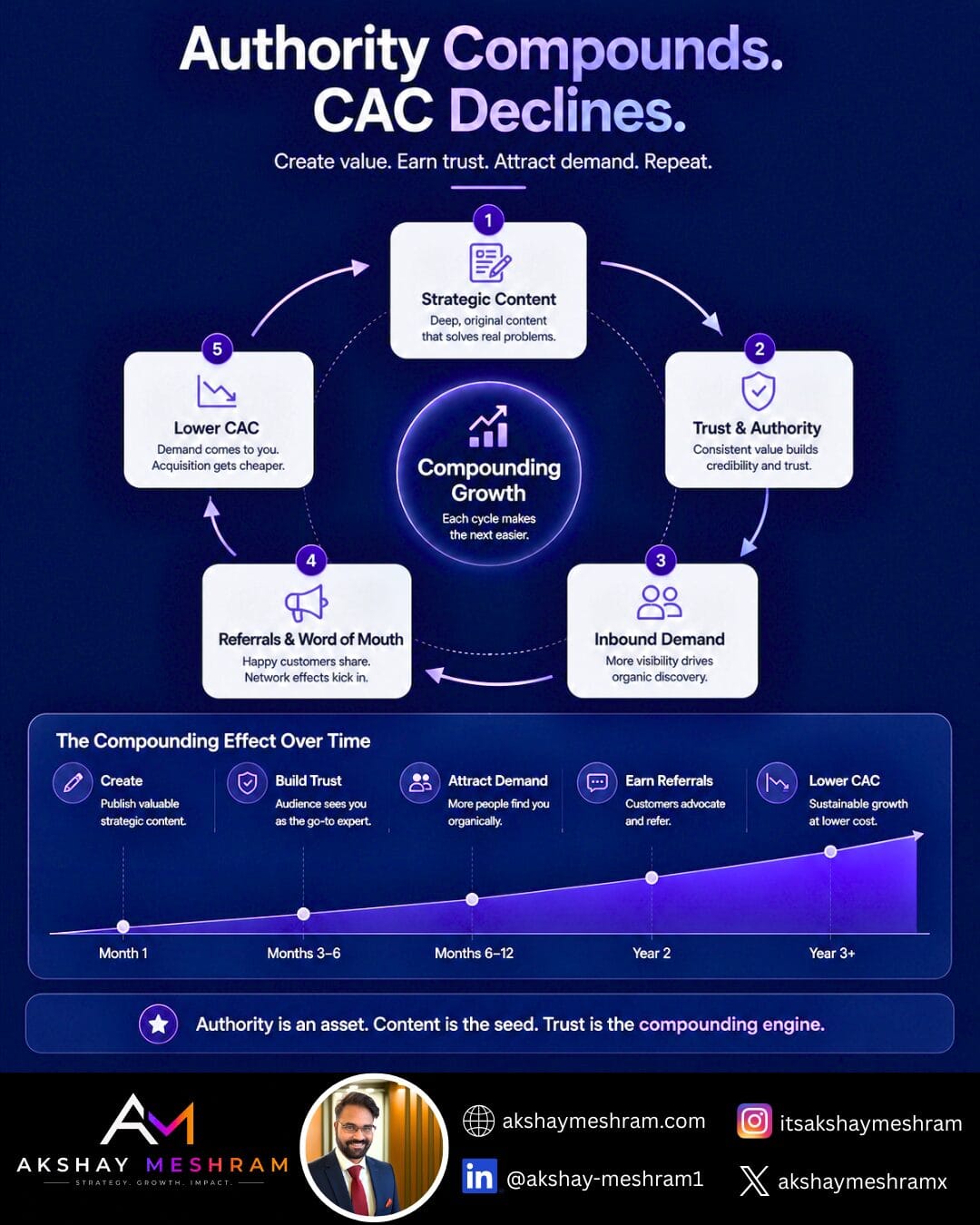
Content is frequently misunderstood as a traffic mechanism.
Sophisticated SaaS operators increasingly treat content as:
- a trust asset
- a positioning asset
- a conversion asset
- a distribution asset
- an authority asset
High-quality content can:
- pre-educate buyers
- reduce sales objections
- improve inbound intent
- increase branded search
- establish category authority
- improve referral behavior
Authority content compresses trust-building timelines.
That has direct implications for CAC.
Low CAC Companies Build Compounding Growth Systems
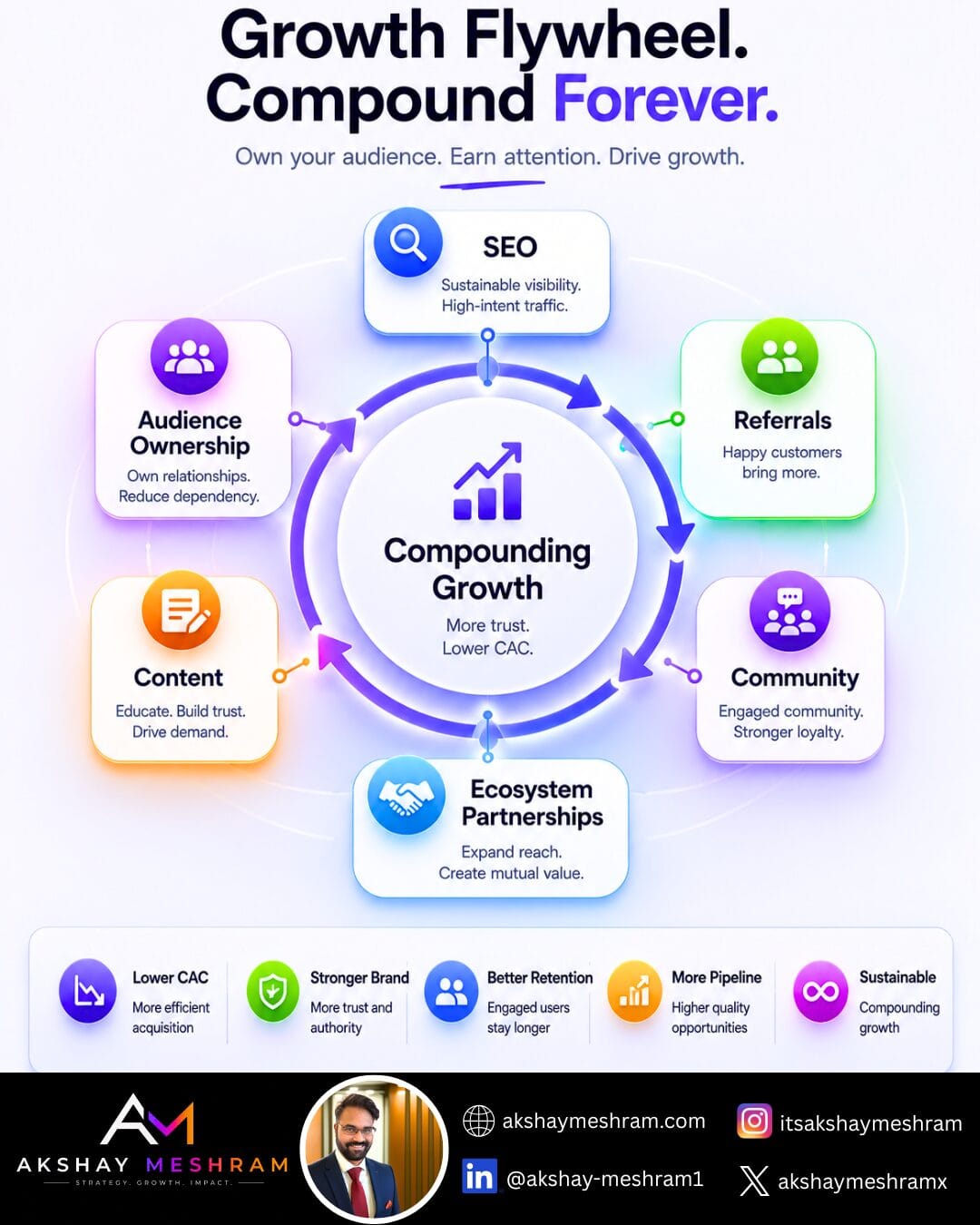
Sophisticated SaaS companies rarely rely on isolated acquisition tactics.
They build interconnected systems that compound over time.
These often include:
- SEO flywheels
- referral loops
- founder authority
- ecosystem partnerships
- audience ownership
- customer advocacy
Over time, these systems reduce dependence on expensive paid acquisition.
A Practical Framework to Reduce CAC Without Increasing Budget
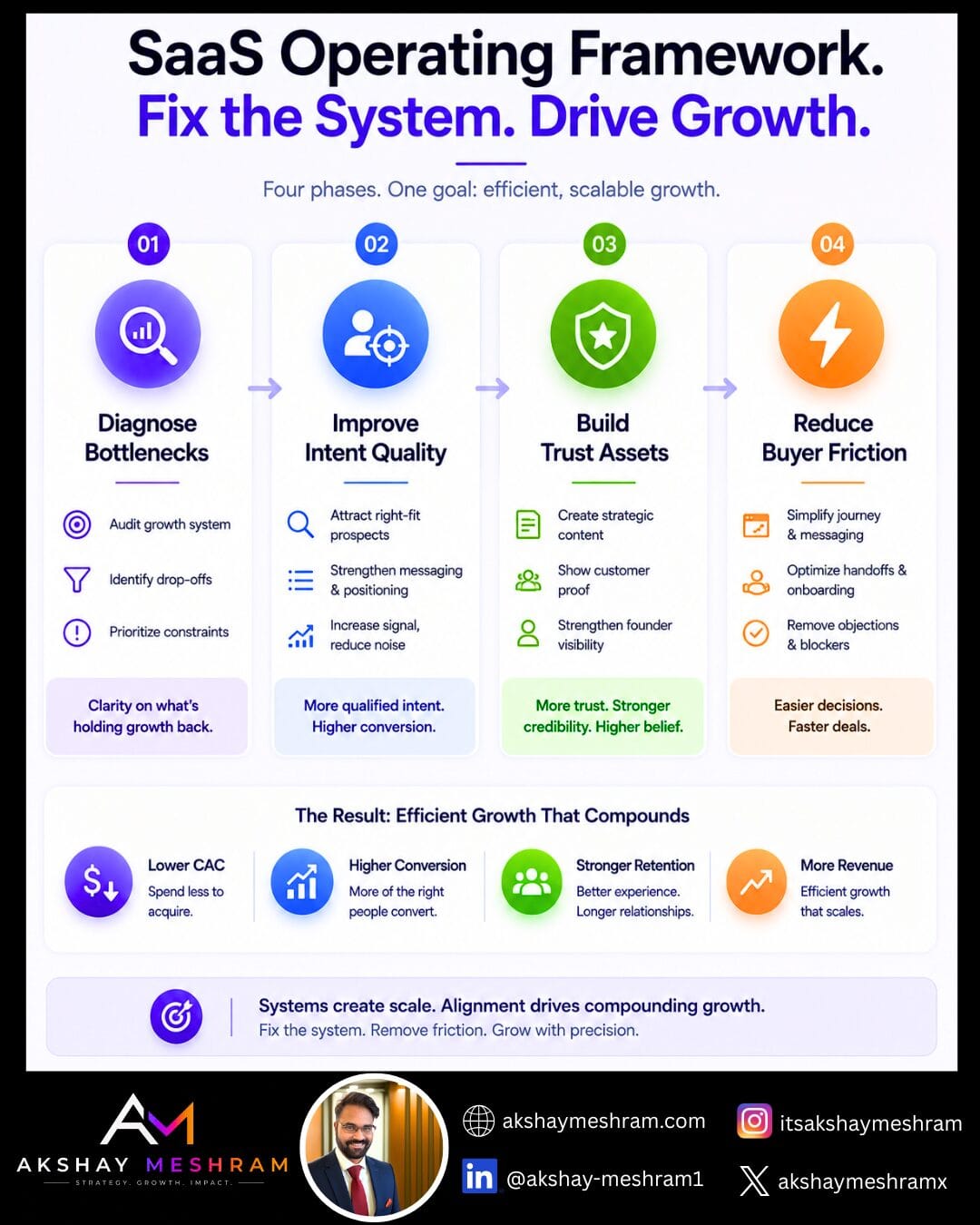
Step 1: Diagnose the Real CAC Constraint
Potential bottlenecks include:
- weak positioning
- poor intent quality
- onboarding friction
- low trust
- poor conversion architecture
- weak activation
Without structural diagnosis, optimization becomes guesswork.
Step 2: Improve Intent Quality Before Increasing Volume
Higher-quality traffic compounds more efficiently than larger traffic volume.
Step 3: Build Trust-Based Acquisition Assets
Invest in:
- strategic content
- founder visibility
- customer proof
- SEO authority
- educational media
Step 4: Reduce Friction Across the Buyer Journey
Examine every stage where buyers hesitate:
- unclear messaging
- onboarding confusion
- pricing ambiguity
- weak proof
Reducing friction often improves CAC faster than increasing acquisition volume.
The Future of CAC Will Favor Trust-Rich Companies
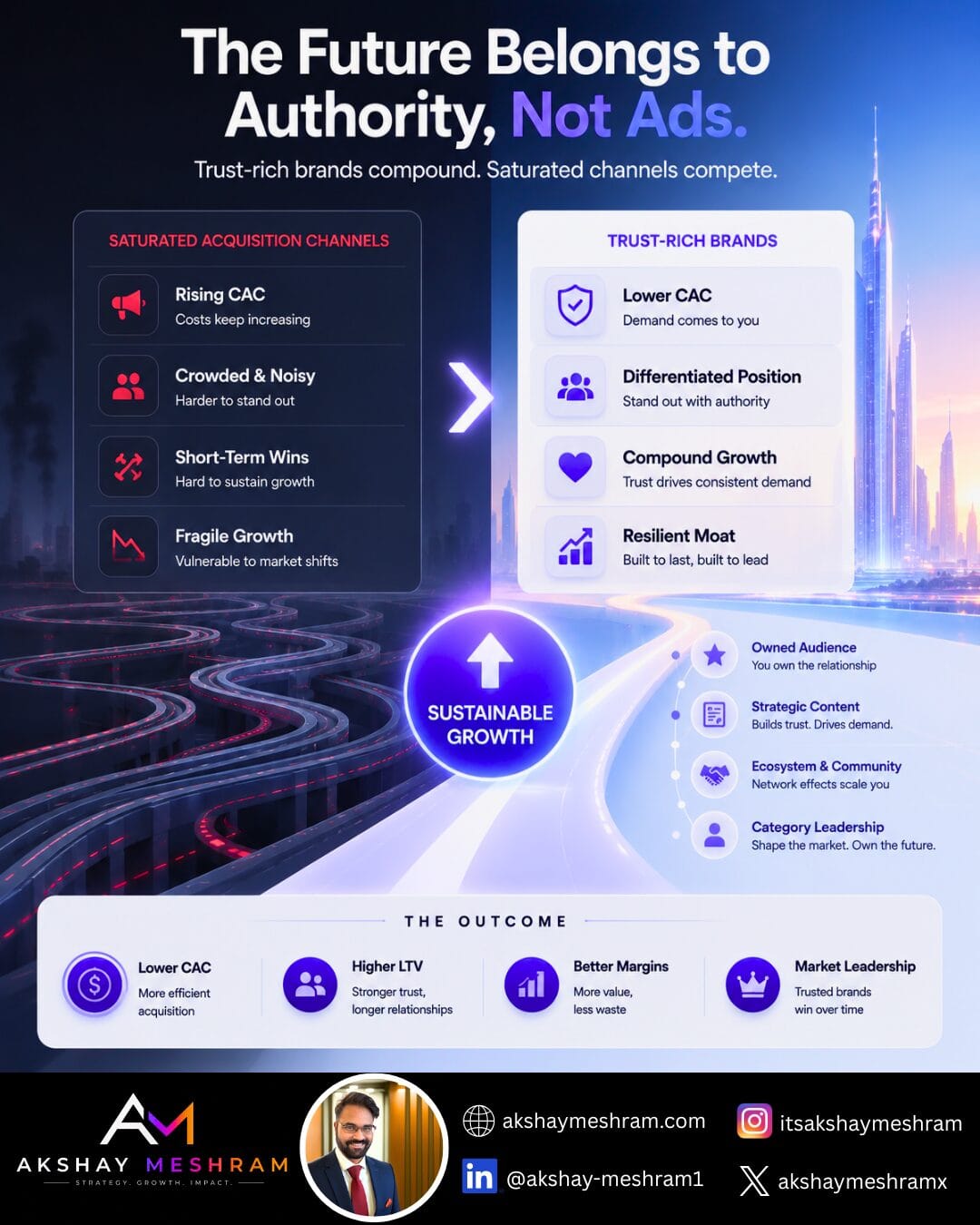
As channels become increasingly saturated, trust becomes a distribution advantage.
The companies that sustain efficient acquisition over the next decade will likely be those that:
- build category authority
- compound audience trust
- create educational ecosystems
- develop founder credibility
- improve intent quality systematically
The strongest acquisition systems become more efficient over time because buyers arrive:
- more informed
- more confident
- more familiar
- more pre-qualified
The business spends less convincing and more converting.
That is one of the most important long-term advantages sophisticated SaaS companies build.
The Best SaaS Companies Don’t Merely Buy Attention — They Earn Preference
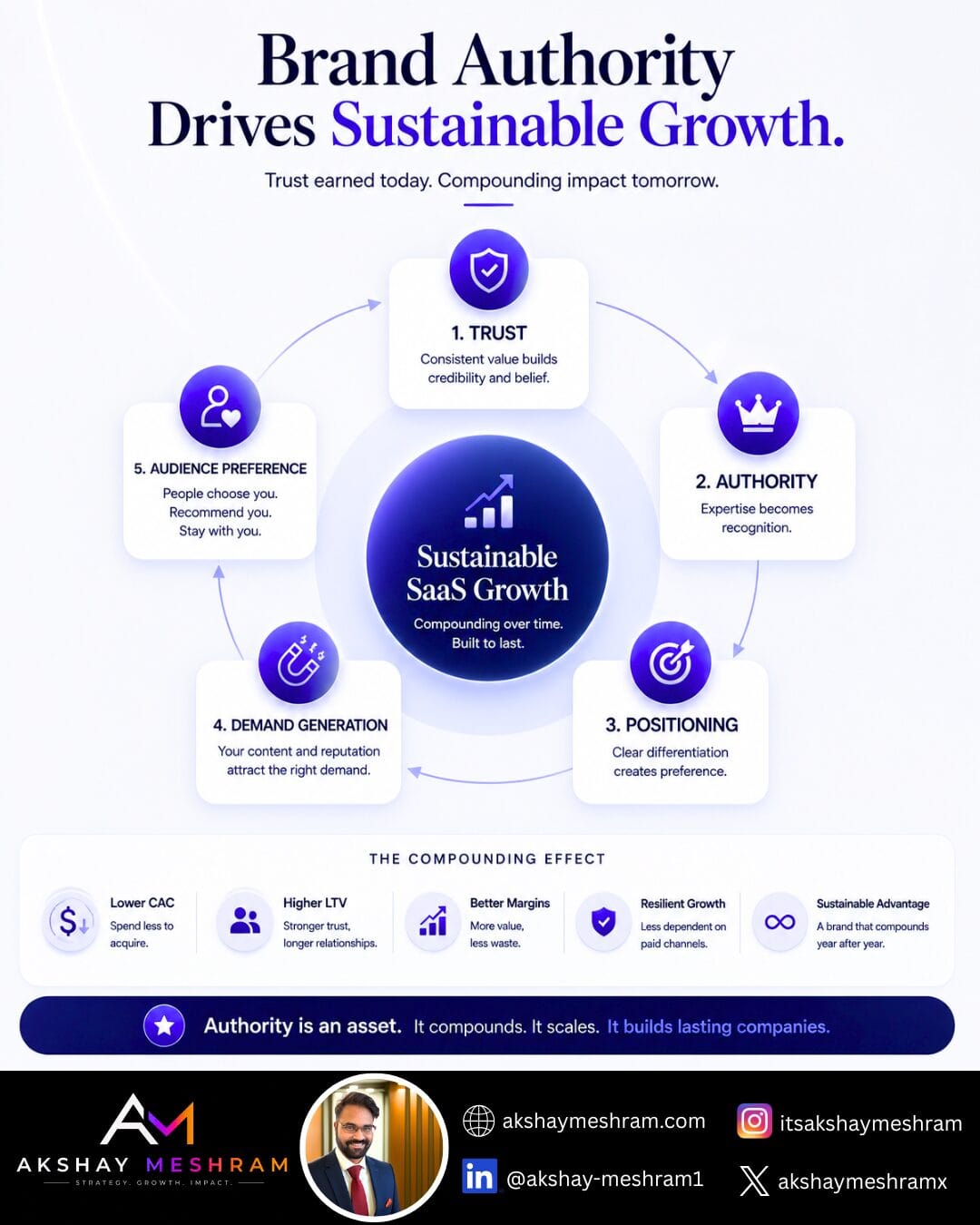
Visibility can be purchased.
Preference is accumulated.
Sophisticated SaaS companies reduce CAC without increasing budget because they build systems that:
- increase trust
- improve positioning
- reduce friction
- compound authority
- strengthen intent quality
Eventually, acquisition becomes more efficient not because channels become cheaper, but because buyers arrive more prepared to convert.
That is a fundamentally different growth model for SaaS companies trying to reduce CAC without increasing budget.
And increasingly, it is the model that compounds most sustainably.